
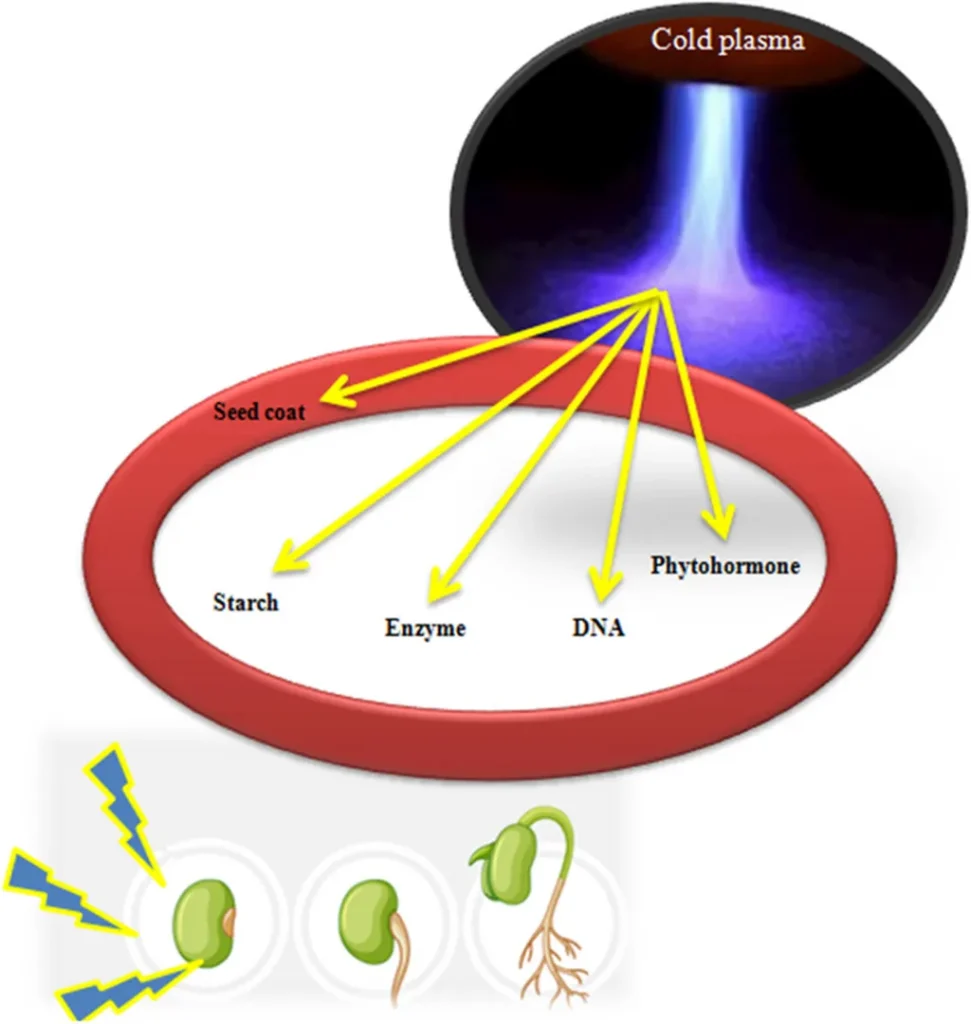
In the quest for sustainable and eco-friendly agricultural practices, researchers from the University of Carthage in Tunisia have been exploring innovative techniques to enhance crop quality and productivity. M. A. Benabderrahim, H. Hannachi, W. Elfalleh, and T. Dufour have recently published their findings on the effects of cold plasma (CP) and ultraviolet (UV) radiation on alfalfa sprouts in the journal “Food Chemistry.”
The study focuses on the potential of CP and UV treatments to improve germination, growth, and phytochemical profiles of alfalfa sprouts. Alfalfa, a widely used crop for animal feed and human consumption, can benefit significantly from these eco-friendly techniques. The researchers found that CP treatment accelerated the germination process, reducing the median germination time by 8 hours compared to the control group. This acceleration can lead to more efficient crop cycles, which is beneficial for farmers aiming to maximize their yield and productivity.
Moreover, CP treatment enhanced the photosynthetic pigments in alfalfa sprouts, resulting in higher biomass. The fresh weight of the sprouts increased to 25.87 mg per sprout, and the dry weight reached 1.45 mg per sprout. This increase in biomass can translate to more abundant and nutritious crops, which is advantageous for both animal feed and human consumption.
On the other hand, UV treatments, particularly UV-C, were found to increase the chlorophyll and total flavonoid content in alfalfa sprouts. Flavonoids are important phytochemicals with antioxidant properties, which can enhance the nutritional value of the crops. This improvement in phytochemical profiles can make alfalfa sprouts more valuable for health-conscious consumers and industries looking for natural sources of antioxidants.
The practical applications of these findings for the energy sector are indirect but noteworthy. Enhanced crop productivity and nutritional value can contribute to more sustainable agricultural practices, which in turn can reduce the environmental impact of farming. This can lead to lower carbon emissions and a more efficient use of resources, aligning with the goals of the energy sector to promote sustainability and reduce environmental footprint.
In conclusion, the research by Benabderrahim et al. published in “Food Chemistry” highlights the potential of cold plasma and UV treatments to improve the quality and productivity of alfalfa sprouts. These eco-friendly techniques offer promising avenues for enhancing crop yields and nutritional value, which can have positive implications for the energy sector’s sustainability goals.
This article is based on research available at arXiv.