
In the realm of energy-efficient materials, a team of researchers from Zhejiang University and the University of California, Berkeley, led by Zhuowen Xie, has developed a novel textile that could revolutionize personal thermal management. This innovative material, inspired by the morpho butterfly, aims to provide all-season comfort while maintaining visual appeal.
The research, published in the journal Science Advances, addresses a longstanding challenge in personal thermal management: the transition from static, appearance-limited passive radiative cooling (PDRC) materials to systems that are both dynamically adaptive and visually versatile. Traditional materials often compromise between color saturation and cooling power, but this new textile overcomes that hurdle.
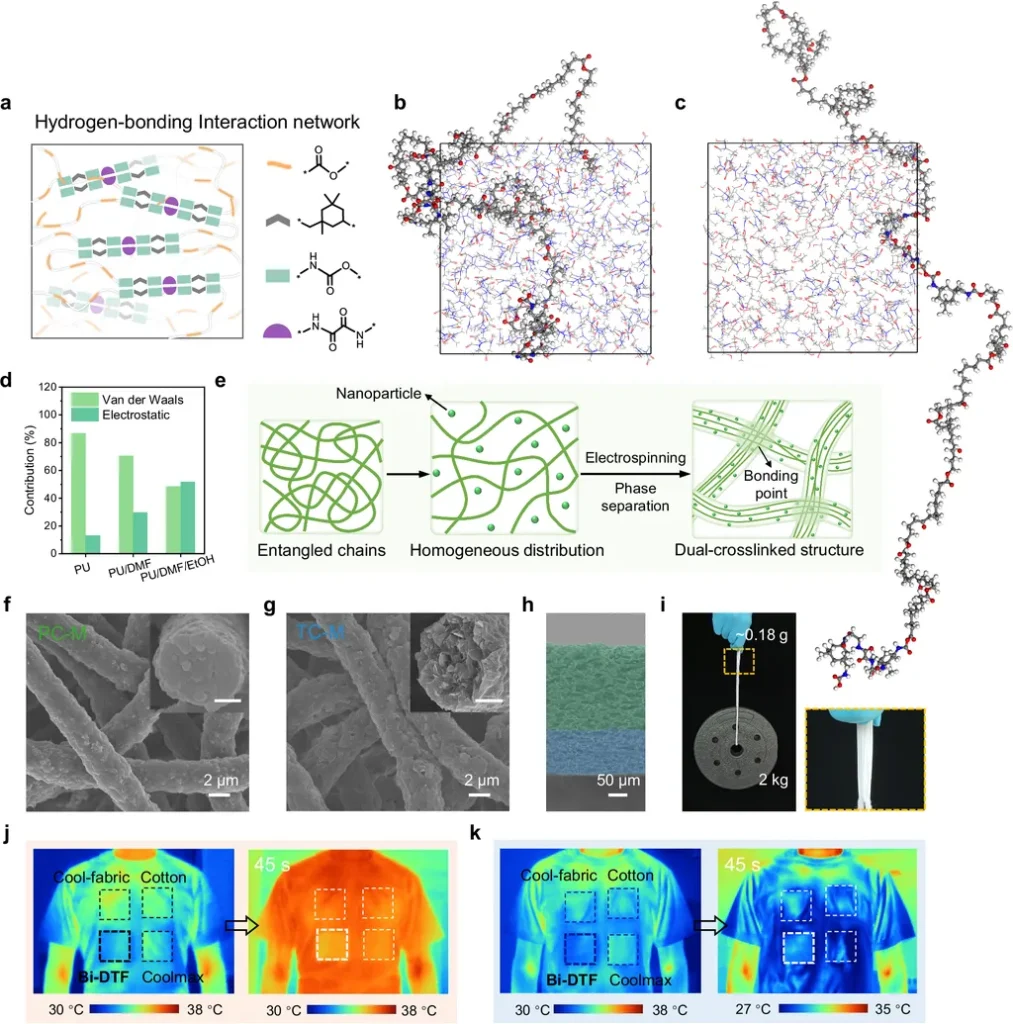
The smart textile integrates a dynamic thermochromic layer with static photonic crystals (PCs). This design allows the fabric to autonomously switch its solar reflectance. In its colored state, the fabric has a solar reflectance of approximately 0.6, which helps in heating. In its high-reflectance state, the solar reflectance increases to about 0.9, enhancing cooling capabilities. This dual-mode operation enables the fabric to regulate temperature effectively.
Outdoor experiments demonstrated the fabric’s effectiveness. In summer, the fabric achieved a surface temperature reduction of 3-4 °C compared to commercial reference materials. In winter, the temperature difference was less than 1 °C, indicating its ability to provide heating as well. Importantly, the fabric maintained high-saturation colors throughout these tests, ensuring visual appeal.
For the energy sector, this innovation could lead to energy-free thermal comfort solutions. By reducing the need for artificial heating and cooling, such textiles could contribute to energy savings and sustainability. Additionally, the technology could be integrated into smart buildings and wearable technologies, further expanding its applications in the energy-efficient materials market.
The research highlights the potential of bio-inspired designs in developing advanced materials that offer both functional and aesthetic benefits. As the energy industry continues to seek innovative solutions for thermal management, this smart textile represents a promising advancement.
This article is based on research available at arXiv.