
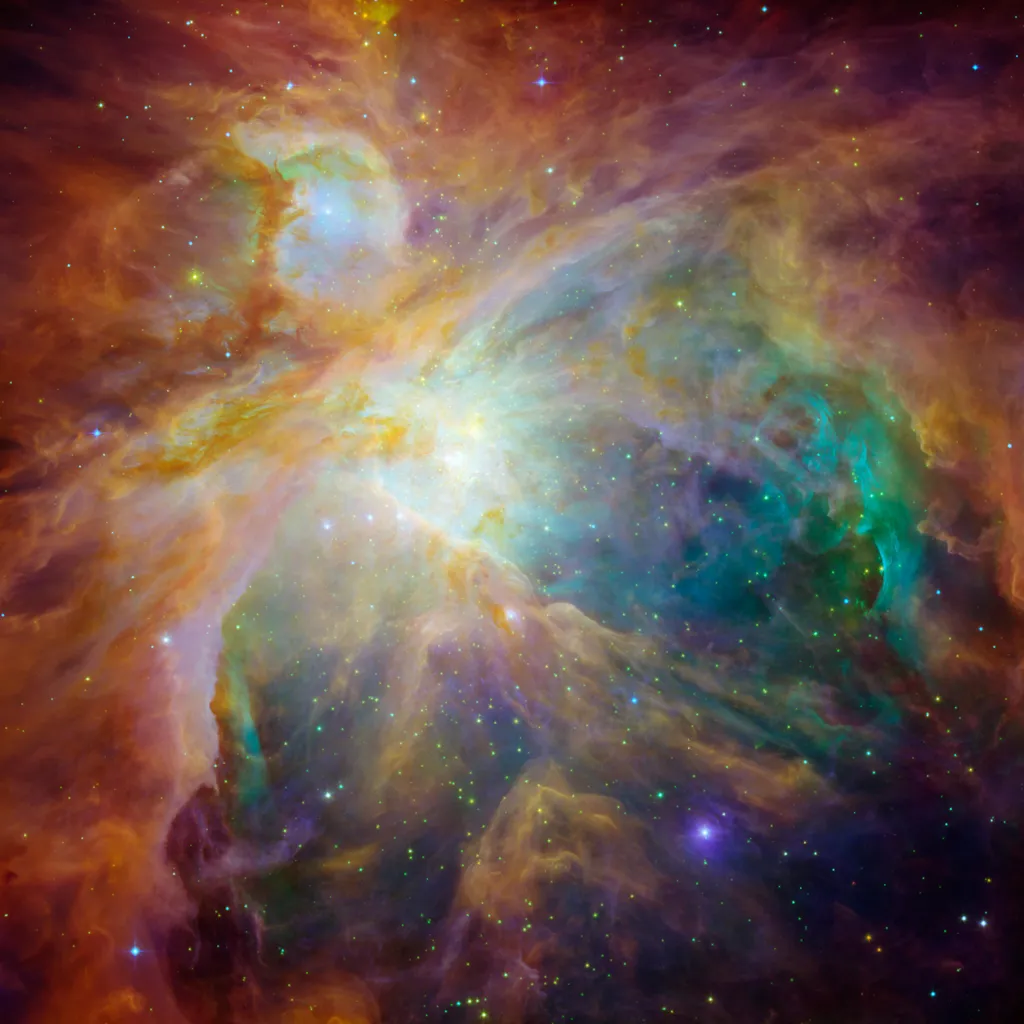
Researchers Damien Borja, Florent Calvo, Pascal Parneix, and Cyril Falvo, affiliated with the University of Bordeaux in France, have delved into the complex world of polycyclic aromatic hydrocarbons (PAHs) and their behavior in space. Their work, published in the Journal of Chemical Physics, focuses on a phenomenon called recurrent fluorescence (RF) and its role in stabilizing PAHs, which are significant components of interstellar matter.
Polycyclic aromatic hydrocarbons are complex organic molecules made up of multiple aromatic rings. They are of interest to the energy industry because they are major components of fossil fuels and can form during combustion processes. Understanding their behavior, especially in extreme environments, can provide insights into energy production and pollution control.
The researchers developed a statistical model to study recurrent fluorescence, a process where a molecule absorbs and re-emits light multiple times. This process can help stabilize PAHs, allowing them to persist in the harsh conditions of the interstellar medium (ISM). The model incorporates several complex effects, including Herzberg-Teller and Duschinsky rotations, and accounts for vibrational progressions, which are the changes in vibrational energy levels during electronic transitions.
Using this model, the team studied three types of PAH cations—naphthalene, anthracene, and pyrene. They found that low-lying, symmetry-forbidden electronic excited states, which are typically less reactive, might contribute more to recurrent fluorescence than higher energy, non-forbidden states. This unexpected finding suggests that PAHs could be even more stable in the highly ionized environments of the ISM than previously thought.
For the energy industry, this research could have practical applications in areas like combustion optimization and pollution control. By understanding how PAHs behave and stabilize, engineers could design more efficient and cleaner combustion processes. Additionally, this knowledge could aid in the development of new materials and technologies for energy storage and conversion.
In summary, the work of Borja and colleagues sheds light on the complex behavior of PAHs in space, with potential implications for energy production and environmental protection here on Earth. Their model provides a powerful tool for studying recurrent fluorescence and could pave the way for new advancements in the energy sector.
This article is based on research available at arXiv.