
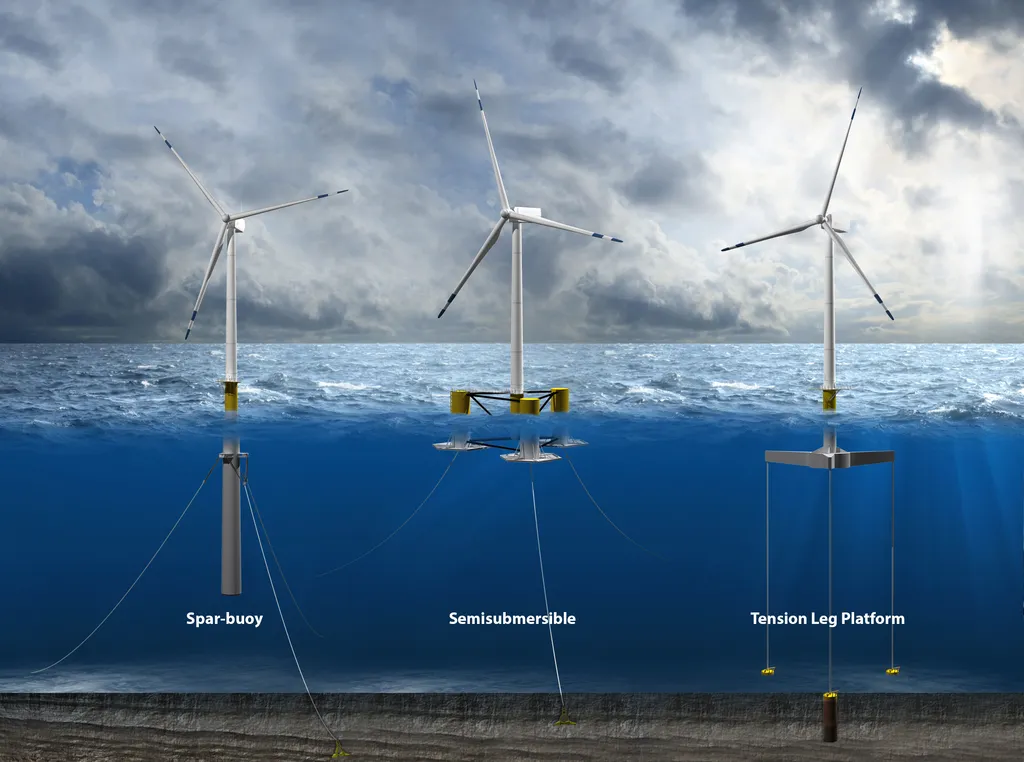
Researchers João Alves Ribeiro, Francisco Pimenta, Bruno Alves Ribeiro, Sérgio M. O. Tavares, and Faez Ahmed, affiliated with the University of Porto and the University of Strathclyde, have developed a new framework to optimize the design of floating offshore wind turbine towers. Their work, published in the journal Wind Energy Science, addresses the challenge of reducing costs in offshore wind energy by improving the design of floating wind turbines.
As offshore wind turbines grow in size, so do the challenges of designing their towers. Larger rotors and nacelles require taller and stronger towers, which in turn face increased fatigue loads due to the combined effects of wind, waves, and platform motion. Traditional methods of evaluating these fatigue loads are computationally expensive and time-consuming, hindering innovation in tower design. The researchers’ new framework, called FLOAT (Fatigue-aware Lightweight Optimization and Analysis for Towers), aims to overcome these challenges.
FLOAT integrates three key innovations. First, it uses a lightweight method to estimate fatigue, allowing for efficient optimization of the tower design. Second, it employs a probabilistic approach to simulate wind and wave conditions, reducing the number of required simulations. Finally, it enhances high-fidelity modeling through calibration and high-performance computing. The researchers applied FLOAT to the design of a 22 MW floating offshore wind turbine tower, achieving a significant extension of the estimated fatigue life from just 9 months to 25 years. This was accomplished while avoiding resonance, a critical factor in the longevity of wind turbine structures. The optimized design also represents the lowest-mass fatigue-compliant design, balancing increased tower mass with extended lifespan.
The FLOAT framework significantly reduces the computational requirements for designing floating offshore wind turbine towers, making the process more reliable and scalable. This advancement bridges the gap between industrial needs and academic research, paving the way for next-generation floating offshore wind turbines. The high-fidelity datasets generated by FLOAT can also support data-driven and AI-assisted design methodologies, further enhancing the potential for innovation in the field.
The research was published in Wind Energy Science, a peer-reviewed journal dedicated to the science of wind energy. This work represents a significant step forward in the design and optimization of floating offshore wind turbines, addressing key challenges in the industry and offering practical applications for the energy sector.
This article is based on research available at arXiv.