
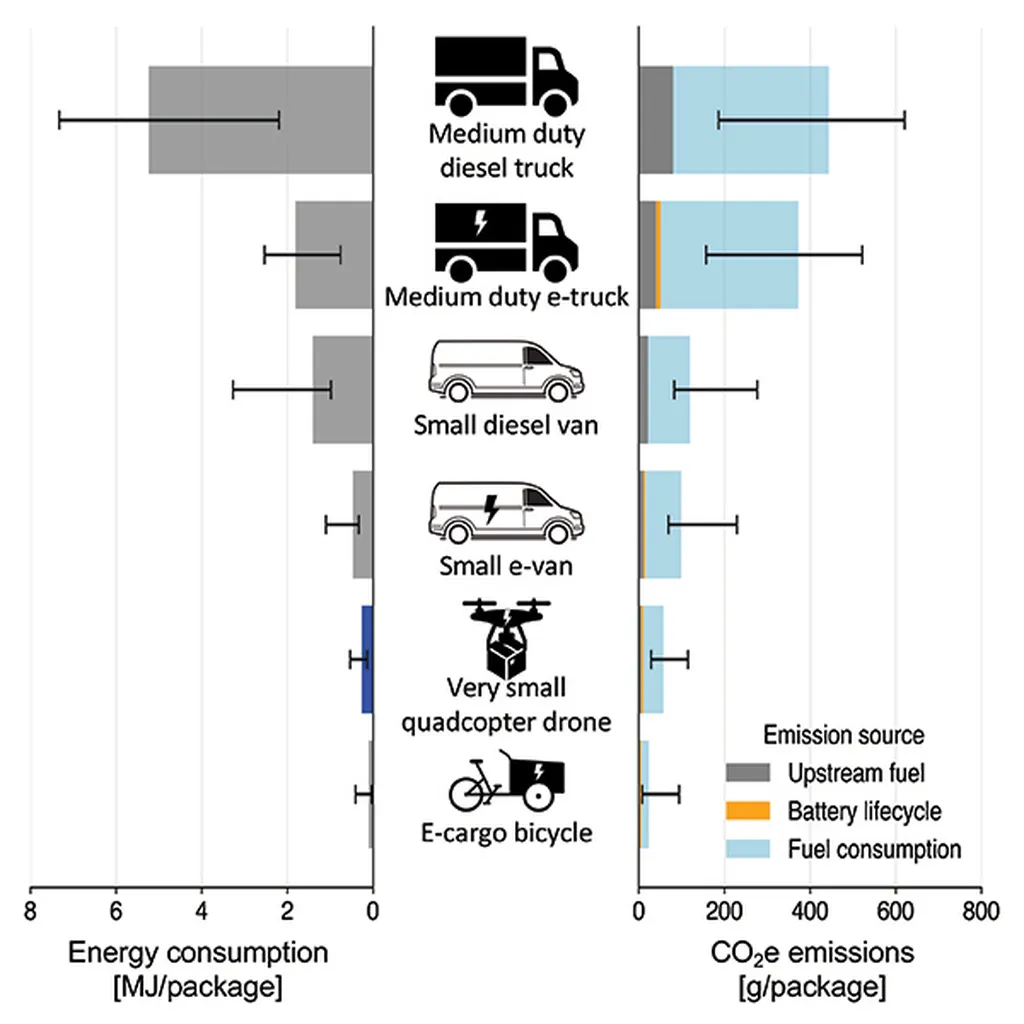
Researchers from the University of Sydney, including Vejaykarthy Srithar, Syeda Amna Rizvi, Amani Abusafia, Athman Bouguettaya, and Balsam Alkouz, have conducted a study on the impact of spatial proximity on drone services, with implications for the energy efficiency of drone delivery systems. The research was published in the IEEE Internet of Things Journal.
The study focuses on understanding how drones flying in close proximity affect each other’s energy consumption, which is crucial for planning efficient drone delivery services. The researchers conducted experiments using drones at varying positions in a 3D space under different wind conditions. They collected data on drone energy consumption while traveling in a skyway segment, which is a designated airspace for drone operations.
To analyze the data, the researchers developed a Graphical User Interface (GUI) that plots drone trajectories within a segment. The GUI allows for the analysis of peer-to-peer influence of drones on their energy consumption, taking into account factors such as drones’ positions, distance of separation, and wind impact.
The findings of this research can have practical applications for the energy sector, particularly in the area of drone delivery services. By understanding the impact of spatial proximity on drone energy consumption, companies can optimize their drone delivery routes and schedules to minimize energy usage and maximize efficiency. This can lead to cost savings and reduced environmental impact, as well as improved overall performance of drone delivery services.
In summary, the research conducted by the University of Sydney team sheds light on the importance of spatial proximity in drone operations and its impact on energy consumption. The development of a GUI for analyzing drone trajectories and energy consumption provides a valuable tool for the energy sector to optimize drone delivery services.
This article is based on research available at arXiv.