
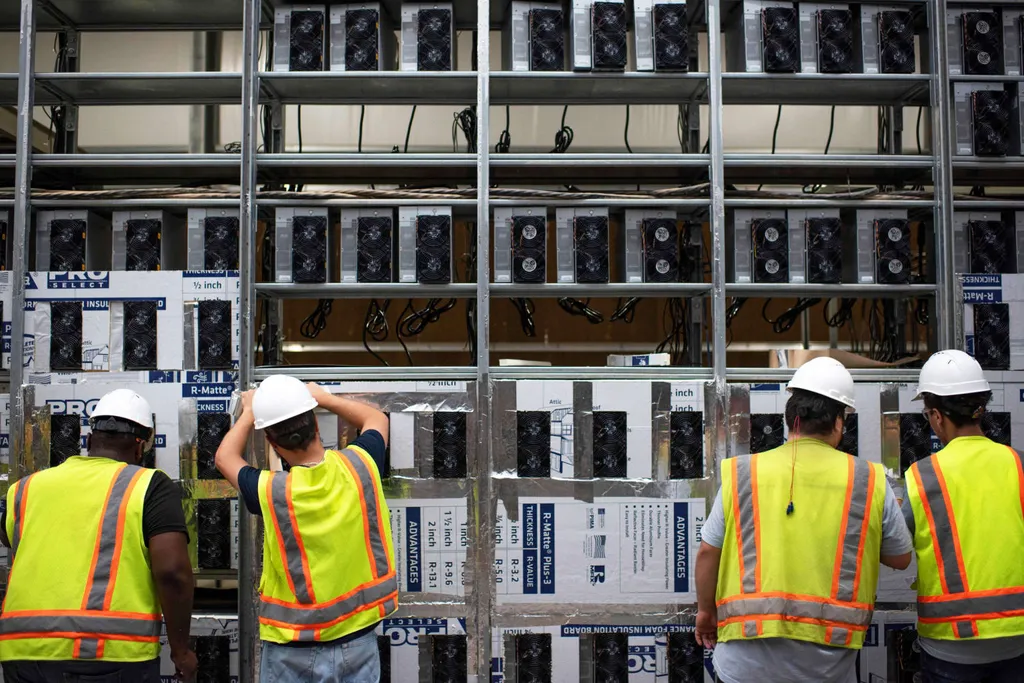
Researchers Francisco Angulo de Lafuente, Vladimir Veselov, and Richard Goodman, affiliated with the University of California, Berkeley, have proposed an innovative approach to repurpose Bitcoin mining hardware for advanced computing applications. Their work, published in the journal Nature Scientific Reports, explores the potential of using Bitcoin mining ASICs (Application-Specific Integrated Circuits) for a novel computing paradigm known as reservoir computing.
The researchers propose a theoretical framework called Holographic Reservoir Computing (HRC), which suggests that the thermodynamic noise and timing dynamics in voltage-stressed Bitcoin mining ASICs could serve as a physical substrate for reservoir computing. Reservoir computing is a type of machine learning that processes information using a fixed, random structure known as a “reservoir.” The CHIMERA (Conscious Hybrid Intelligence via Miner-Embedded Resonance Architecture) system architecture treats the SHA-256 hashing pipeline in these ASICs not as an entropy source but as a deterministic diffusion operator. Under controlled voltage and frequency conditions, the timing characteristics of these ASICs may exhibit computationally useful dynamics.
The researchers observed preliminary evidence of non-Poissonian variability in inter-arrival time statistics during edge-of-stability operation, which they term the “Silicon Heartbeat” hypothesis. This variability suggests that the ASICs could potentially achieve O(log n) energy scaling compared to traditional von Neumann architectures, which have O(2^n) dependencies. However, these findings are theoretical and require experimental validation.
The energy industry could benefit from this research by exploring new ways to repurpose obsolete cryptographic hardware for more energy-efficient computing applications. If validated, this approach could lead to significant energy savings and extended useful life for specialized hardware, reducing electronic waste and promoting sustainability in the tech sector. The researchers have implemented a measurement infrastructure and outlined an experimental program to confirm or refute their hypotheses, contributing to the emerging field of thermodynamic computing.
This article is based on research available at arXiv.