
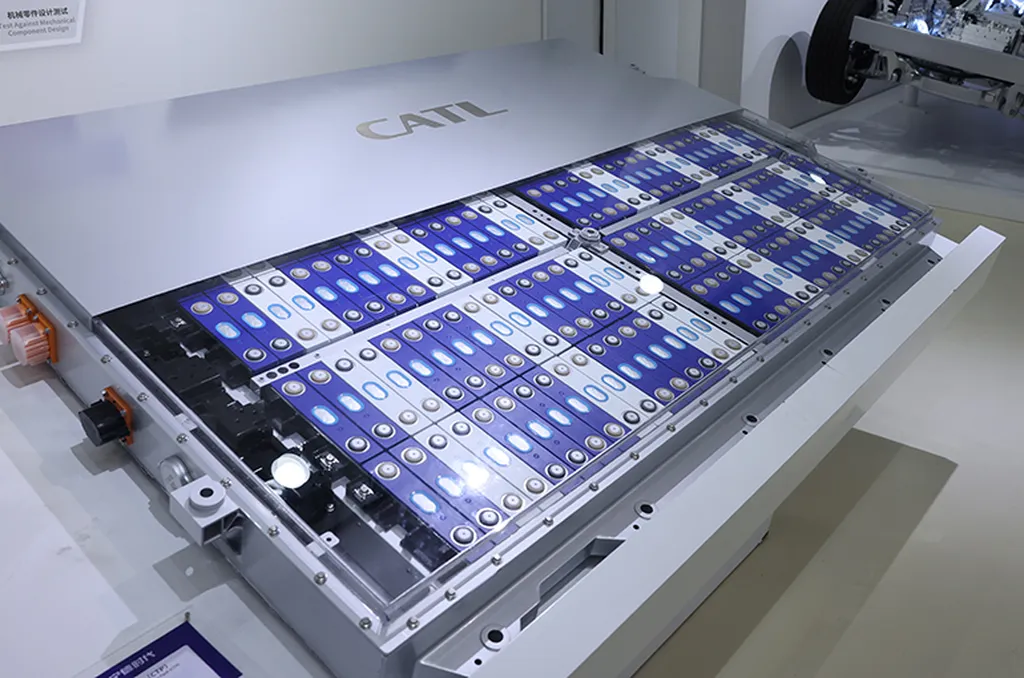
A team of researchers from Donghua University and Xi’an Jiaotong University has unveiled a groundbreaking advancement in solid-state battery technology, achieving an ionic conductivity of 1.95 mS cm⁻¹ and a lithium-ion migration number of 0.74—metrics that shatter previous benchmarks and promise to redefine the limits of energy storage. The innovation, centered around an imidazole-based ionized covalent organic framework (COF) nanofiber skeleton gel electrolyte, enables batteries to retain 83.2% of their initial capacity after 300 cycles at a high rate of 5C. This leap forward addresses two of the most persistent challenges in battery science: fast charging and long-term stability, both critical for electric vehicles, grid storage, and portable electronics.
The new electrolyte design overcomes the limitations of traditional solid-state electrolytes, which often suffer from poor ionic conductivity or instability. By creating a gel electrolyte with a dual capability of balanced desolvation and dissociation, the researchers have achieved a critical current density (CCD) breakthrough of 4.5 mA cm⁻² in lithium symmetric batteries. This means the battery can handle much higher charge and discharge rates without degrading, a game-changer for applications requiring rapid energy turnover, such as data centers and renewable energy integration. “This design achieved an ultra-high conductivity and a LiF-rich interface layer, enabling the critical current density of lithium symmetric batteries to break through 4.5 mA cm⁻²,” noted the research team, emphasizing the potential for widespread adoption in high-performance energy storage systems.
Industry experts are quick to highlight the broader implications. “The convergence of EV and storage supply chains is creating real momentum for ‘built-at-home’ solutions and non-lithium chemistries,” said Julie Royes, Vice President of Corporate Affairs at CMBlu Energy. “As the U.S. steadily moves toward a circular storage economy, alternative chemistries are shifting from ‘nice-to-have’ to ‘must-have’ because they improve safety, affordability, and long-term confidence.” The new electrolyte’s performance metrics align with this shift, offering a path to safer, more efficient, and longer-lasting batteries that could accelerate the transition away from lithium-ion dominance, especially in grid and industrial applications.
This breakthrough arrives at a pivotal moment. The energy storage sector is under intense pressure to deliver solutions that can support the AI-driven load growth, data center demand, and the integration of intermittent renewable energy sources. With solid-state batteries poised for widespread installation trials from 2026-2027, and global shipments projected to reach 614 GWh by 2030, innovations like this gel electrolyte could be the catalyst for a new era of energy storage—one defined by ultra-fast charging, unparalleled safety, and unprecedented longevity. For engineers, policymakers, and industry leaders, the message is clear: the future of energy storage is not just about incremental improvements, but about reimagining what’s possible.