
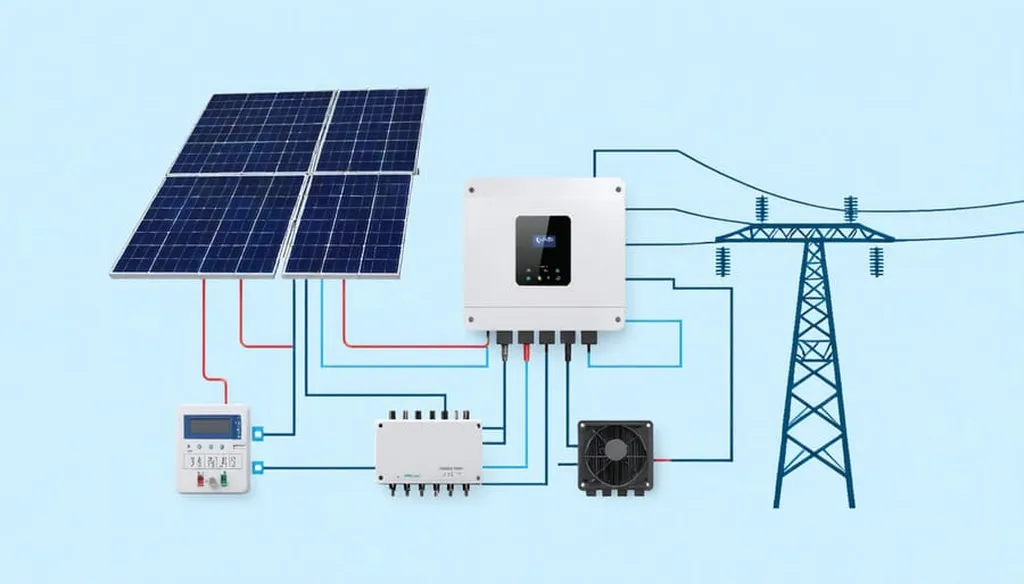
As the energy sector transitions towards decarbonization, the integration of distributed energy resources (DERs), particularly photovoltaic (PV) systems, into low-voltage distribution networks has surged. This shift has necessitated the adoption of smart inverters (SIs) to maintain grid stability, as mandated by recent standards like IEEE 1547-2018. Researchers from the University of Agder, including S. Gokul Krishnan, Mohd. Asim Aftab, Nabil Mohammed, Shehab Ahmed, and Charalambos Konstantinou, have been studying the impacts of these smart inverters on the grid.
The researchers found that as the penetration of DERs increases, the uncoordinated control modes of SIs can lead to adverse interactions, compromising system efficiency, voltage regulation, and overall stability. While previous studies have shown the benefits of coordinated inverter control and optimal dispatch strategies, the system-wide impacts of heterogeneous SI groups operating under different control modes have not been thoroughly examined. This research aims to fill that gap by assessing the dynamic interactions among multiple SI groups with varying control strategies, including Constant Power Factor (CPF), Volt-VAR, and Volt-Watt modes. The study also covers both resistive and inductive feeder types.
The validation of the research was performed using a real-time setup. The CIGRE low-voltage (LV) distribution network was simulated in the Opal-RT platform, enabling a realistic and high-fidelity evaluation of SI control interactions under practical grid conditions. The findings of this study are crucial for the energy sector as they provide insights into the optimal deployment and control of smart inverters to ensure grid stability and efficiency in the face of increasing DER penetration. This research was published in the IEEE Transactions on Power Systems.
This article is based on research available at arXiv.