
Researchers from the Italian National Institute for Astrophysics (INAF) and other institutions have developed a novel solar polarimeter mission called the CUbesat Solar Polarimeter (CUSP) to study solar flares and their polarization in the 25-100 keV energy range. The team, led by Nicolas De Angelis and including members from various institutions, has published their preliminary findings in the journal “Experimental Astronomy.”
The Sun, being the closest X-ray astrophysical source to Earth, provides an excellent opportunity to study astrophysical processes. Solar flares, in particular, are linked to coronal mass ejections and magnetic field reconnection sites in the solar atmosphere. Understanding these phenomena can help improve space weather forecasting. However, the hard X-ray polarization of solar flares, which is crucial for distinguishing between competing theoretical models, remains poorly constrained by existing observations.
To address this gap, the researchers have developed CUSP, a mission that consists of a 6U-XL platform hosting a dual-phase Compton polarimeter. The polarimeter is made up of a central assembly of four 4×4 arrays of plastic scintillators, each coupled to multi-anode photomultiplier tubes, surrounded by four strips of eight elongated GAGG scintillator bars coupled to avalanche photodiodes. Both types of sensors are from Hamamatsu and are read out by the MAROC-3A and SKIROC-2A ASICs from Weeroc.
In their recent study, the researchers presented the preliminary spectral performances of single plastic and GAGG channels measured in the laboratory using development boards of the ASICs foreseen for the flight model. The results demonstrate the potential of CUSP to provide valuable insights into the polarization of solar flares, which can help improve our understanding of the physical processes at play in these energetic events.
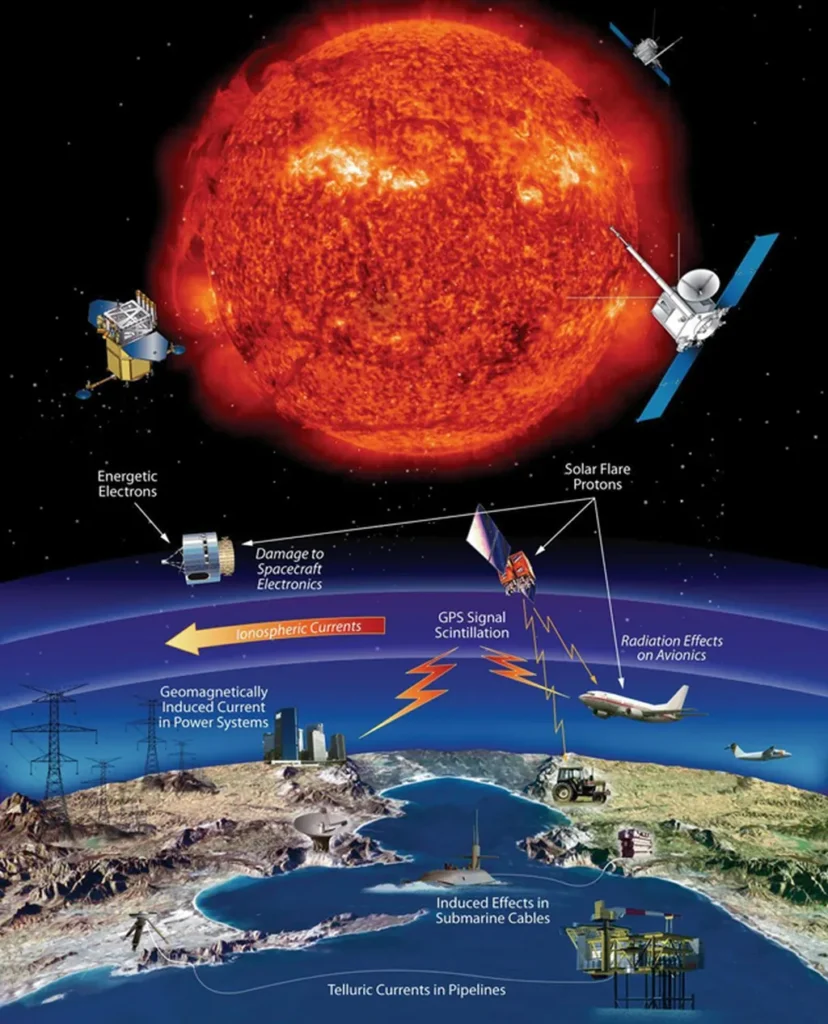
The practical applications of this research for the energy sector are primarily related to space weather forecasting. Solar flares and coronal mass ejections can have significant impacts on space-based and ground-based energy infrastructure, including power grids, satellites, and pipelines. Improved space weather forecasting can help energy companies mitigate these risks and ensure the reliable operation of their systems. Additionally, the technology developed for CUSP could potentially be adapted for use in other areas of energy research, such as nuclear power plant monitoring and radiation detection.
Source: De Angelis, N., Kumar, A., Fabiani, S. et al. Spectral performance of single-channel plastic and GAGG scintillator bars of the CUbesat Solar Polarimeter (CUSP). Exp Astron (2023). https://doi.org/10.1007/s10686-023-09863-4
This article is based on research available at arXiv.