
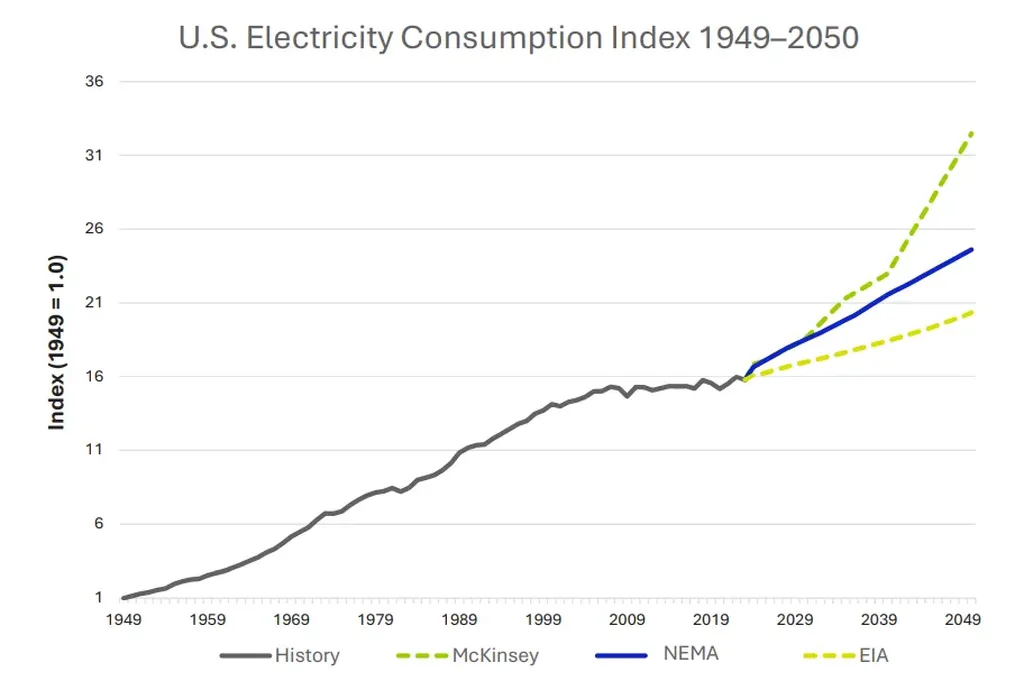
The U.S. power sector stands at a crossroads, with electricity demand poised to surge by up to 50% between 2024 and 2040. This growth, fueled by the insatiable appetite of AI data centers, a resurgent manufacturing sector, and the electrification of transportation, is set to reshape the energy landscape and present both challenges and opportunities for investors and policymakers alike.
At the heart of this transformation is the data center industry, which is evolving rapidly to support the AI revolution. The U.S. Department of Energy estimates that data centers could consume up to 12% of the nation’s electricity by 2028, a tripling of their current share. This surge in demand is not merely a function of more data centers being built, but also of the increasing power intensity of AI workloads. A single high-density rack in an AI data center can consume as much electricity as 80-100 homes, a stark contrast to the three-house equivalent of a traditional data center rack. This dynamic underscores the critical role that the power grid will play in the advancement of AI, with the potential to either enable or constrain the development of AI infrastructure.
The manufacturing sector, too, is set to place significant demands on the power grid. The construction of semiconductor fabrication plants, such as those planned by TSMC in Arizona, requires vast amounts of electricity. A single fab can consume as much power as 100,000 homes, and with dozens more plants in the pipeline, the industrial sector’s share of total U.S. electricity consumption is expected to remain steady at around 25%. Meanwhile, the electrification of vehicles is projected to become an increasingly significant driver of electricity demand, with EVs forecast to reach 10% of total energy demand in the United States by 2040.
To meet this growing demand, a diversified approach to power generation will be essential. Nuclear power, with its reliable and zero-carbon output, is increasingly being explored by tech companies to meet their data center power needs. Hyperscalers like Google, Meta, and Amazon have signed power purchase agreements for both traditional and next-gen nuclear power projects. Renewable energy systems, particularly solar, also remain viable solutions due to their scalability, cost competitiveness, and shorter development timeframes. Behind-the-meter solutions, such as onsite energy storage systems and hydrogen fuel cells, can further help address potential challenges within the U.S. power grid.
In response to these trends, U.S. electric utilities are planning to double their grid investments, with a total of $1.4 trillion expected to be spent between 2025 and 2030. This investment will be crucial not only to meet rising demand but also to replace or modernize aging infrastructure and address growing risks from extreme weather and climate change.
The implications for markets are profound. The dramatic transformation of the U.S. power industry presents significant opportunities for companies throughout the electrification value chain, from grid infrastructure developers and smart grid technology providers to traditional and alternative electricity generators. However, it also poses challenges, as the speed and scale of the required buildout will test the capacity of the industry to respond. The dependent relationship between electricity and AI data centers implies that the power grid is central to the advancement of AI, and the U.S. must act swiftly to ensure that its power infrastructure does not become a constraint on economic competitiveness and leadership in the AI ‘arms race’.
Moreover, the growing demand for electricity from data centers, manufacturing, and transportation underscores the need for a diversified approach to power generation. The increasing exploration of nuclear power by tech companies, the continued viability of renewable energy systems, and the growing momentum of behind-the-meter solutions all point to a more complex and interconnected energy landscape. This complexity will require careful planning, strategic investment, and innovative solutions to ensure that the U.S. power grid can meet the demands of the future.
In the end, the dramatic transformation of the U.S. power industry is not just a story of infrastructure and investment, but also of the critical role that energy will play in shaping the future of the U.S. economy. As the nation grapples with the challenges and opportunities presented by the AI revolution, the electrification of transportation, and the resurgence of manufacturing, the power grid will be at the heart of the action. The choices made today will determine whether the U.S. power grid becomes an enabler or a constraint on the nation’s economic competitiveness and leadership in the years to come.