
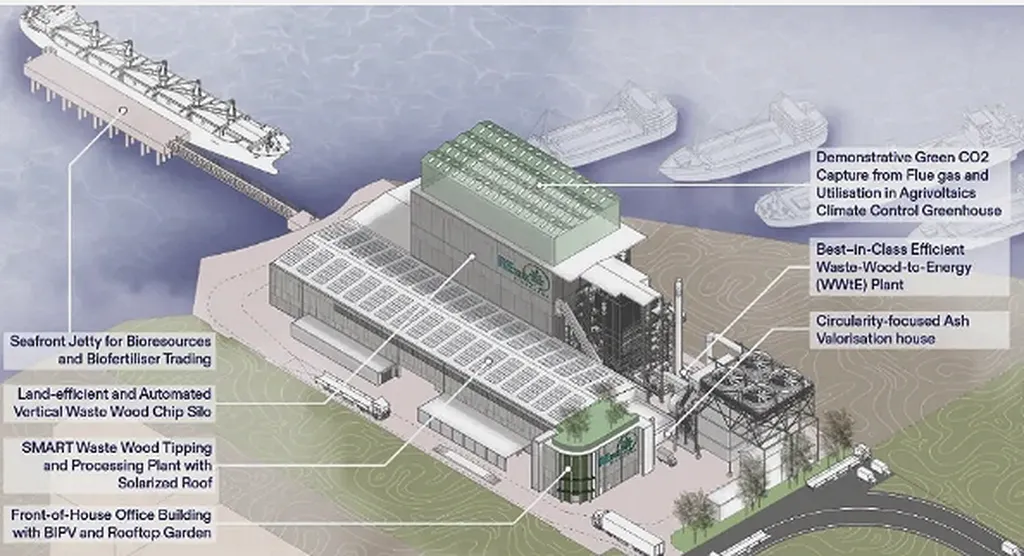
Singapore has just set a new benchmark for the integration of carbon capture and storage (CCS) with waste-to-energy (WtE) plants, announcing the implementation of a pilot project that promises to redefine industrial efficiency and circular economy practices in Asia. Scheduled for full operation by 2026, this initiative is designed to capture residual CO₂ emissions from WtE facilities, converting what was once a liability into a scalable, sustainable asset for the region. The project not only addresses the pressing challenge of emissions from waste incineration but also provides a blueprint for other Asian nations grappling with similar energy and environmental dilemmas.
At the heart of this innovation is the seamless integration of CCS technology with existing WtE infrastructure. Traditional WtE plants, while effective at reducing landfill waste and generating electricity, have long been criticized for their CO₂ emissions. Singapore’s pilot project tackles this by deploying advanced solvent-based capture systems that selectively absorb CO₂ from flue gases, which is then compressed, transported, and either utilized in industrial processes or sequestered underground. This approach significantly reduces the carbon footprint of waste management and energy recovery, while also creating a new revenue stream from captured carbon—a critical step toward a true circular economy.
What sets this project apart is its scalability and adaptability. Unlike previous CCS endeavors that were often bespoke and capital-intensive, Singapore’s model is designed for replication across Asia’s diverse waste and energy landscapes. “This initiative is not just about reducing emissions; it’s about transforming waste into a resource and setting a new standard for sustainable urban development,” said a spokesperson for Singapore’s National Environment Agency. The project’s success hinges on its ability to demonstrate cost-effective, large-scale carbon capture—a challenge that has stymied many earlier attempts.
The implications for Asia’s energy transition are profound. With the region’s rapid urbanization and industrial growth, waste generation and energy demand are soaring. By proving that CCS can be viably integrated with WtE, Singapore is paving the way for a new generation of clean energy infrastructure. This could accelerate the adoption of similar systems in countries like China, India, and Indonesia, where waste management and emissions reduction are top priorities. Moreover, the project aligns with broader trends in green hydrogen, battery storage, and smart grids, all of which are gaining momentum as Asia seeks to decarbonize its economy.
For policymakers and industry leaders, Singapore’s breakthrough underscores the urgency of investing in scalable, cross-sector solutions. The project’s success could catalyze new partnerships, regulatory frameworks, and financial incentives to support circular economy technologies. As the world watches, Singapore’s bold experiment may well become the gold standard for turning waste into wealth—and emissions into opportunity.