
Researchers from the University of Minnesota, Oak Ridge National Laboratory, and other institutions have published a study in the journal Physical Review Letters, shedding light on the behavior of a specific type of nickelate material that could have implications for the energy industry, particularly in the development of advanced superconductors and energy storage technologies.
The team, led by Professor Martin Greven from the University of Minnesota, investigated the structural and electronic properties of the nickelate compound La2-xSrxNiO4. This material is structurally similar to high-temperature cuprate superconductors, which are of great interest for their potential applications in energy transmission and storage. The researchers used advanced neutron and x-ray scattering techniques to probe the fluctuations in the material’s structure and electronic properties.
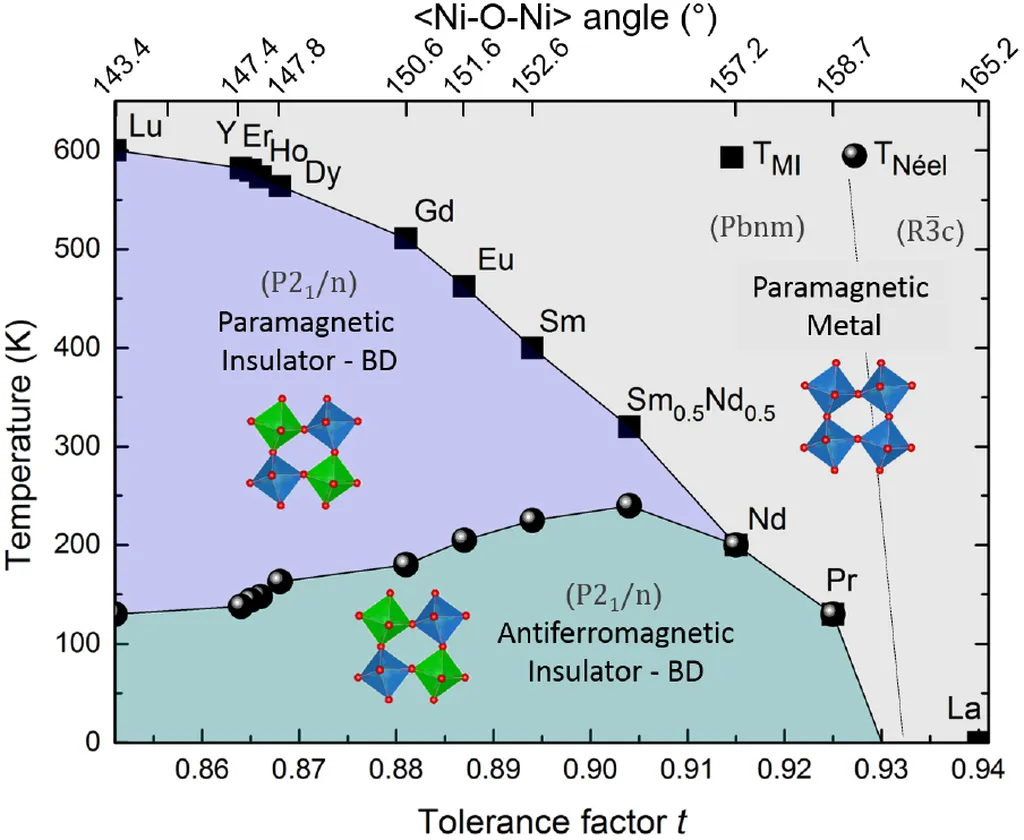
The study revealed that La2-xSrxNiO4 exhibits unusual fluctuations in its structure and electronic properties, which the researchers attribute to “rare-region physics.” This phenomenon occurs due to inherent inhomogeneities in the material, unrelated to common defects or impurities. The researchers observed nanoscale fluctuations in the material’s orthorhombic structure, as well as short-range magnetic and charge fluctuations above the respective ordering temperatures. These findings suggest that rare-region effects are a common feature in perovskite-related structures, leading to universal fluctuations in both structural and electronic degrees of freedom over extended temperature ranges.
The practical implications of this research for the energy industry are significant. Understanding the behavior of these fluctuations could help in the development of new superconducting materials that can operate at higher temperatures, reducing the need for expensive cooling systems. Additionally, insights into the electronic properties of these materials could lead to improvements in energy storage technologies, such as batteries and capacitors, by enhancing their capacity and efficiency.
In summary, the research team’s findings provide valuable insights into the behavior of nickelate materials, which are crucial for advancing energy technologies. By elucidating the underlying physics of these materials, the study paves the way for the development of more efficient and cost-effective energy solutions.
Source: Physical Review Letters
This article is based on research available at arXiv.