
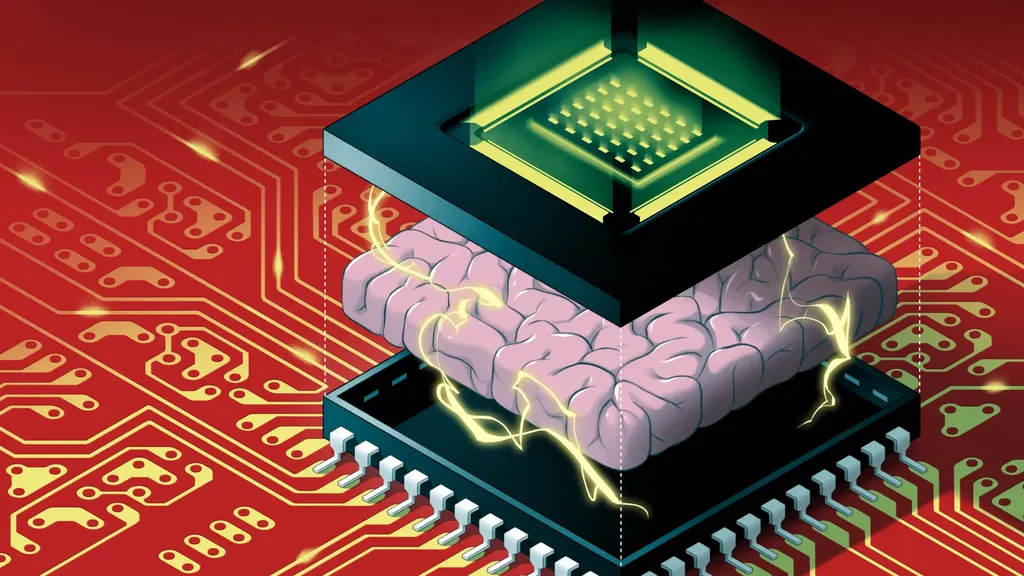
Researchers from Boston University, led by Professor Shriram Ramanathan and Professor Duygu Kuzum, have developed a novel neuromorphic computing platform using protonic nickelates. This technology aims to replicate the complex, dynamic interactions found in biological neural circuits, offering potential advancements for energy-efficient, intelligent hardware in the energy sector.
The team introduced an integrated neuromorphic computing platform that combines nonlinear spatiotemporal processing and programmable memory within a single perovskite nickelate material system. By creating symmetric and asymmetric hydrogenated NdNiO3 junction devices on the same wafer, they achieved ultrafast, proton-mediated transient dynamics alongside stable multilevel resistance states. This dual capability allows for both short-term and long-term memory functions within the same material.
Networks of symmetric NdNiO3 junctions exhibit emergent spatial interactions mediated by proton redistribution. Each node in these networks provides short-term temporal memory, enabling nanosecond-scale operation with an energy cost of just 0.2 nJ per input. When interfaced with asymmetric output units serving as reconfigurable long-term weights, these networks can perform feature transformation and linear classification. This integrated approach allows for real-time pattern recognition and has demonstrated high accuracy in tasks such as spoken-digit classification and early seizure detection, outperforming temporal-only or uncoupled architectures.
The practical applications for the energy sector are significant. This technology could lead to the development of compact, energy-efficient, and intelligent hardware that integrates both processing and memory functions. Such advancements could enhance the capabilities of smart grids, energy management systems, and other energy-related applications that require real-time data processing and decision-making. The researchers published their findings in the journal Nature Materials, highlighting the potential of protonic nickelates for scalable intelligent hardware in various industries, including energy.
This article is based on research available at arXiv.