
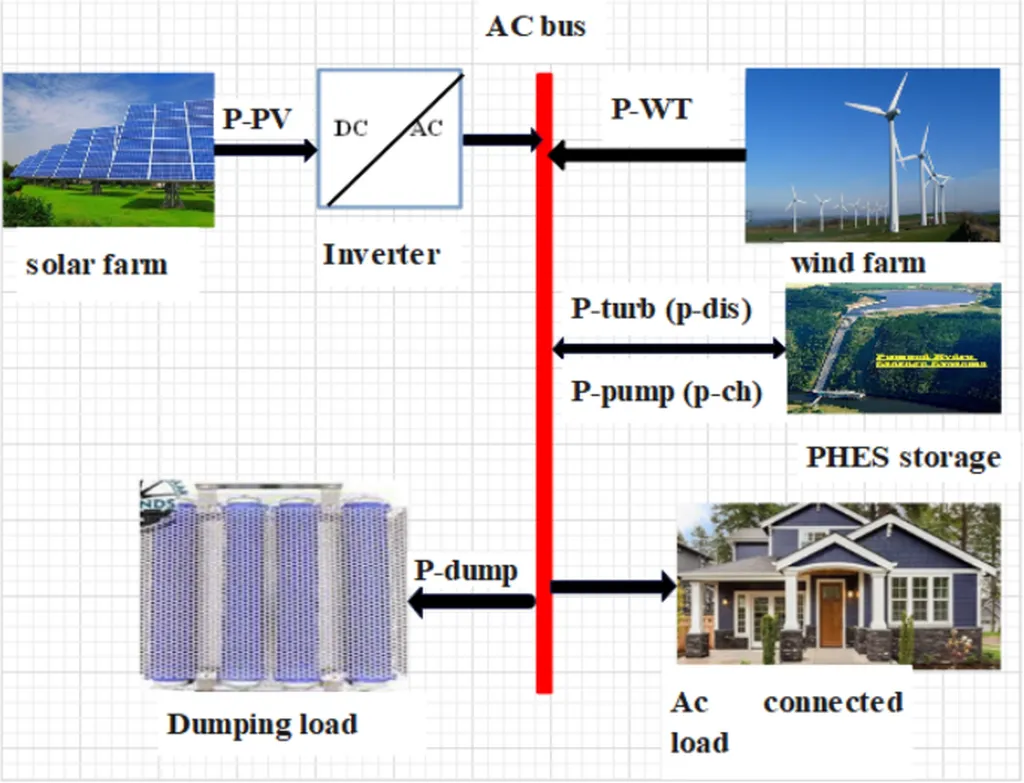
In a recent study, researchers from the University of Gondar in Ethiopia and the University of Electronic Science and Technology of China have explored the potential of hybrid energy systems to provide reliable and sustainable power to Boru Meda Hospital in Ethiopia. The team, led by Tegenu Argaw Woldegiyorgis and including Hong Xian Li, Fekadu Chekol Admassu, Merkebu Gezahegne, Abdurohman Kebede, Tadese Abera, Haris Ishaq, and Eninges Asmare, evaluated various hybrid energy configurations to meet the hospital’s daily energy consumption of approximately 11,214.66 kWh.
The researchers used HOMER Pro 3.11.2 software to design and evaluate different hybrid energy systems (HES) that included photovoltaic (PV) panels, biomass generators (BG), wind power (WP), diesel generators (DG), batteries, and converters. The goal was to find the most cost-effective and sustainable solution that could meet the hospital’s energy needs while reducing emissions. The study was published in the journal Energy Reports.
The evaluation showed that a combination of PV, BG, batteries, and converters could effectively provide the hospital’s daily energy consumption while conforming to reliability standards and reducing emissions. This configuration emerged as the most cost-effective and sustainable alternative, with the lowest levelized cost of energy (LCOE) of $0.339 per kWh, a net present cost (NPC) of $25.7 million, and a 100% renewable energy fraction. The payback period for this system was estimated to be 7.26 years. By implementing this hybrid system, the hospital could avoid the operational costs associated with the consumption of 500 liters of diesel per month.
The researchers also found that hybrid systems integrated with diesel generators exhibited advanced techno-economic capabilities, with a significant return on investment (ROI) of 20% and an internal rate of return (IRR) of 18%. These systems also showed a fast capital recovery period ranging from 7.21 to 8.71 years.
Overall, the study suggests that hybrid energy systems offer an optimal balance of cost, reliability, and sustainability, making them a promising and scalable solution for electrification in energy-scarce institutions and areas in Ethiopia. This research contributes to the country’s sustainable energy development goals and highlights the potential of hybrid energy systems in the energy sector.
This article is based on research available at arXiv.