
Researchers from the University of Science and Technology of China have uncovered a novel metal-insulator transition in a bulk compound, offering potential insights for the energy sector. The team, led by Professor Xianhui Chen, utilized advanced techniques to investigate the unique properties of intercalated vanadium diselenide (VSe2).
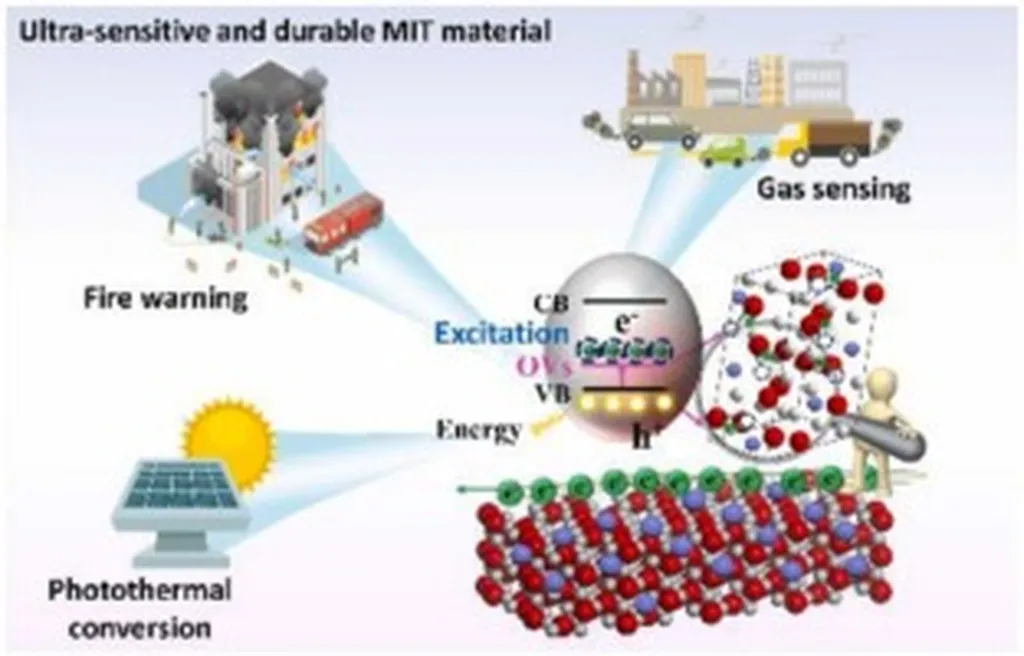
In their study, the researchers employed scanning tunneling microscopy and first-principles calculations to explore the behavior of (TBA)0.3VSe2, a compound formed by intercalating tetrabutylammonium (TBA) into the layers of VSe2. They observed that the initial charge density wave (CDW) order in the material transformed upon intercalation, leading to a new ordering pattern and the opening of an insulating gap of up to approximately 115 meV. This transition from a metallic to an insulating state is known as a metal-insulator transition (MIT).
The researchers found that this energy gap is highly tunable through electron doping introduced by the intercalant. This tunability is significant as it allows for the precise control of the material’s electronic properties. Additionally, the study revealed that the new CDW order is robust against the Lifshitz transition, highlighting the crucial role of electron-phonon interactions in stabilizing the CDW state.
The findings, published in the journal Nature Communications, provide a rare example of a CDW-driven MIT in quasi-2D materials. The research establishes cation intercalation as an effective method for tuning both the dimensionality and the carrier concentration of materials without inducing strain or disorder. This could have practical applications in the energy sector, particularly in the development of advanced energy storage devices and electronic materials with tailored properties. By understanding and controlling these transitions, researchers can potentially design materials with enhanced performance for energy storage and conversion technologies.
The work of Professor Chen and his team offers valuable insights into the behavior of 2D materials and their potential applications in the energy industry. As the world seeks to transition to cleaner and more sustainable energy sources, such research is crucial for developing the next generation of energy technologies.
This article is based on research available at arXiv.