
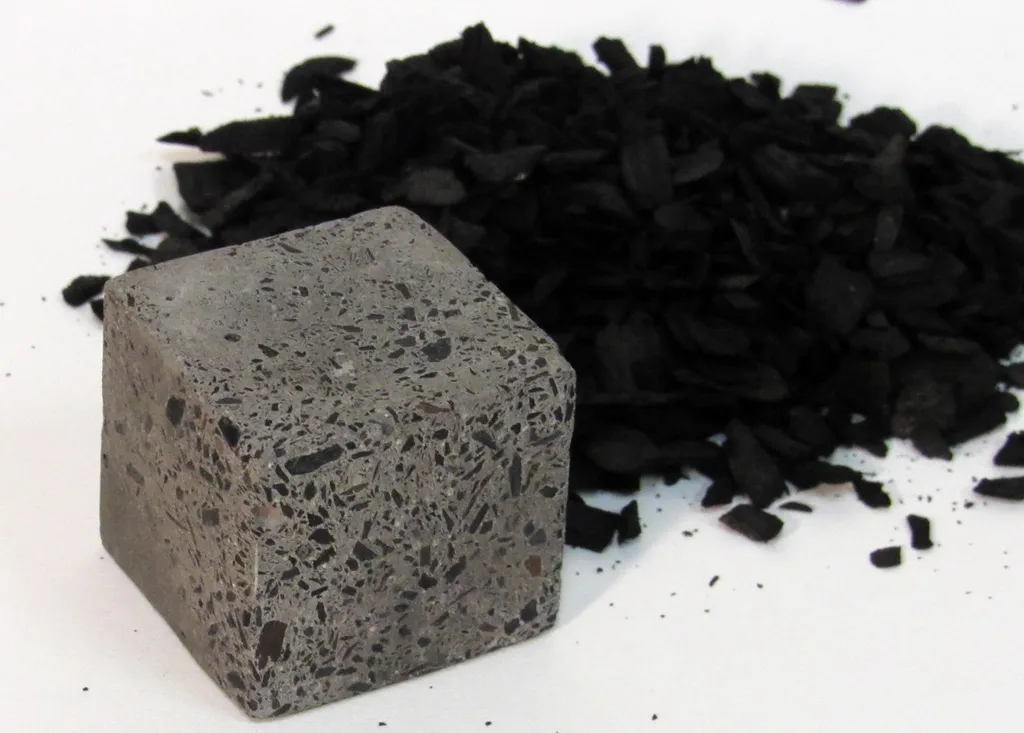
A revolutionary class of advanced materials is set to redefine the construction industry, transforming buildings, bridges, and roads into long-term carbon sinks. This innovation, emerging from the intersection of sustainable chemistry and circular manufacturing, promises to support global net-zero goals while maintaining the strength and durability of conventional concrete. The breakthrough, highlighted in a recent industry analysis, marks a pivotal shift in how the built environment can actively contribute to carbon sequestration rather than merely reducing emissions.
At the heart of this advancement is the development of carbon-sequestering concrete, which leverages novel chemical processes to absorb and permanently store CO₂ during production and throughout the material’s lifecycle. Unlike traditional concrete—responsible for nearly 8% of global CO₂ emissions—these new formulations use industrial byproducts and innovative binders that not only cut emissions but also enhance material performance. The result is a construction material that not only matches the structural integrity of conventional concrete but also turns infrastructure into a tool for climate action.
“What makes 2025 different is not just the urgency of climate action, but the rich ecosystem of solutions each with a unique story, challenge, and opportunity emerging across advanced materials, chemicals, and fuels,” notes a recent industry report. The shift is driven by a convergence of AI-driven recycling, molecular breakthroughs in chemistry, and a sweeping adoption of green and circular manufacturing principles. This approach addresses two critical challenges: the need for rapid decarbonization in heavy industries and the demand for scalable, cost-effective solutions that do not compromise on performance.
The implications for energy sustainability and policy are profound. As governments and industries accelerate innovation in advanced materials, the construction sector—long a laggard in emissions reduction—is poised to become a leader in the circular economy. This transition is expected to unlock new economic opportunities, with circular supply chain models projected to tap into trillions in value by 2030. For policymakers, the breakthrough underscores the importance of incentivizing research, development, and adoption of next-generation materials, while for engineers and industry professionals, it signals a paradigm shift in how buildings and infrastructure are designed, built, and maintained.
In a world where climate targets are increasingly non-negotiable, the rise of carbon-neutral concrete is more than a technical achievement—it’s a blueprint for a future where every structure is part of the solution.