
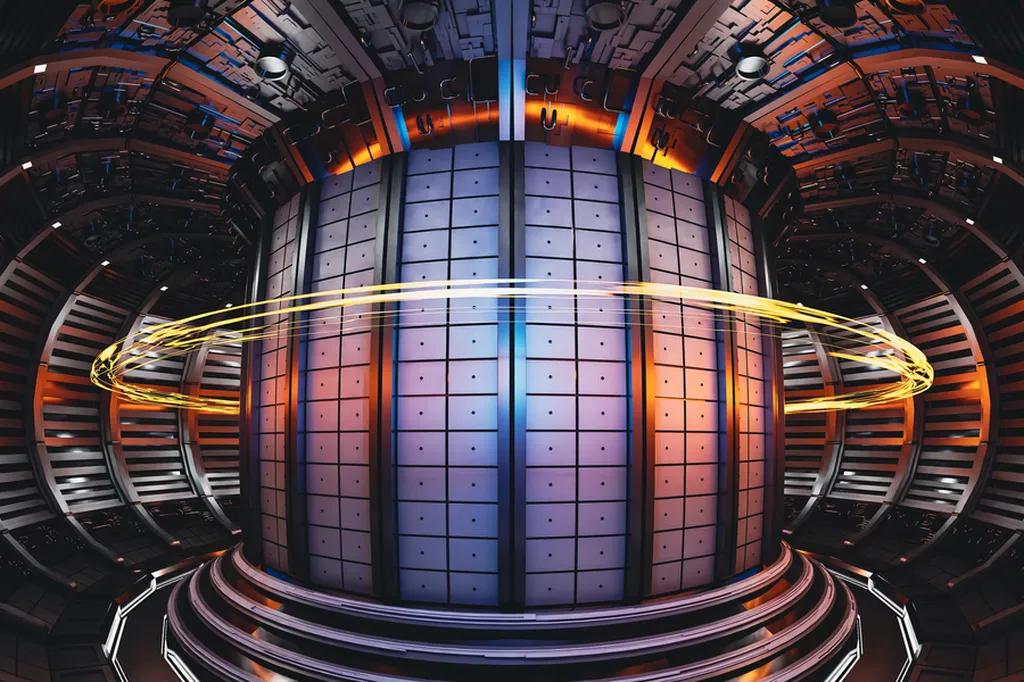
Researchers from the Massachusetts Institute of Technology’s Plasma Science and Fusion Center, including Marco Muraca, Pablo Rodriguez-Fernandez, Joe Hall, Nathaniel T. Howard, Daniel Fajardo, Giovanni Tardini, Benedikt Zimmermann, and Thomas Body, have conducted a study to understand impurity transport in the upcoming SPARC tokamak, a compact fusion device designed to achieve net energy gain. Their findings, published in the journal Nuclear Fusion, provide valuable insights into the behavior of impurities in fusion plasmas and their impact on fusion performance.
The researchers focused on impurity transport in three H-mode plasmas, which are characterized by a high level of confinement and are a key regime for fusion power production. They used a combination of simulation tools, including ASTRA+STRAHL, FACIT, and TGLF-SAT2, to model neoclassical and turbulent transport processes. A neural network trained on EPED simulations was employed to predict the pedestal height and width, which are crucial for determining the overall plasma performance.
The study found that the predictions of impurity transport were largely insensitive to changes in the concentration of tungsten (W) at the top of the pedestal. However, varying the concentration of argon (Ar) in the pedestal had a small effect on impurity peaking and fusion gain. The inclusion of rotation in the simulations had minimal impact on confinement and impurity transport predictions.
An exploratory study was also conducted to investigate the effects of different deuterium-tritium (DT) fuel compositions. The simulations showed a maximum fusion power at a 55-45% DT fuel composition, with an asymmetric distribution with respect to the deuterium concentration. Overall, the results indicated that turbulent impurity transport dominates over the neoclassical component, suggesting that next-generation devices like SPARC, operating at low collisionality, will experience low tungsten accumulation.
These findings have important implications for the design and operation of future fusion power plants. By understanding the behavior of impurities in fusion plasmas, researchers can develop strategies to mitigate their impact on fusion performance and improve the overall efficiency of fusion power production. The study also highlights the importance of using advanced simulation tools to model complex plasma phenomena and guide the development of next-generation fusion devices.
The research was published in the journal Nuclear Fusion, a leading publication in the field of plasma physics and fusion research. The study was supported by the U.S. Department of Energy and the National Science Foundation.
This article is based on research available at arXiv.