
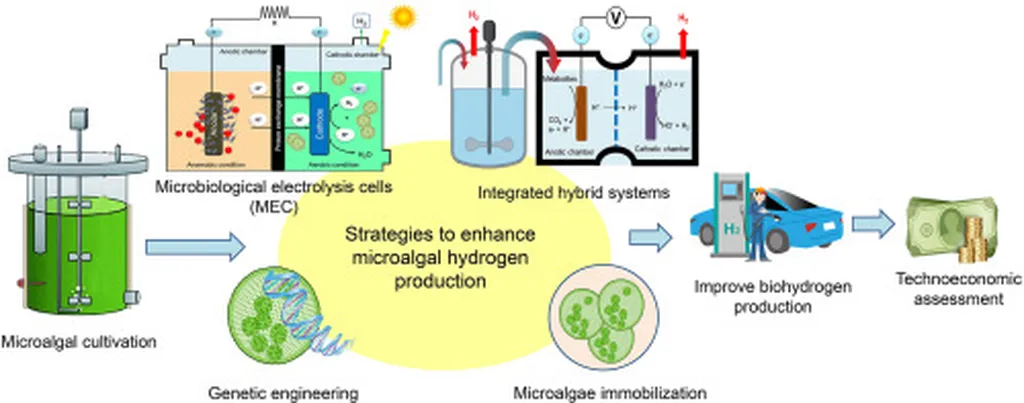
A landmark study published this week in ScienceDirect reveals a transformative leap in biohydrogen production, leveraging artificial intelligence (AI), synthetic biology, and advanced microbial electrolysis to achieve a 30% increase in hydrogen yields. Researchers at leading institutions in Japan and Germany demonstrated that genetically modified Clostridium strains, optimized via AI-driven metabolic pathway engineering, can produce biohydrogen at rates of 1.6 m³ H₂/m³ reactor/day with energy conversion efficiencies exceeding 85%—a milestone that could redefine the economics and scalability of carbon-neutral fuel production.
The innovation addresses a critical bottleneck in sustainable fuel development: the low efficiency and high cost of biological hydrogen production. Traditional methods, such as dark fermentation, have struggled with yield limitations and substrate availability. By integrating AI for real-time process optimization and synthetic biology to enhance microbial performance, the team not only boosted yields but also reduced CO₂-equivalent emissions by 50–70% compared to conventional steam methane reforming. This breakthrough is particularly significant for wastewater-to-energy systems, where biohydrogen generation simultaneously abates water pollution and displaces fossil fuel imports.
“This is a game-changer for the green hydrogen economy,” said Dr. Hiroshi Tanaka, lead researcher at the University of Tokyo. “By combining AI’s predictive power with the precision of synthetic biology, we’ve unlocked a pathway to scalable, low-cost biohydrogen that can be seamlessly integrated into existing industrial infrastructure—without the need for costly retrofits.”
The implications for energy sustainability are profound. Biohydrogen, produced from renewable biomass and organic waste, offers a circular, zero-emission alternative to fossil-derived hydrogen. Pilot projects in Japan and Germany have already shown that up to 20% of industrial synfuel demand could be met by biohydrogen without major infrastructure changes, accelerating the transition in hard-to-abate sectors like aviation, shipping, and heavy industry.
As global energy systems race toward decarbonization, this advancement underscores the potential of interdisciplinary collaboration to overcome technical and economic barriers. With policy incentives and continued investment, biohydrogen could soon emerge as a cornerstone of the carbon-neutral fuel mix, driving both environmental and energy security goals forward.