
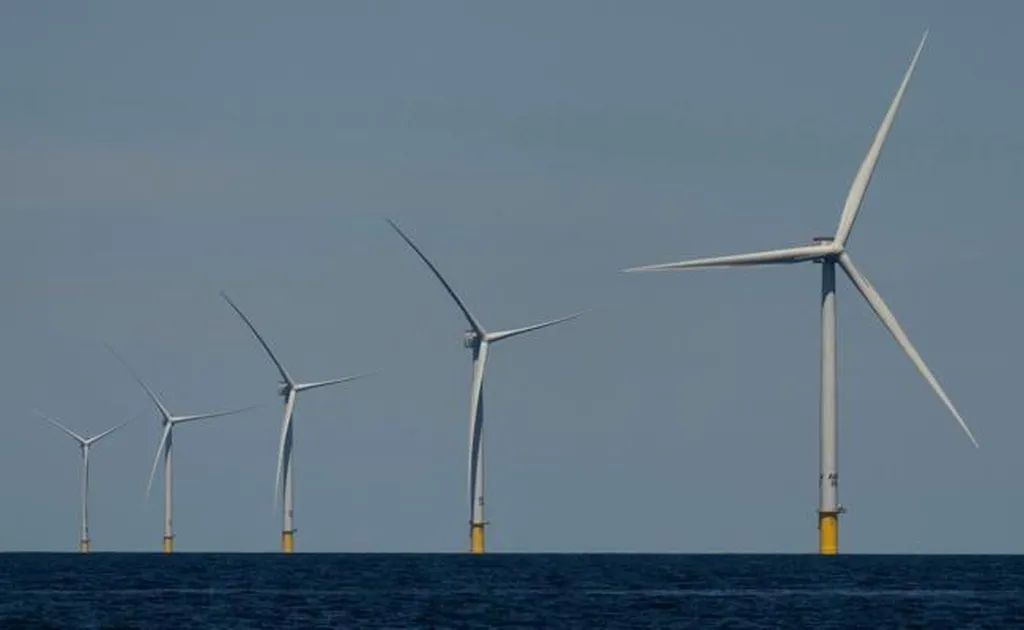
The U.S. Department of Interior’s (DOI) sudden pause on large-scale offshore wind projects has sent shockwaves through the energy sector, raising questions about the future of offshore wind development and the balance between national security and clean energy goals. The decision, sparked by national security concerns identified by the Department of War (DOW), has put several high-profile projects on hold, including Ørsted’s Revolution Wind and Sunrise Wind, Avangrid and Copenhagen Infrastructure Partners’ Vineyard Wind 1, Dominion Energy’s Coastal Virginia Offshore Wind (CVOW), and Equinor’s Empire Wind 1.
The suspension aims to allow the DOI, DOW, and other agencies to evaluate potential security risks and explore mitigation measures with leaseholders and state partners. U.S. Secretary of the Interior Doug Burgum emphasized the government’s primary duty to protect American people, citing concerns about radar interference from large-scale offshore wind projects near east coast population centers.
Unclassified U.S. government reports suggest that offshore wind projects can create radar “clutter” from spinning turbine blades and reflective towers, potentially obscuring legitimate moving targets and generating false ones. This interference could impact national security operations, according to the reports.
Offshore wind developers are responding to the suspension with a mix of compliance and pushback. Ørsted, for instance, has halted activities related to its Revolution Wind and Sunrise Wind projects while exploring avenues for a swift resolution, including discussions with the Bureau of Ocean Energy Management (BOEM) and other permitting agencies. The company has not ruled out legal proceedings. Revolution Wind holds 20-year power purchase agreements (PPAs) to supply 400MW to Rhode Island and 304MW to Connecticut, while Sunrise Wind has a 25-year PPA to supply 924MW to New York. Together, these projects power roughly one million homes.
Dominion Energy has expressed strong concerns about the CVOW project’s suspension, arguing that it is critical for national security and meeting Virginia’s increasing energy needs. The company warns that a halt to the project could undermine grid reliability for critical military, AI, and civilian assets, lead to energy cost increases, and jeopardize thousands of jobs.
The DOI’s decision has sparked criticism from state officials, lawmakers, and industry groups, who argue that the suspension could hinder the U.S.’s progress toward clean energy goals and undermine state-level commitments to renewable energy. The situation raises important questions about how the U.S. can balance national security concerns with the urgent need to transition to cleaner energy sources.
As the DOI and DOW work to evaluate and mitigate potential security risks, the offshore wind industry and its stakeholders will be watching closely, hoping for a resolution that allows the sector to continue its growth while addressing legitimate security concerns. The outcome of this process could significantly shape the future of offshore wind development in the U.S. and set a precedent for how the country navigates the complex intersection of energy and national security.