
Researchers from the School of Electrical Engineering at the Beijing Institute of Technology, including Zenan Yang, Yuanliang Li, Jingwei Zhang, Yongjie Liu, and Kun Ding, have developed a new method for diagnosing and quantifying faults in photovoltaic (PV) arrays. Their work, published in the IEEE Transactions on Industrial Electronics, aims to improve the reliability and maintenance of solar power systems.
The team’s approach focuses on creating a differentiable fast fault simulation model (DFFSM) that accurately represents the current-voltage (I-V) characteristics of PV strings under various fault conditions. Unlike previous methods, the DFFSM provides analytical gradients with respect to fault parameters, which allows for more efficient and interpretable fault quantification.
Leveraging the properties of the DFFSM, the researchers developed a gradient-based fault parameters identification (GFPI) method. This method uses the Adahessian optimizer to quantify common faults such as partial shading, short-circuit, and series-resistance degradation. The GFPI method was tested on both simulated and measured I-V curves, demonstrating high quantification accuracy with an I-V reconstruction error below 3%.
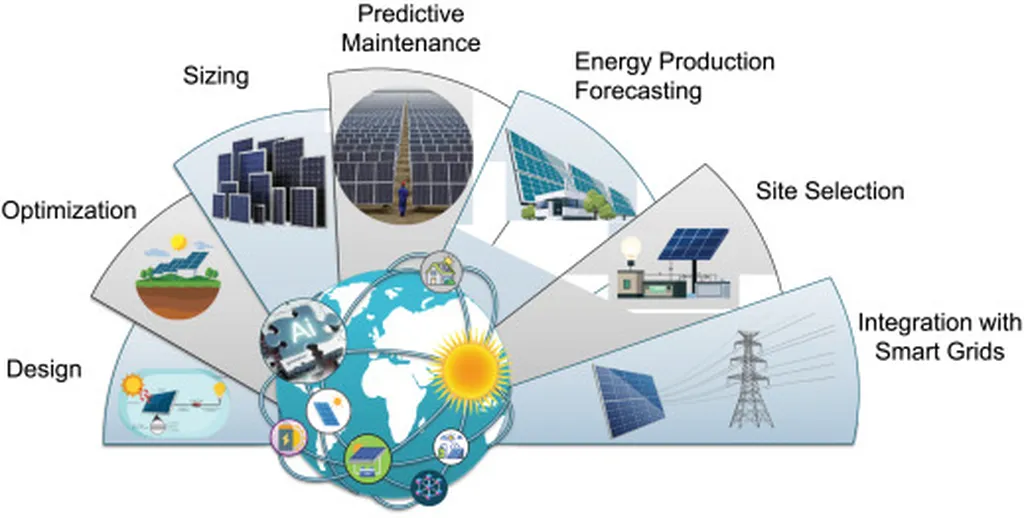
The practical applications of this research for the energy sector are significant. Accurate fault diagnosis and quantification can lead to more effective maintenance strategies, reducing downtime and improving the overall efficiency of PV systems. By integrating the DFFSM and GFPI methods into existing monitoring systems, solar power operators can enhance their predictive maintenance capabilities, ensuring more reliable and cost-effective solar energy production.
This research highlights the potential of differentiable physical simulators in advancing the fault diagnosis capabilities for PV systems. As solar energy continues to play a crucial role in the global transition to renewable energy, innovations like these are essential for optimizing the performance and longevity of photovoltaic arrays.
This article is based on research available at arXiv.