
Researchers from the University of Tennessee, Oak Ridge National Laboratory, Michigan State University, the University of Washington, and the University of Oslo have made significant strides in the field of nuclear physics, with potential implications for the energy sector, particularly in nuclear energy research and development. The team, led by Dr. Francesco Marino and Dr. Paolo Demol, has been exploring advanced computational methods to better understand the behavior of atomic nuclei.
In their recent study, the researchers focused on coupled-cluster theory, a powerful tool for predicting nuclear observables with high accuracy. This theory is particularly efficient at shell closures, which are points in the nuclear landscape where certain quantum states are fully occupied. However, the team has also developed extensions to tackle open-shell nuclei, where these states are not fully occupied. These extensions include the equation-of-motion method and the use of symmetry-breaking reference states, which can be deformed or superfluid.
The study provides a comprehensive comparison of these different formulations applied to the calcium and nickel isotopes. The researchers used nuclear two- and three-body interactions from chiral effective field theory, a framework that provides a systematic way to describe nuclear forces. By comparing ground-state energies, two-neutron separation energies, and two-neutron shell gaps, the team found that different coupled-cluster computations offer consistent descriptions of bulk properties across medium-mass isotopic chains.
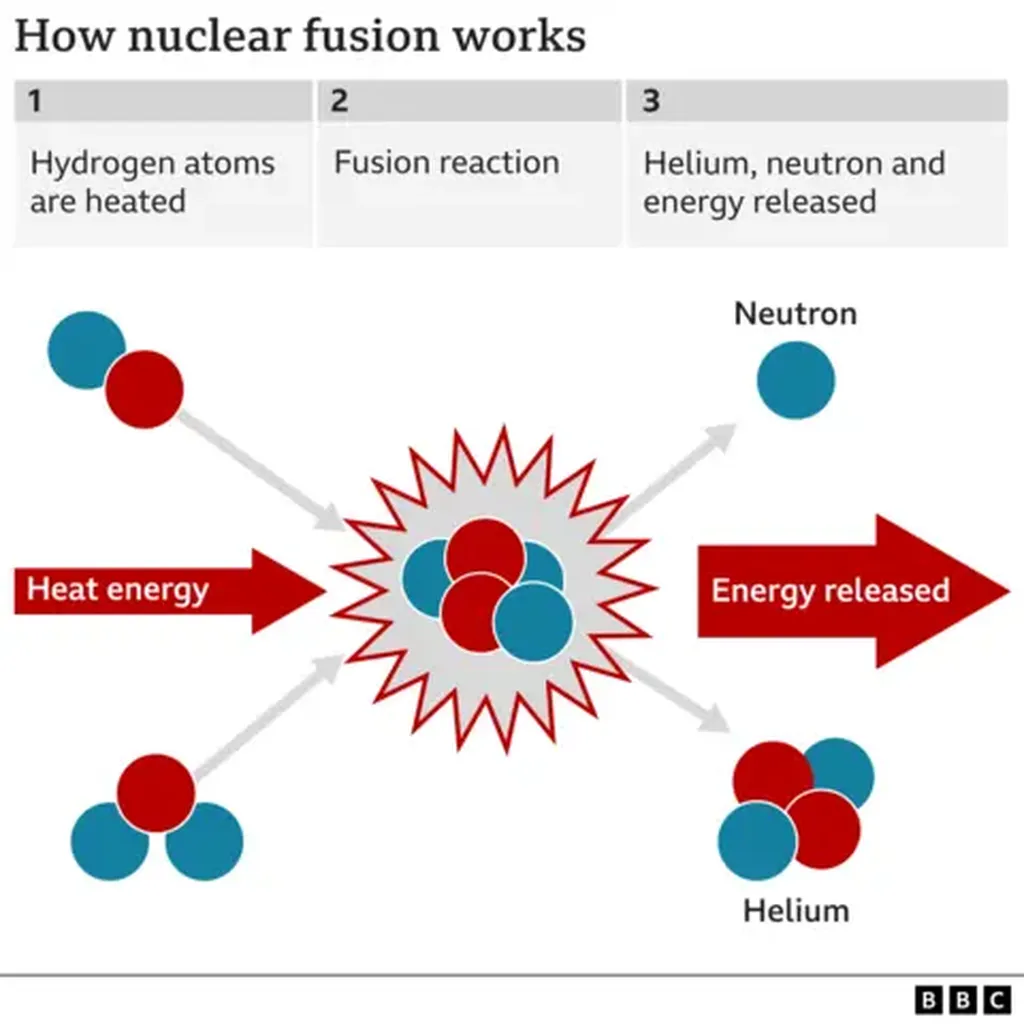
The practical applications of this research for the energy sector are significant. A deeper understanding of nuclear structure and behavior can inform the development of advanced nuclear reactors, improve nuclear waste management strategies, and enhance nuclear safety measures. Moreover, the computational methods developed in this study can be applied to other areas of energy research, such as materials science and fusion energy, where a detailed understanding of atomic and molecular behavior is crucial.
This research was published in the prestigious journal Physical Review Letters, underscoring its importance and relevance to the scientific community. As the world continues to seek sustainable and efficient energy solutions, the insights gained from this study will be invaluable in shaping the future of nuclear energy and beyond.
This article is based on research available at arXiv.