
Researchers from the University of Helsinki, Finland, and other institutions have developed a new computational approach to better understand and predict radiation damage in high-temperature superconductors. These materials are of interest to the energy sector, particularly for use in fusion reactors and other harsh environments where radiation is a concern.
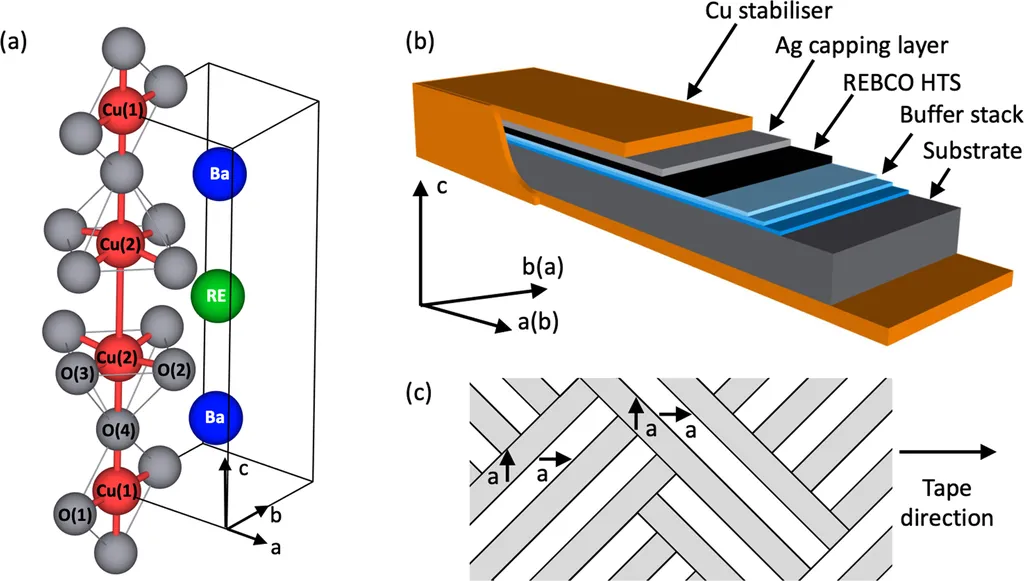
The team, led by Federico Ledda and including members from the University of Helsinki, University of Turin, and the Italian National Institute for Nuclear Physics, focused on the cuprate superconductor YBa2Cu3O7. This material’s complex crystal structure makes it difficult to model irradiation effects accurately. The researchers combined Molecular Dynamics and Binary Collision Approximation simulations to create a more comprehensive picture of primary radiation damage. This approach allows for quantitative estimates of defect production, defect clustering, and the effective damaged volume under specific irradiation conditions.
The new framework integrates Primary Knock-on Atom spectra obtained from Monte Carlo codes, enabling multiscale modeling of radiation damage. This means that the model can be used to predict how different irradiation conditions will affect the material, which is crucial for designing and deploying these materials in real-world applications.
One of the key advantages of this approach is its versatility. The researchers suggest that it can be applied to any complex functional oxide, making it relevant for various industries, including aerospace, nuclear fusion, and high-energy physics. For the energy sector, this could mean more robust and reliable materials for use in fusion reactors, which could help bring this promising energy technology closer to reality.
The research was published in the journal Physical Review Materials, providing a solid foundation for further studies and practical applications in the energy industry. By improving our understanding of radiation damage, this work could contribute to the development of more resilient materials for next-generation energy technologies.
This article is based on research available at arXiv.