
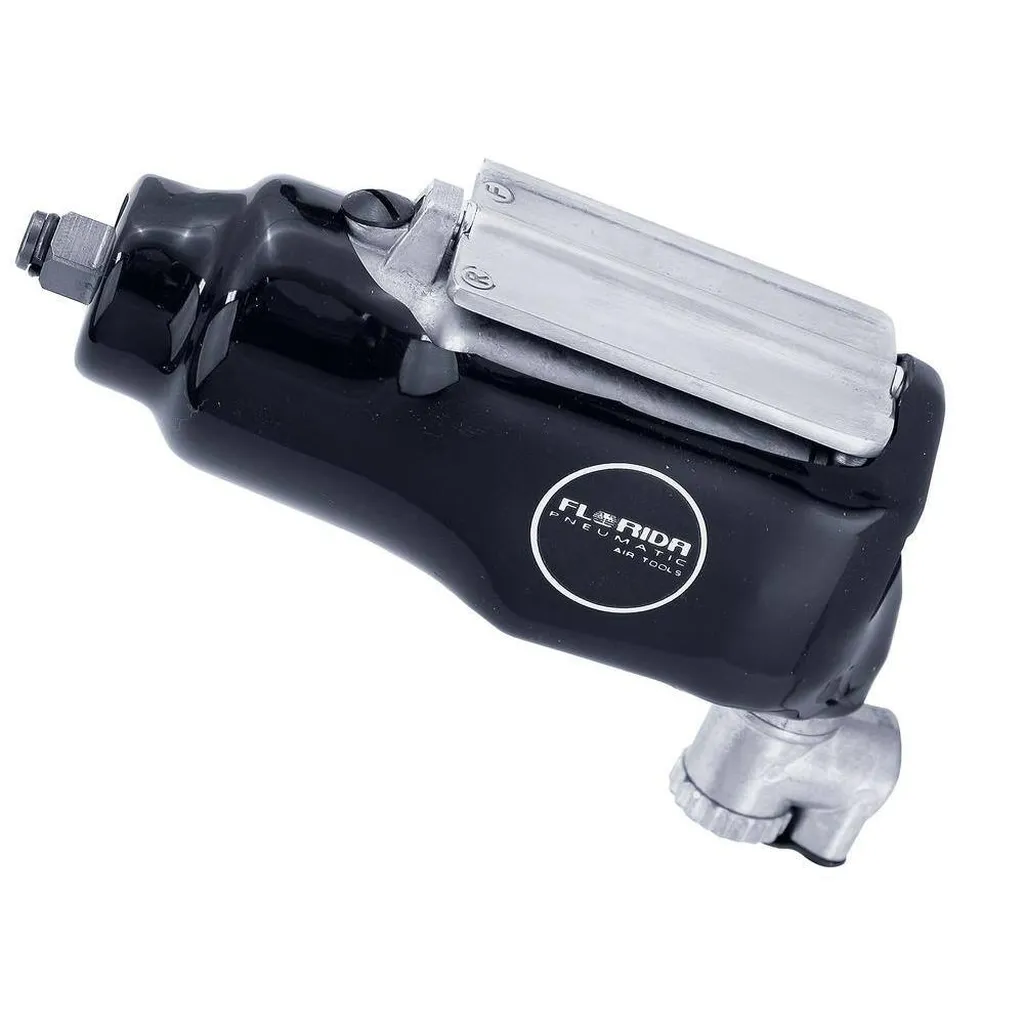
Researchers from the Swiss Federal Institute of Technology in Lausanne (EPFL) have developed a novel approach to control torque in impact wrenches, a common tool in various industries, using learning-based model predictive control. The team, led by Mark Benazet and including Francesco Ricca, Dario Bralla, Melanie N. Zeilinger, and Andrea Carron, has published their findings in a recent paper titled “Learning-based Approximate Model Predictive Control for an Impact Wrench Tool.”
Impact wrenches are widely used in manufacturing, construction, and automotive industries for tightening or loosening nuts and bolts. However, controlling the torque in these tools is challenging due to their complex dynamics and the need for high-frequency control updates to manage fast transients during impact events. Traditional control methods, such as Proportional-Integral-Derivative (PID) control, often struggle to meet these demands, especially in battery-powered tools with limited computational resources.
The researchers addressed this issue by combining data-driven model augmentation through Gaussian process regression with neural network approximation of the resulting control policy. This approach allows for real-time torque control in impact wrenches, even on resource-constrained embedded platforms. The method ensures both constraint satisfaction and microsecond-level inference times, making it suitable for high-frequency operation.
The proposed framework was evaluated through numerical simulations and hardware experiments on a custom impact wrench testbed. The results demonstrated that the approach successfully achieves real-time control while maintaining constraint satisfaction and improving tracking accuracy compared to baseline PID control. This advancement could lead to more efficient and safer use of impact wrenches in various industrial applications.
The research was published in the IEEE Transactions on Control Systems Technology, a peer-reviewed journal that focuses on the practical applications of control systems in various industries. The findings highlight the potential of learning-based model predictive control in enhancing the performance and safety of mechatronic systems, particularly in resource-constrained environments.
This article is based on research available at arXiv.