
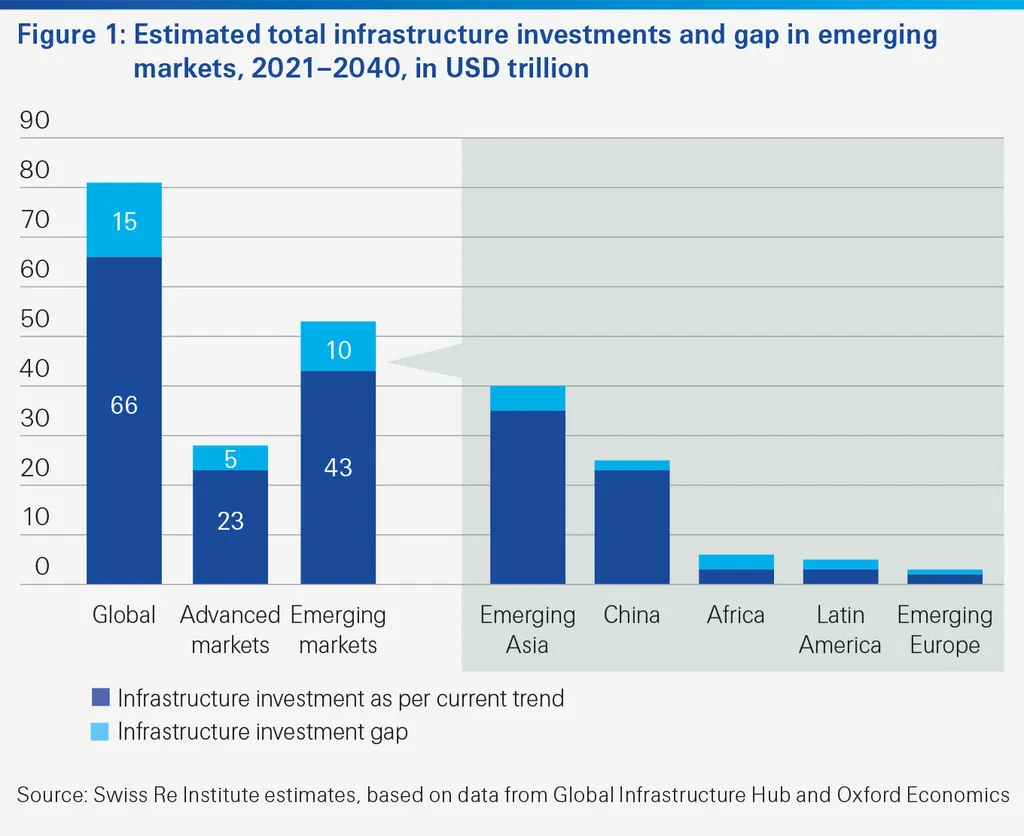
The British International Investment (BII) and the Foreign, Commonwealth & Development Office (FCDO) have jointly published a comprehensive evaluation of BII’s infrastructure investments, offering a roadmap for the future of development finance in emerging markets. The Infrastructure Evaluation: Final Synthesis report, compiled through an independent evaluation process, provides a critical assessment of BII’s portfolio and offers recommendations to enhance its development impact.
The report underscores BII’s catalytic role in addressing infrastructure gaps in emerging markets, particularly in frontier markets where private capital is scarce. It highlights several areas where BII has strengthened its development impact since the 2022 portfolio-wide review. Notably, BII has significantly increased its climate finance investments, with 61% of its infrastructure investments between 2019 and 2024 qualifying as climate finance. This shift towards climate finance is a response to the urgent need for infrastructure that supports climate mitigation and adaptation in vulnerable regions.
The evaluation also commends BII’s efforts to enable economic impact in frontier markets through platforms and partnerships. Initiatives like the Gridworks platform, which supports transmission, distribution, and distributed energy, and the partnership with DP World to develop trade infrastructure in Africa, demonstrate BII’s commitment to early-stage projects in regions with the widest infrastructure gaps.
One of the key recommendations from the evaluation is the need for context-specific investment strategies. The report emphasizes that the same power generation technologies can have different greenhouse gas and GDP impacts in different countries, depending on their specific context. This insight calls for a more nuanced approach to investment decision-making, taking into account the unique needs and circumstances of each market.
The evaluation also highlights the importance of transmission infrastructure and commercial and industrial (C&I) power in enabling renewable energy integration and improving grid resilience. BII’s investments in platforms like EnerGrid in India and Gridworks in Africa are cited as innovative examples that should be built upon. The report recommends increasing investments in these areas to support the transition to renewable energy and enhance grid reliability.
In response to the evaluation, BII has outlined its plans to prioritize economic development in frontier markets through locally relevant infrastructure investments and climate mitigation efforts in more mature emerging markets. The organization has also committed to developing high-level plans for select countries or regions to increase the availability and reliability of power supply while minimizing greenhouse gas emissions. This approach aligns with BII’s fossil fuel policy, which prioritizes renewables while allowing gas investments under specific conditions.
The evaluation’s recommendations also include a more granular assessment of relative need at the infrastructure subsector and country level in the Impact Score. This would help incentivize investments in power supply in contexts where access indicators alone do not reflect supply constraints. BII has agreed to consider further granularity in the Impact Score, balancing the need for simplicity in portfolio-level tools.
Furthermore, the evaluation recommends increasing the share of infrastructure climate finance allocated to adaptation. BII has committed to expanding its portfolio of adaptation-focused investments, particularly in countries most vulnerable to climate change. This includes investments in climate-resilient infrastructure and infrastructure for enhanced adaptation and resilience, as well as leveraging concessional capital to support businesses driving adaptation and resilience.
The implications of this evaluation for the development finance sector are significant. It underscores the need for a more nuanced, context-specific approach to investment decision-making, taking into account the unique needs and circumstances of each market. It also highlights the importance of transmission infrastructure and C&I power in enabling the transition to renewable energy and enhancing grid reliability. Moreover, it calls for a greater focus on adaptation finance, particularly in vulnerable regions.
As the development finance sector continues to evolve, the insights and recommendations from this evaluation will be crucial in shaping the future of infrastructure investments in emerging markets. By prioritizing context-specific strategies, enhancing grid resilience, and increasing adaptation finance, BII and other development finance institutions can play a pivotal role in addressing the critical infrastructure gaps and supporting sustainable development in these regions.