
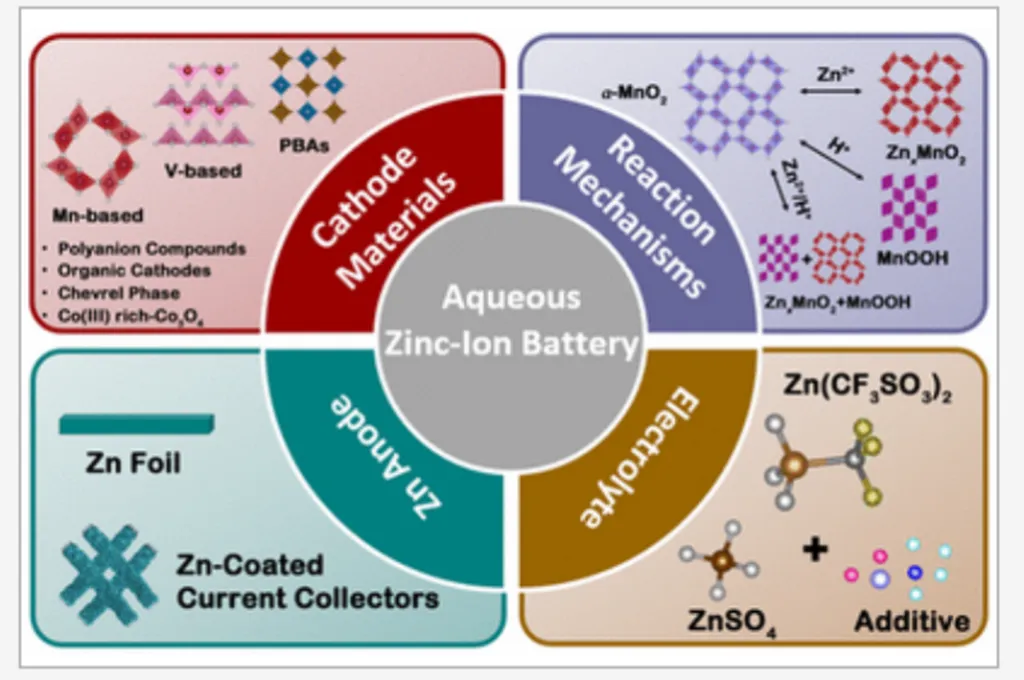
Researchers from the Max Planck Institute for Colloids and Interfaces, led by Dr. Iyad Al Kathemi and Professor Markus Antonietti, have developed a novel approach to enhance the performance of aqueous zinc (Zn) batteries. Their work, published in the journal Nature Communications, focuses on mitigating the challenges of side reactions and dendrite growth that have previously limited the practical application of these batteries.
Aqueous zinc batteries offer several advantages, including high theoretical capacity, low redox potential, and the abundance of zinc in the Earth’s crust. However, these benefits are often compromised by severe side reactions and dendrite growth. To address these issues, many studies have focused on using high-concentration electrolytes to desolvate the Zn2+ solvation shell from water and reduce the amount of free water. The researchers proposed a methodology to achieve the benefits of highly concentrated electrolytes while using low salt concentrations.
The team introduced 5-methyl-2-pyrrolidone (5MP) as a safe and polar cosolvent capable of anchoring free water molecules through hydrogen bonding, enabled by its carbonyl and secondary amine groups. Additionally, by adding a co-salt containing a chaotropic ion, they disrupted the water network, enabling the development of high-performance aqueous Zn batteries. The synergy between anchoring water molecules and disrupting the overall water network proved to be an effective strategy for enhancing the overall Zn battery performance.
In a symmetric Zn cell, the researchers demonstrated lifetimes exceeding 2000 hours and 1400 hours at 1 C and 5 C, respectively. Analysis of the recovered Zn anode confirmed that the combination of 5MP and chaotropic ions enabled Zn deposition along the energetically favorable (002) plane, with no signs of surface dehydration observed by in situ Raman spectroscopy. Furthermore, long-term stability tests using a carbonyl-rich COF- and NaVO-based cathodes at various current densities further demonstrated the benefits of this approach.
This work showcases the universality of a diluted electrolyte in combination with 5MP and chaotropic ions, bridging the gap between laboratory research and real-world applications. The practical applications for the energy sector are significant, as improved aqueous Zn batteries could be used for grid storage, electric vehicles, and other energy storage applications, providing a more sustainable and efficient energy solution.
Source: Al Kathemi, I., Caroni, J., Dehne, T. et al. Green and sustainable hydrogen-anchored solvent enabling stable aqueous Zn batteries. Nat Commun 14, 498 (2023).
This article is based on research available at arXiv.