
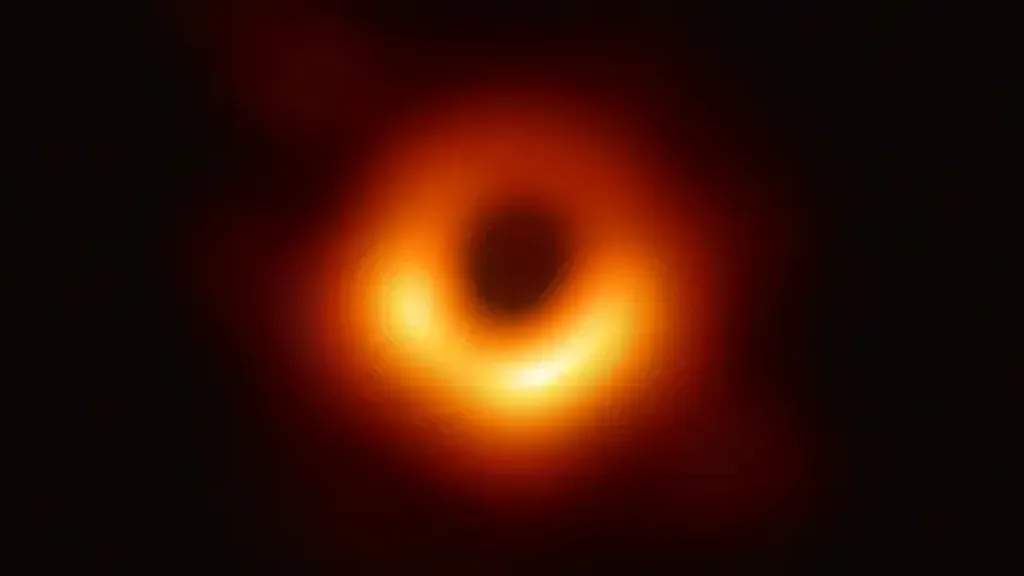
In the realm of astrophysics and energy research, a team of scientists from the Indian Association for the Cultivation of Science in Kolkata, India, has been delving into the intriguing world of black holes. Researchers Anirban Dasgupta, Supragyan Priyadarshinee, Indrani Banerjee, and Subhash Mahapatra have recently published a study that explores the unique characteristics of “hairy” black holes, which are black holes with additional parameters beyond the usual mass, charge, and angular momentum.
The study, titled “Probing Hairy Kerr Black Holes through Quasi-Periodic Oscillations I: A study based on the kinematic models,” was published in the journal Physical Review D. The researchers focused on rotating hairy black hole solutions inspired by the gravitational decoupling method, which satisfy the Einstein field equations with a conserved energy-momentum tensor that respects the strong energy conditions.
The team investigated the horizon structure of these hairy black holes and discovered unique features not observed in Kerr black holes, which are the most well-known type of rotating black holes. They also examined how the hairy parameters influence the fundamental frequencies associated with the motion of matter in the hairy Kerr spacetime and compared these findings with the Kerr scenario.
One of the practical applications of this research for the energy sector lies in the study of high-frequency quasi-periodic oscillations (HFQPOs) observed in black holes. These oscillations are linked to the fundamental frequencies and can help constrain the parameter space of the hairy Kerr spacetime. By comparing the kinematic models of HFQPOs with observations from six black hole sources, the researchers identified the most favored parameter space for each of these black holes. Their analysis also provided a framework to determine the most suitable model for each source.
Interestingly, the study found that, with the current precision of data, the Relativistic Precession Model is less suitable compared to the Tidal Disruption Model for the black hole sources GRO J1655-40 and XTE J1859+226. This research not only advances our understanding of black holes but also has implications for the energy industry, particularly in the context of astrophysical observations and theoretical modeling.
This article is based on research available at arXiv.