
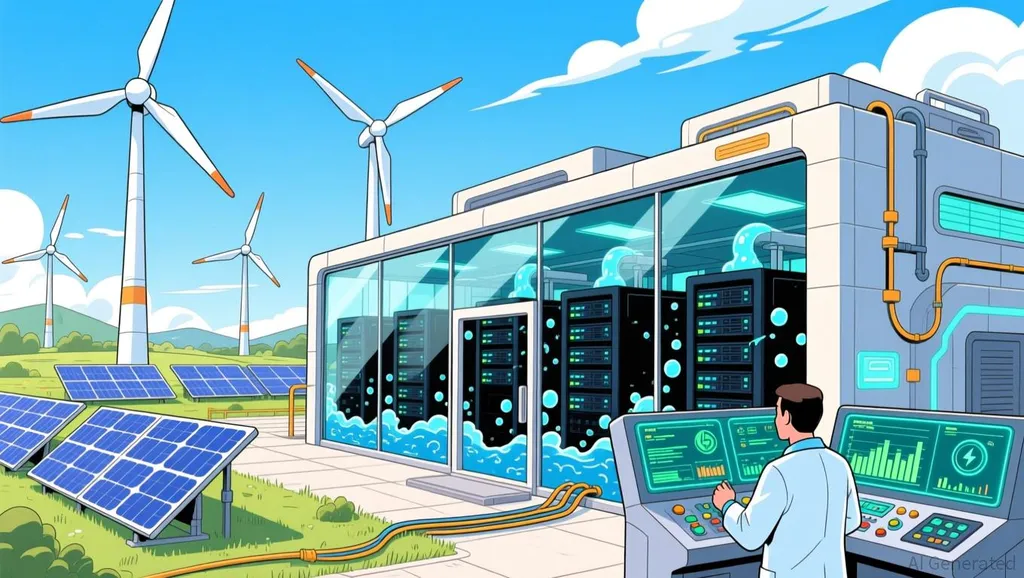
In the quest for more sustainable and reliable power systems, researchers are exploring innovative ways to integrate data centers into the grid’s frequency regulation efforts. Xiaojie Tao and Rajit Gadh, affiliated with the University of California, Los Angeles, have recently published a study in the IEEE Transactions on Sustainable Energy that delves into the potential of data centers to provide fast frequency response (FFR) in modern power systems.
The rapid growth of renewable energy sources has led to a significant reduction in system inertia, which is the grid’s ability to maintain steady frequency. This has increased the need for fast frequency response to stabilize the grid. Data centers, with their large and flexible electrical consumption, controllable IT workloads, and on-site uninterruptible power supply (UPS) systems, are well-positioned to contribute to this effort.
The researchers developed a dynamic model that combines data center power consumption and grid frequency dynamics. This model captures the interactions between IT servers, cooling systems, and energy storage. By implementing control strategies based on frequency deviation, the researchers found that server power can be adjusted and UPS batteries can be discharged during frequency events to effectively reduce frequency nadir and shorten recovery time.
The study’s case studies, conducted on a modified IEEE 39-bus system, demonstrated that the proposed strategy can stabilize the grid without compromising the service quality of the data centers. This highlights the promising role of data centers as grid-supporting resources in future low-inertia systems.
For the energy sector, this research opens up new avenues for leveraging data centers as flexible demand response resources. By participating in frequency regulation markets, data centers can not only contribute to grid stability but also potentially reduce their energy costs. This symbiotic relationship between data centers and the grid could play a significant role in the transition to a more sustainable and reliable energy future.
This article is based on research available at arXiv.