
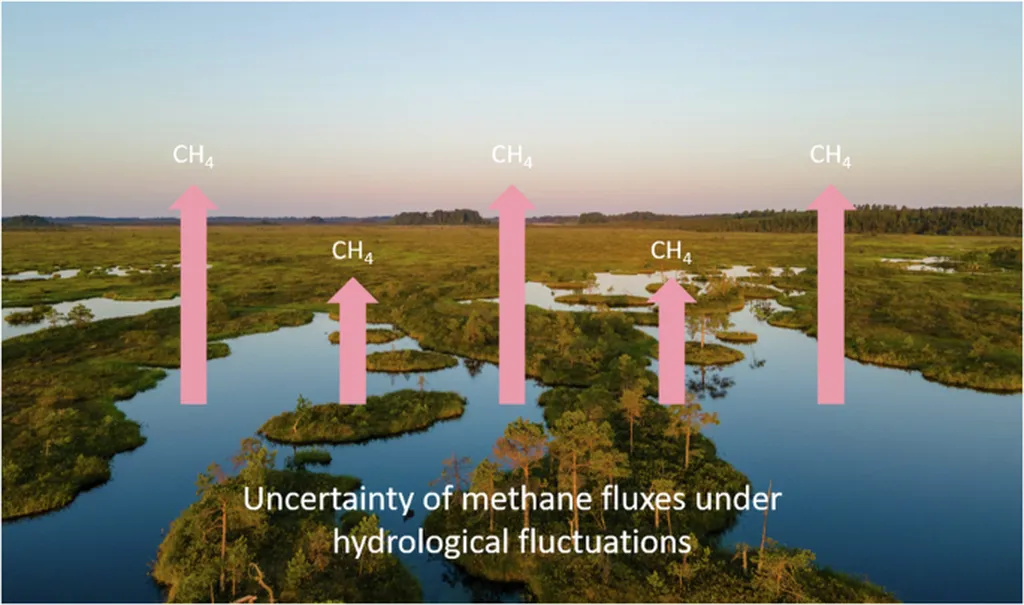
In the realm of energy and environmental science, understanding the dynamics of greenhouse gas emissions is crucial. Researchers Xun Cai, Xiucheng Yang, and Peter A. Raymond from Yale University have delved into the complex interplay of factors influencing methane emissions in coastal tidal wetlands. Their findings, published in the journal Nature Communications, shed light on the significant role these ecosystems play in the global carbon cycle and their potential impact on climate change.
Coastal tidal wetlands are known for their ability to absorb and store carbon, acting as vital carbon sinks. However, they also release methane, a potent greenhouse gas that can offset their carbon-sequestering benefits. What sets these wetlands apart from their non-tidal counterparts is their regulation by oceanic drivers such as salinity gradients and tidal inundation. These factors strongly influence methane production and release, yet they have been poorly represented in regional assessments until now.
The researchers estimated methane emissions from U.S. East Coast tidal marshes by integrating ocean models, remote sensing datasets, and empirical relationships from metadata. They found that spatially, emissions are a result of the combined effects of marsh extent and per-unit-area flux rates. Hotspots of methane emissions were identified in areas with lower salinity, higher inundation, and lower latitudes.
Temporally, the study revealed that temperature and salinity dominate decadal-scale interannual variability in methane emissions. Between 2001 and 2020, total methane emissions were estimated to range from 0.019 to 0.038 Tg yr-1, with local flux rates ranging from 0 to 20 g m-2 day-1. Following significant hydrological variability in the early 2000s, emissions have been increasing steadily since 2007 at approximately 802 t yr-1. This increase is driven by warming, freshening, and enhanced inundation.
The researchers also projected future methane emissions under IPCC climate scenarios. They found that increasing inundation due to sea-level rise will amplify methane emissions until a threshold near 0.75 meters of sea-level rise is reached. Beyond this point, saltwater intrusion will increasingly suppress further growth in emissions, highlighting the critical role of salinity-inundation interactions in coastal methane dynamics.
For the energy sector, this research underscores the importance of considering coastal wetlands in carbon accounting and climate change mitigation strategies. As sea levels rise and climates change, these ecosystems may become either more significant sources or sinks of methane, depending on the balance of salinity and inundation. Understanding and managing these dynamics can help optimize the role of coastal wetlands in mitigating climate change and inform energy policies that aim to reduce greenhouse gas emissions.
Source: Cai, X., Yang, X., & Raymond, P. A. (2023). Seesaw of saltwater and inundation drives methane emissions in coastal tidal wetlands. Nature Communications.
This article is based on research available at arXiv.