
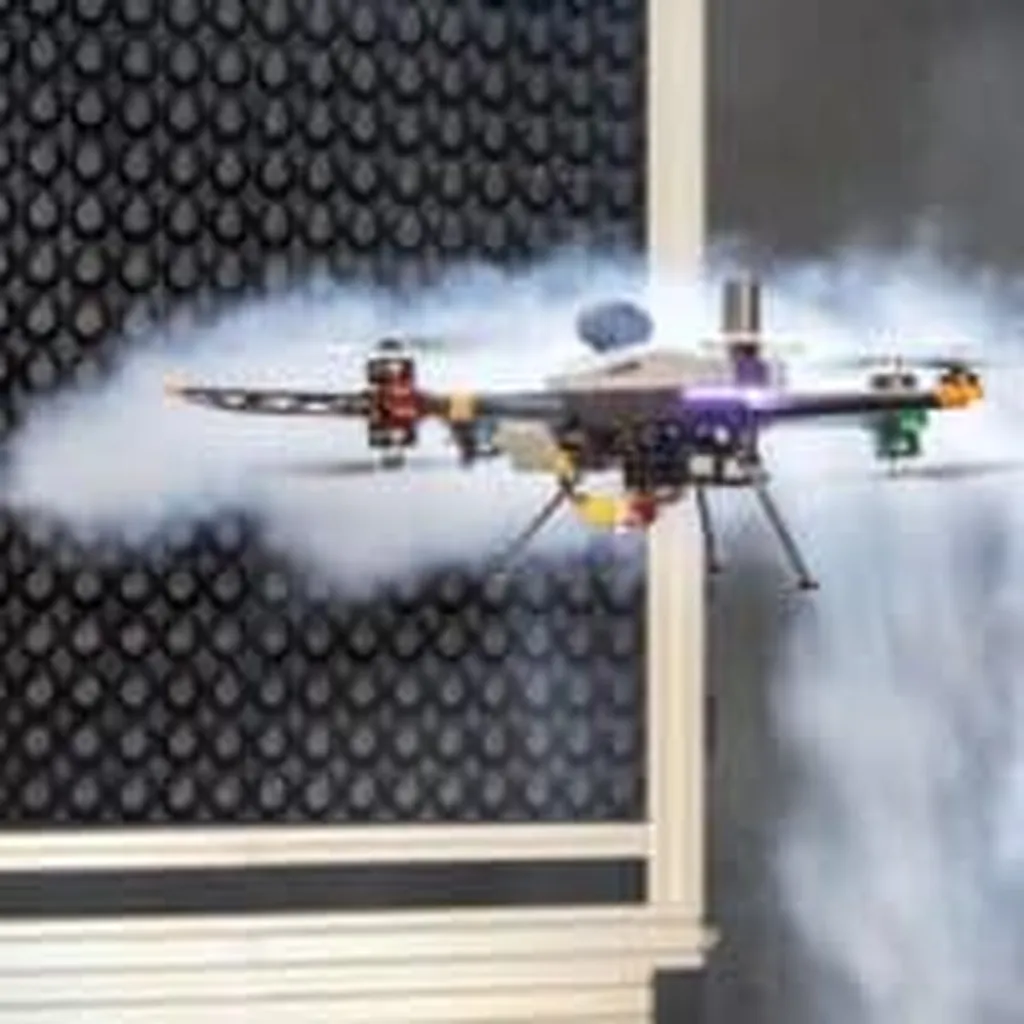
Researchers from the Beijing University of Aeronautics and Astronautics and the Technische Universität Berlin have been exploring ways to enhance the turbulence of fan array wind generators (FAWG). Their work, published in the journal Experiments in Fluids, focuses on optimizing the performance of these devices, which are designed to mimic the turbulent flows found in natural environments.
Fan array wind generators consist of multiple individually controllable fans arranged in a grid. In this study, the researchers used a square FAWG with 10×10 fans, each with a width of 4 cm and a maximum velocity of 17 m/s. The goal was to maximize the turbulence intensity in the test region. Turbulence intensity is a measure of the fluctuations in wind speed, and higher turbulence can be beneficial for certain applications, such as wind tunnel testing and wind energy research.
The researchers investigated two approaches for operating the fans. The first approach, called geometric texturing, involved varying the duty cycle distribution of the fans in specific patterns. A duty cycle refers to the proportion of time that a fan is active. The researchers found that a checkerboard pattern yielded a robust, uniform turbulence field with an intensity of around 0.14. This turbulence was driven by the interactions between the jets of air produced by the fans.
The second approach used particle swarm optimization, a computational technique inspired by the social behavior of birds and fish, to maximize the turbulence intensity at selected points within the test region. This method achieved higher local turbulence intensities of around 0.28. However, it resulted in significant spatial non-uniformity, meaning that the turbulence was not evenly distributed across the test region.
The study highlights the trade-off between achieving high local turbulence and maintaining uniform turbulence across the entire test region. For applications that require uniform turbulence, geometric texturing may be the preferred approach. For applications that can tolerate non-uniform turbulence, particle swarm optimization may be more suitable.
The findings of this research could have practical applications in the energy sector, particularly in wind energy research and development. Wind turbines operate in turbulent wind conditions, and understanding how to generate and control turbulence can help improve the design and performance of wind turbines. Additionally, the ability to create controlled turbulent environments can aid in the testing and validation of wind turbine models and designs.
Source: Cao, G., Shaqarin, T., Jiang, Z., Liu, Y., Li, Y., Gao, N., He, X., Noack, B.R., “Turbulence enhancement of a fan array wind generator using geometric texturing and optimization-based control,” Experiments in Fluids, 2023.
This article is based on research available at arXiv.