
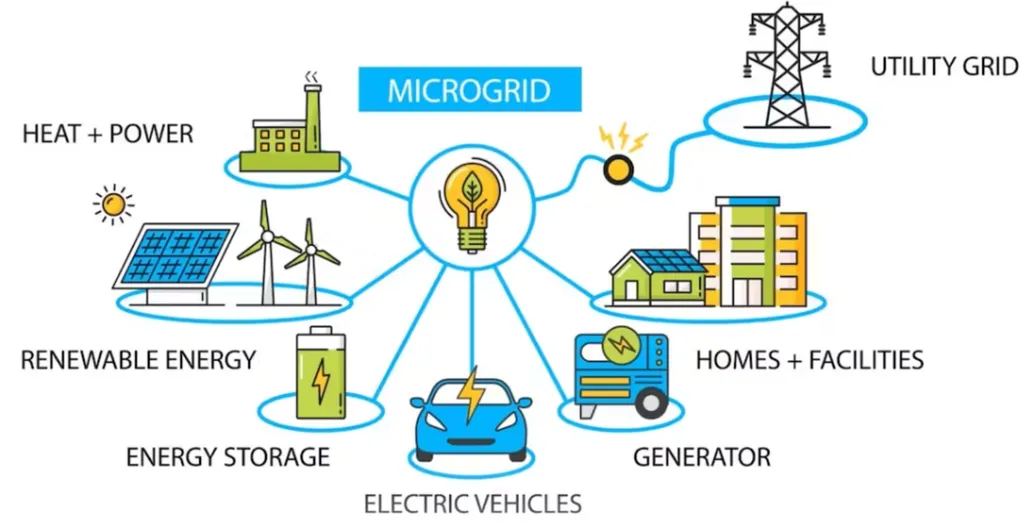
A groundbreaking study published this week in ScienceDirect introduces an advanced energy management system for microgrids, leveraging the combined power of Internet of Things (IoT) and artificial intelligence (AI) to achieve unprecedented levels of efficiency, cost savings, and resilience—especially under extreme weather conditions. The system, tested on a 6 kW solar microgrid, demonstrated a 31.8% increase in battery participation during peak loads and a 17% reduction in daily operational costs compared to traditional systems. This innovation marks a significant leap forward in the quest for sustainable, decentralized energy solutions that can adapt to the unpredictable challenges posed by climate change.
At the heart of this advancement is the integration of real-time sensor data with Generative Adversarial Networks (GANs), a class of AI algorithms known for their ability to simulate complex scenarios. By training GANs on historical and real-time weather data, the system can predict and prepare for extreme weather events—such as prolonged cloud cover or sudden temperature drops—over the course of a year. This predictive capability allows microgrids to dynamically adjust battery storage and renewable energy output, reducing reliance on the main grid by an average of 7.3 kW during peak demand. The system’s scalability was validated using MATLAB simulators, proving its potential for real-world deployment in both urban and remote settings.
The study’s lead researchers emphasized the transformative impact of this approach: “Traditional energy management systems struggle with the variability of renewable sources and the increasing frequency of extreme weather. Our AI-driven solution not only optimizes energy use but also ensures grid stability and financial savings, aligning with the UN’s Sustainable Development Goal 7 for affordable and clean energy.” The system’s ability to enhance battery management—boosting participation in peak load coverage from 14.5% to 31.8%—underscores its potential to revolutionize how microgrids operate, particularly in regions prone to weather-related disruptions.
This breakthrough arrives at a critical juncture for the energy sector. As global energy demand surges and climate-related disruptions become more frequent, the need for resilient, adaptive microgrids has never been greater. The integration of AI and IoT not only addresses the intermittency of renewable energy but also paves the way for more autonomous, self-healing energy networks. For policymakers, this innovation offers a blueprint for modernizing energy infrastructure, while for industry professionals, it presents a compelling case for investment in smart, decentralized systems. The study’s findings suggest that AI-driven energy management could become a cornerstone of the next generation of smart grids, enabling communities to achieve both sustainability and energy independence in the face of a changing climate.