
Researchers Rishit Agnihotri and Amit Chaurasia from the Indian Institute of Technology Bombay have proposed a scalable framework for Electric Road Systems (ERS) that could significantly enhance the adoption of electric vehicles (EVs) in smart cities. Their work, published in the journal “IEEE Transactions on Intelligent Transportation Systems,” addresses the critical challenge of inadequate charging infrastructure that currently hampers large-scale EV adoption.
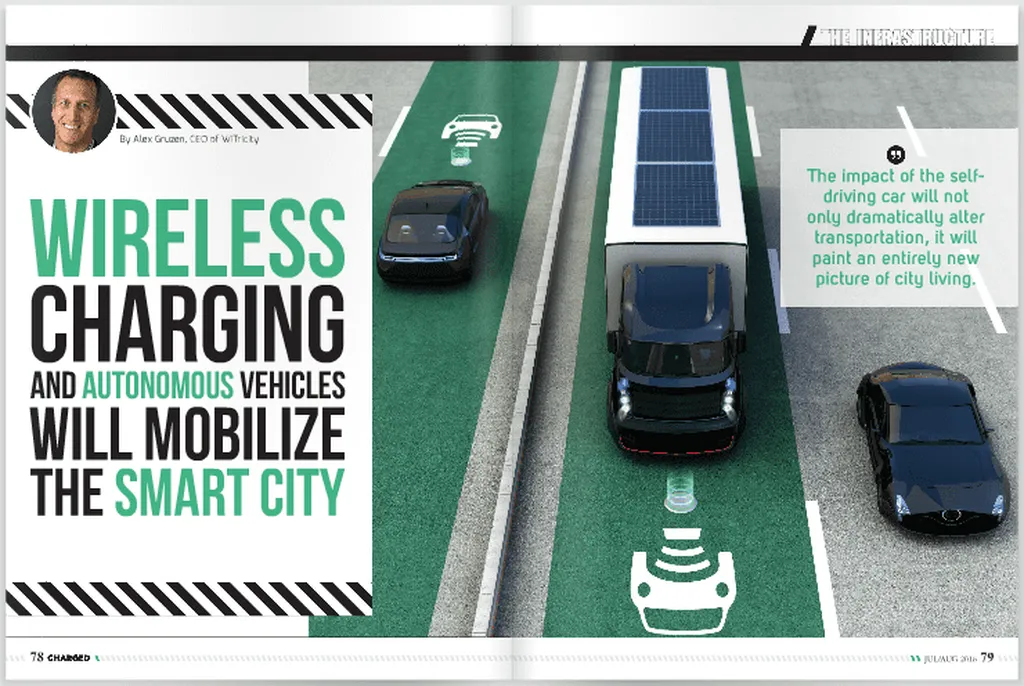
The researchers present an ERS architecture that enables Dynamic Wireless Charging (DWC) of EVs while they are in motion. This system integrates inductive charging coils embedded in road pavements, real-time vehicle-to-infrastructure (V2I) communication, and adaptive energy management systems that coordinate with smart grid technologies. The framework uses modular road segments with a standardized charging process to ensure scalability across urban areas and interoperability among different EV platforms.
To evaluate the system’s performance, Agnihotri and Chaurasia used a co-simulation framework that combined MATLAB-based power analysis with traffic inputs generated in SUMO, a traffic simulation tool. Key performance metrics included charging efficiency, energy cost per kilometer, and improvements in battery lifespan. The simulation results suggest that frequent shallow charging cycles could reduce range anxiety and extend battery life, making EVs more practical for everyday use.
The study also discusses deployment challenges, policy considerations, and energy distribution strategies that align with climate-resilient urban development. A case study of a tier-1 Indian city analyzes the cost-benefit trade-offs of retrofitting high-density urban corridors with ERS, providing practical insights for city planners and policymakers.
For the energy sector, this research offers a promising avenue for developing next-generation EV infrastructure. By enabling dynamic wireless charging, the proposed ERS framework could reduce the need for extensive stationary charging stations, optimize energy distribution, and support the integration of renewable energy sources into the grid. This could lead to more efficient and sustainable urban transportation systems, ultimately contributing to the broader goals of reducing greenhouse gas emissions and promoting energy independence.
This article is based on research available at arXiv.