
In the realm of energy research, understanding the interactions of cosmic rays with the atmosphere can provide valuable insights for various applications, including energy production and space weather monitoring. Researchers Leif Lönnblad and Torbjörn Sjöstrand from Lund University have been delving into this topic through their work on the PYTHIA simulation tool.
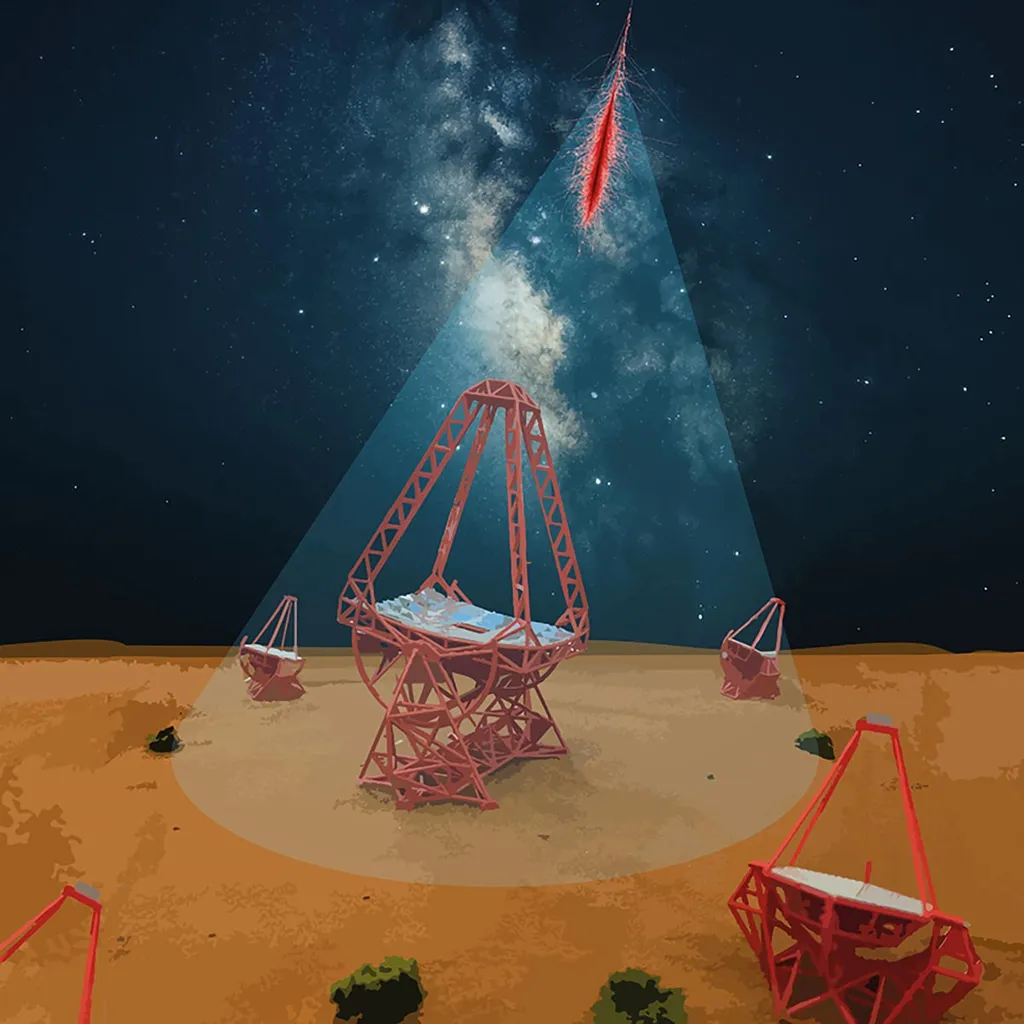
PYTHIA is a widely-used software tool in particle physics that models the behavior of particles in high-energy collisions. In their recent research, Lönnblad and Sjöstrand have focused on improving PYTHIA’s ability to simulate hadronic cascades, which are sequences of particle collisions that occur when cosmic rays interact with the atmosphere. These improvements are particularly significant for understanding cosmic ray air showers, which are extensive cascades of particles that can be triggered by both high-energy protons and nuclei.
The researchers have made several enhancements to the Angantyr model within PYTHIA, which is used to simulate collisions involving nuclei. These improvements are especially important for low-energy collisions, allowing the model to be applied throughout the entire hadronic cascade. Additionally, they have updated the simplified nuclear model in the PythiaCascade module. The consistency between the two models in simulating cosmic ray air showers is a notable achievement, as it provides a more reliable tool for studying these phenomena.
For the energy industry, a better understanding of cosmic ray interactions can have practical applications. For instance, it can aid in the design and operation of space-based solar power systems, which are exposed to cosmic rays and other forms of space radiation. Additionally, improved models of cosmic ray air showers can contribute to better monitoring and prediction of space weather, which can impact satellite operations and power grids on Earth.
The research was published in the European Physical Journal C, a peer-reviewed journal that covers all aspects of theoretical and experimental particle physics. The improvements made to PYTHIA by Lönnblad and Sjöstrand represent a significant step forward in the simulation of cosmic ray interactions, with potential benefits for the energy sector and other fields.
This article is based on research available at arXiv.