
Researchers from the KTH Royal Institute of Technology in Sweden have developed a new method to improve situational awareness for connected and automated vehicles, particularly in dealing with occluded pedestrians. The team, led by Vandana Narri and including Jonah J. Glunt, Joshua A. Robbins, Jonas Mårtensson, Herschel C. Pangborn, and Karl H. Johansson, has proposed a solution that enhances safety and reliability in autonomous vehicle operations. Their work was published in the IEEE Transactions on Intelligent Vehicles.
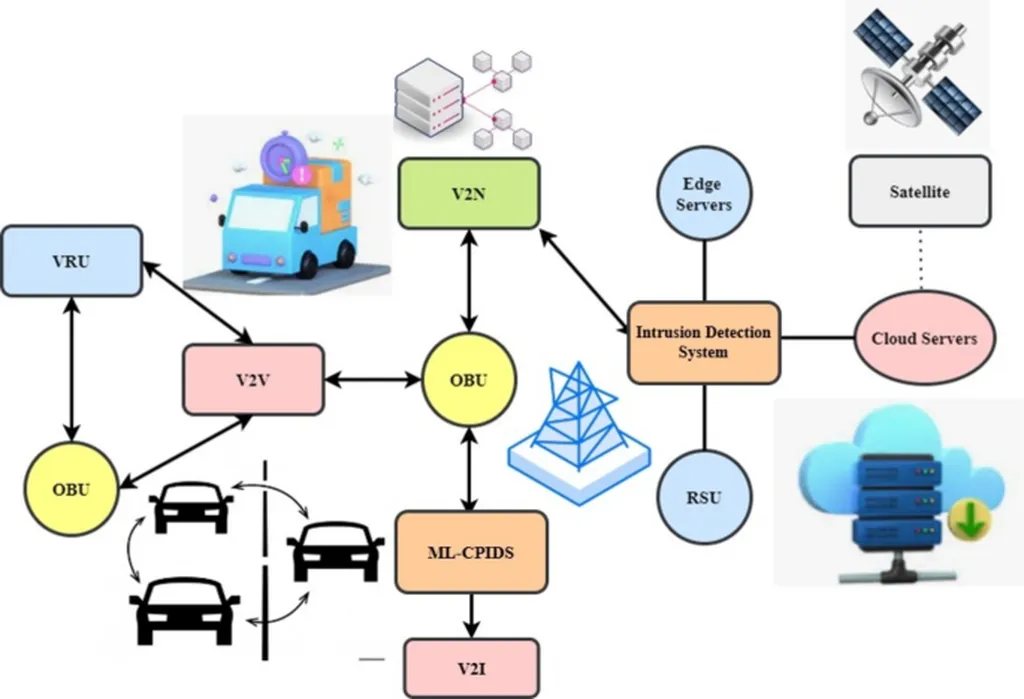
The study addresses a critical challenge in autonomous driving: the ability to perceive and predict the behavior of other road users, especially when visibility is obstructed. Pedestrians can become occluded by vehicles or infrastructure, leading to significant safety risks due to limited visibility. To mitigate this, the researchers propose using vehicle-to-everything (V2X) communication to share perception data between connected road users. This shared data allows for a more comprehensive awareness of the surroundings.
However, the main challenge lies in fusing perception data when measurements are inconsistent with the true locations of pedestrians. Inconsistent measurements can arise from sensor noise, false positives, or communication issues. To tackle this, the researchers employ set-based estimation with constrained zonotopes to compute a confidence metric for the measurement set from each sensor. These sets and their confidences are then fused using hybrid zonotopes. This method enables reliable and robust fusion of sensor data, even when measurements are inconsistent.
The effectiveness of the proposed method was demonstrated through both simulation and real-world experiments. The results show that this approach can significantly improve the situational awareness of autonomous vehicles, enhancing safety and reliability in various driving scenarios.
For the energy sector, particularly in the development and deployment of autonomous electric vehicles, this research offers practical applications. Improved situational awareness can lead to safer and more efficient autonomous driving systems, which are crucial for the widespread adoption of electric vehicles. Additionally, the ability to reliably fuse sensor data can enhance the overall performance of autonomous fleets, contributing to the energy industry’s goal of reducing carbon emissions and promoting sustainable transportation.
This article is based on research available at arXiv.