
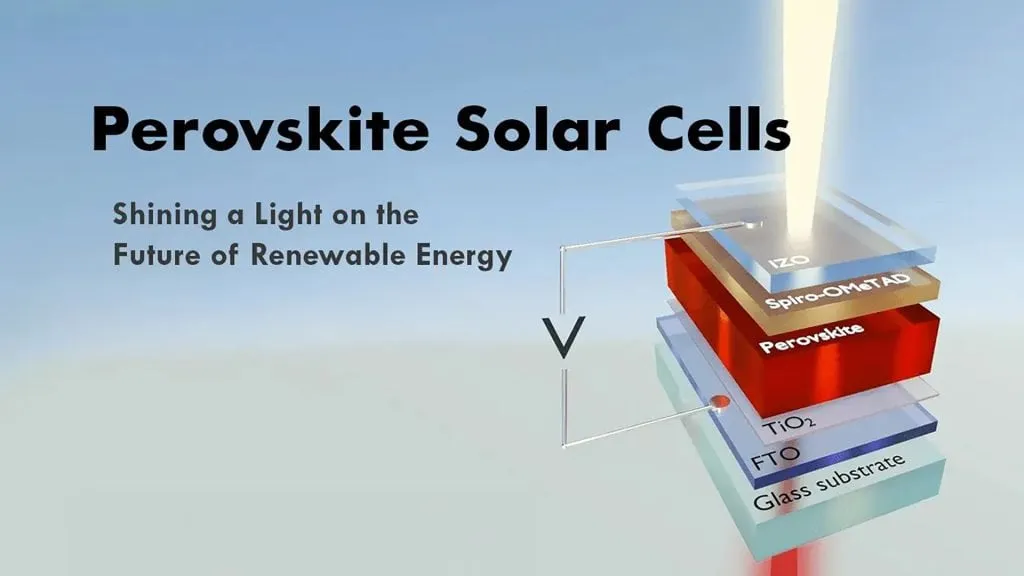
Researchers S. Frenkel, V. Zakharov, and E. A. Katz from the Skolkovo Institute of Science and Technology in Russia have explored the potential of large language models (LLMs) to aid in the development of perovskite solar cells (PSCs). Their study, published in the journal Solar Energy Materials and Solar Cells, investigates whether LLM tools can predict the lifetime and degradation of PSCs under various environmental conditions.
Perovskite solar cells are a promising alternative to traditional silicon-based solar cells due to their high efficiency and low production costs. However, their commercialization has been hindered by issues related to their stability and degradation over time. The researchers aimed to determine if LLMs could assist in addressing these challenges by providing predictions based on incomplete information and various environmental factors.
The study demonstrates that common LLM tools, such as ChatGPT, DeepSeek, and even a simplified free version of ChatGPT, can suggest and justify prediction methods for PSC degradation. These tools can engage in a dialogue with users, helping them to understand the physical models of PSC degradation and the influence of the environment. One notable finding is that ChatGPT can form time series of efficiency for a given PSC architecture by utilizing various models and environmental characteristics archived in meteorological databases. These characteristics include illumination, temperature, humidity, and UV level.
The researchers conclude that ChatGPT currently has sufficient access to training samples and can find various models in the literature, providing adequate solutions for predicting degradation trends. This suggests that LLMs could be a valuable tool for developers working on perovskite solar cells, helping them to better understand and mitigate degradation issues. As the energy sector continues to explore new and innovative solar technologies, the use of LLMs in predicting the stability of PSCs could contribute to the advancement of more efficient and reliable solar energy solutions.
Source: Solar Energy Materials and Solar Cells
This article is based on research available at arXiv.