
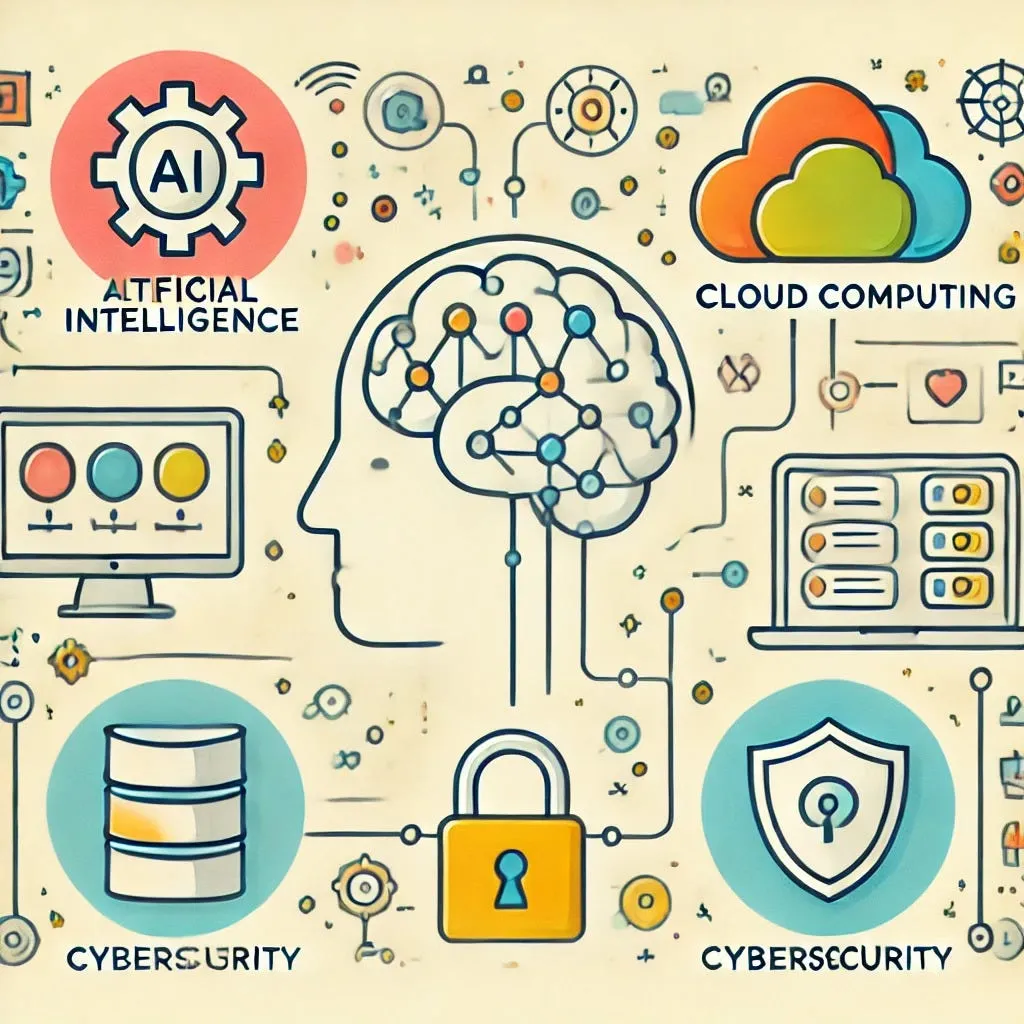
The utility industry is increasingly turning to artificial intelligence (AI) and cloud computing to fortify its cybersecurity defenses, a shift that could significantly alter the sector’s approach to threat management. AI-powered cybersecurity systems offer real-time threat detection and response capabilities, enhancing resilience against sophisticated cyber threats that are becoming more prevalent and complex.
Smart cybersecurity tools, unlike traditional systems, leverage AI, machine learning (ML), and automation to provide adaptive and proactive defenses. These systems learn from data and previous security incidents to identify anomalous behavior and respond to new or unknown attacks in real-time. Key characteristics of smart cybersecurity include AI and ML for pattern recognition, automation for continuous network monitoring, and behavioral analytics to identify insider threats or compromised accounts.
The utility sector faces significant risks due to the convergence of legacy infrastructure with modern digital technologies, expanding the attack surface. Smart grids, IoT devices, and the integration of OT with IT networks have introduced numerous vulnerabilities. Many utilities, particularly smaller ones, struggle with limited security budgets and a shortage of skilled professionals, often resulting in a reactive approach to security. The high value of the national power grid makes it a prime target for nation-states and cybercriminals, with recent attacks demonstrating the potential for service disruptions and data theft.
AI systems analyze real-time and historical network data to quickly identify suspicious activities and anomalies. They help utilities break down traditional silos between IT and OT networks, providing unified visibility and monitoring across the entire infrastructure. AI-powered security solutions offer critical defense against vulnerabilities introduced by third-party vendors and supply chain partners. By continuously monitoring and analyzing emerging global threats, these systems enable utilities to proactively identify vulnerabilities and quickly respond to potential attacks.
To fully capitalize on AI-enhanced security, utility operators must implement a multi-layered defense strategy. This includes predictive analytics, generative AI for assistance, graph ML for alert correlation, hyperautomation for security operations, and agentic AI for proactive defense. A multi-layered AI approach significantly enhances the speed, scale, and efficiency of Security Operations Center (SOC) environments, allowing security professionals to focus on more intricate tasks.
The utility industry’s escalating and sophisticated cyber threat landscape necessitates the implementation of smart, AI-powered cybersecurity systems. This multi-layered approach provides unified visibility, real-time threat detection and response, and the capability to transition from a reactive to a proactive defense posture. Embracing these architectural safeguards ensures the continuous protection and resilience of the nation’s critical power infrastructure.
As Subo Guha, senior vice president of Product Management at Stellar Cyber, notes, “The implementation of smart, AI-powered cybersecurity systems—featuring multiple layers of technologies like Generative AI, Graph ML, Hyperautomation, and Agentic AI—is not just an enhancement, but a critical necessity.” This shift towards AI-driven cybersecurity could redefine the utility sector’s approach to threat management, ensuring a more secure and resilient infrastructure for the future.