
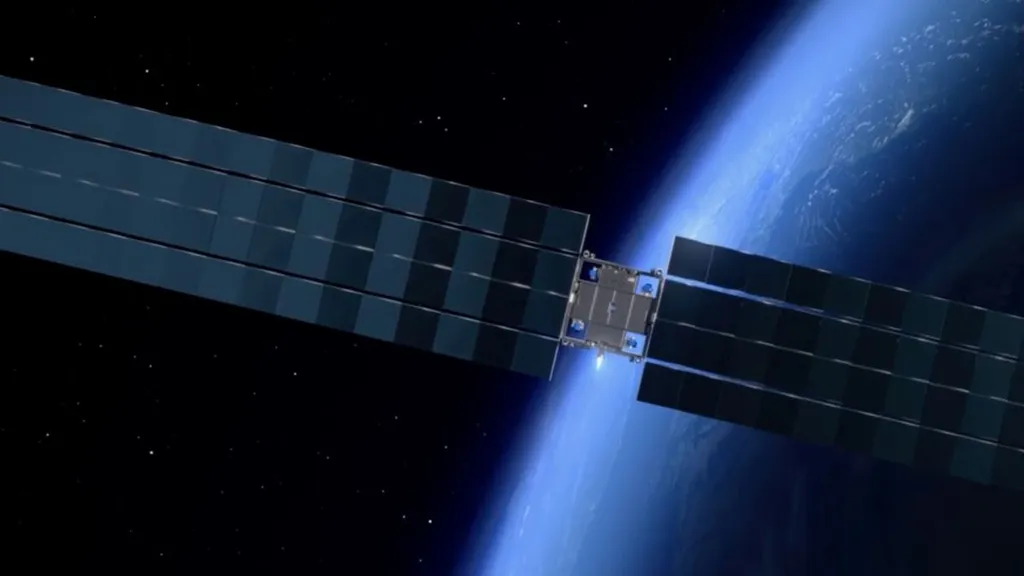
Researchers from the University of Pennsylvania, including Igor Bargatin, Dengge Jin, Zaini Alansari, and Jordan R. Raney, have proposed a novel concept for solar-powered orbital data centers that could revolutionize the energy and data processing landscape. Their research, published in the journal Acta Astronautica, introduces a tether-based architecture designed to harness continuous sunlight in specific orbits to power multi-megawatt computing capabilities for artificial intelligence (AI) applications.
The proposed design involves a tethered chain of computing nodes equipped with photovoltaic panels, enabling uninterrupted power generation ranging from 2 to 20 megawatts. This continuous power supply is made possible by positioning the data centers in Dawn-Dusk Sun-Synchronous (DDSS) orbits, where they can remain in constant sunlight. The system is engineered to manage heat and radiation through radiative cooling and integrated shielding, ensuring the stability and longevity of the data centers.
One of the key advantages of this orbital data center concept is the potential to provide AI inference with minimal latency to Earth. By processing data in space, the system could significantly reduce the time delays associated with transmitting data to and from ground-based data centers. This could be particularly beneficial for applications requiring real-time data processing, such as satellite communications, remote sensing, and space-based AI services.
The researchers have also addressed the practical considerations of deploying such a system, including mass budgets, passive attitude control, and the dynamics induced by micrometeoroid collisions. These factors are crucial for ensuring the feasibility and reliability of the orbital data centers in the harsh environment of space.
While the concept is still in the theoretical stages, it holds promising implications for the energy sector. The ability to harness solar power in space for high-performance computing could lead to more sustainable and efficient data processing solutions. Additionally, the minimal latency benefits could enhance the performance of AI applications, making them more responsive and effective. As research progresses, this innovative approach could pave the way for a new era of space-based data centers, transforming the energy and technology industries.
This article is based on research available at arXiv.