
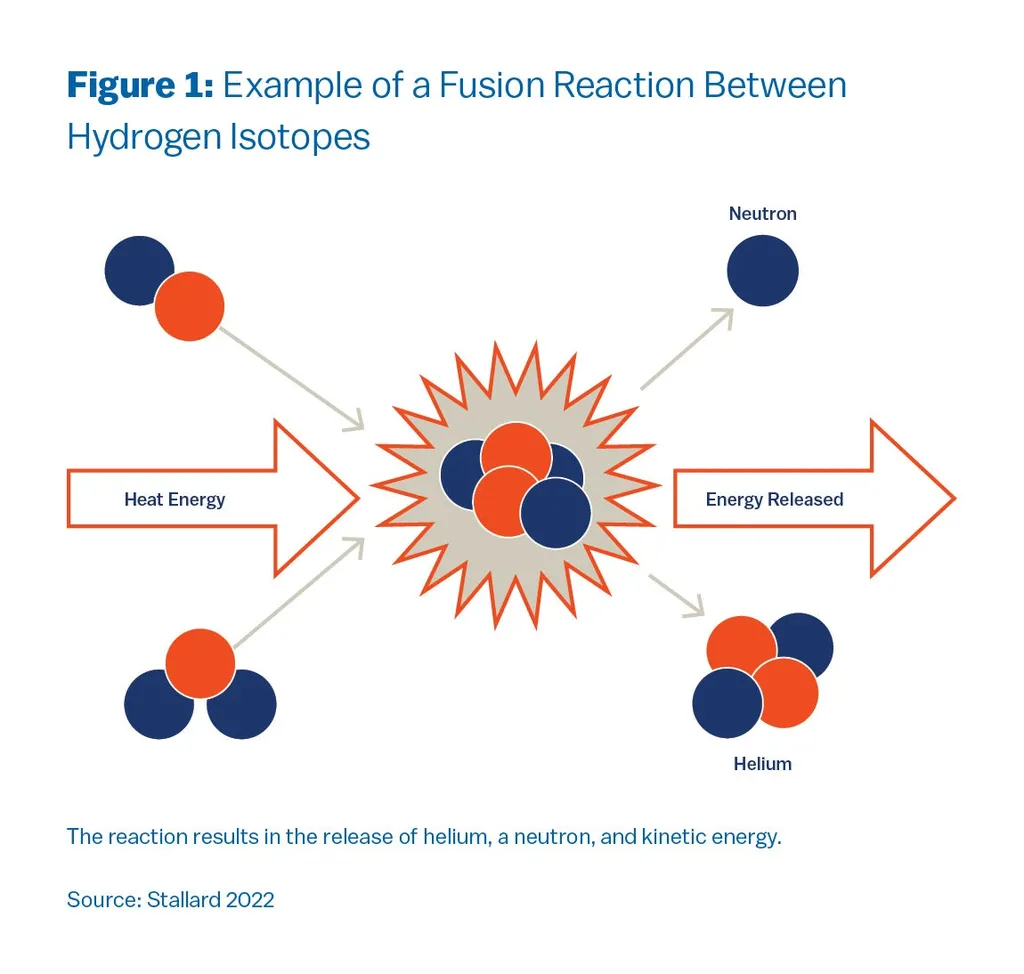
Researchers from Princeton University, including J. F. Parisi, J. A. Schwartz, S. E. Wurzel, A. Rutkowski, and J. Harter, have published a study exploring the economic viability of fusion systems that produce isotopes through neutron-driven transmutation. Their work, published in the journal Nature Energy, suggests that such systems could achieve economic viability before reaching energy breakeven, potentially accelerating the adoption of fusion energy.
The study highlights that fusion systems can generate both electrical power and high-value isotopes by incorporating carefully selected feedstock materials within the blanket. This co-generation approach expands the range of viable fusion concepts and enhances the economic value of fusion energy. The researchers calculate the value of this co-generation and derive a new economic breakeven condition based on net present value.
At lower plasma gain levels (Qplas less than 1-3), the production of high-value isotopes, such as medical radioisotopes, can enable pure transmuter fusion systems operating at only a few megawatts of fusion power. For instance, a 3-megawatt system transmuting ruthenium-102 to molybdenum-99 could meet global demand for molybdenum-99 with a plasma gain well below 1. At higher plasma gain levels (Qplas greater than 3), it becomes viable to generate electricity in addition to isotopes. For example, co-producing electricity and gold, transmuted from mercury in a fusion blanket, can reduce the required plasma gain for viability from around 10-100 to around 3-5.
The researchers also highlight techniques to enhance transmutation, including magnetic mirrors, asymmetric neutron wall loading, and neutron multiplication. These methods could further improve the economic viability of fusion systems. The study suggests that fusion neutron-driven transmutation offers a revenue-positive pathway for deploying fusion energy at a terawatt scale, starting from smaller megawatt-scale machines for radioisotope production and then scaling up to co-producing electricity and gold in larger fusion power plants.
This research provides a promising avenue for the energy sector, particularly for companies and governments investing in fusion energy technologies. By focusing on isotope production, fusion systems could become economically viable sooner, potentially accelerating the commercialization of fusion energy and its integration into the global energy mix.
This article is based on research available at arXiv.