
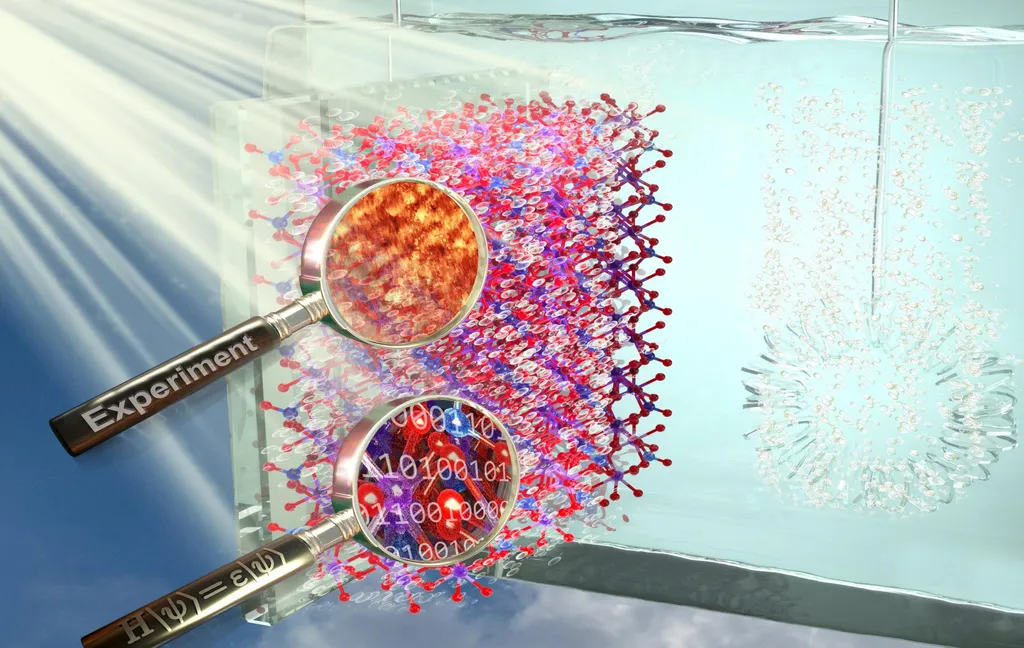
In a collaborative effort, researchers from various institutions, including the Technical University of Munich, the University of Cambridge, and the SLAC National Accelerator Laboratory, have delved into the intricate dynamics of bismuth vanadate (BiVO4), a promising photocatalyst for solar fuel applications. Their findings, published in the journal Nature Communications, shed light on the fundamental processes that govern the conversion of light into chemical energy within this material.
Bismuth vanadate is a key material in the development of solar fuels, which aim to convert sunlight into storable chemical energy. However, the efficiency of this process is currently limited by our incomplete understanding of the electronic and structural changes that occur within the material when it absorbs light. To address this, the researchers employed advanced femtosecond optical pump-X-ray probe techniques to observe these changes in real-time.
The study revealed that when BiVO4 absorbs light, it undergoes a rapid, sub-picosecond (less than a trillionth of a second) localization of electrons within its crystal structure, forming what are known as small polarons. This is a crucial step in the process of converting light into chemical energy, as it allows the material to store the energy temporarily.
However, the researchers also discovered a slower, multi-picosecond (several trillionths of a second) reorganization of the crystal lattice into a previously unknown, hidden photoexcited state. This state is structurally distinct from both the material’s normal state and its high-temperature phase. The researchers found that this hidden state is stabilized by interactions between the holes (positively charged spaces left behind by the excited electrons) and the lattice, which dynamically reduce the material’s distortion.
These findings have significant implications for the energy industry, particularly in the field of solar fuels. By understanding how the electronic and structural changes within BiVO4 govern its light-to-chemical energy conversion pathways, researchers can work towards improving the efficiency of this process. This could lead to the development of more effective solar fuels, which could in turn contribute to a more sustainable and renewable energy future.
The research was published in the journal Nature Communications, a highly respected peer-reviewed journal that covers all areas of the natural sciences. The study represents a significant step forward in our understanding of the fundamental processes that govern the conversion of light into chemical energy, and it highlights the potential of advanced experimental techniques in unraveling the complexities of materials science.
In conclusion, the work of these researchers offers valuable insights into the behavior of bismuth vanadate under light excitation, paving the way for improvements in solar fuel technologies. As the energy industry continues to seek out sustainable and renewable energy sources, such advancements are crucial in driving progress towards a cleaner and greener future.
This article is based on research available at arXiv.