
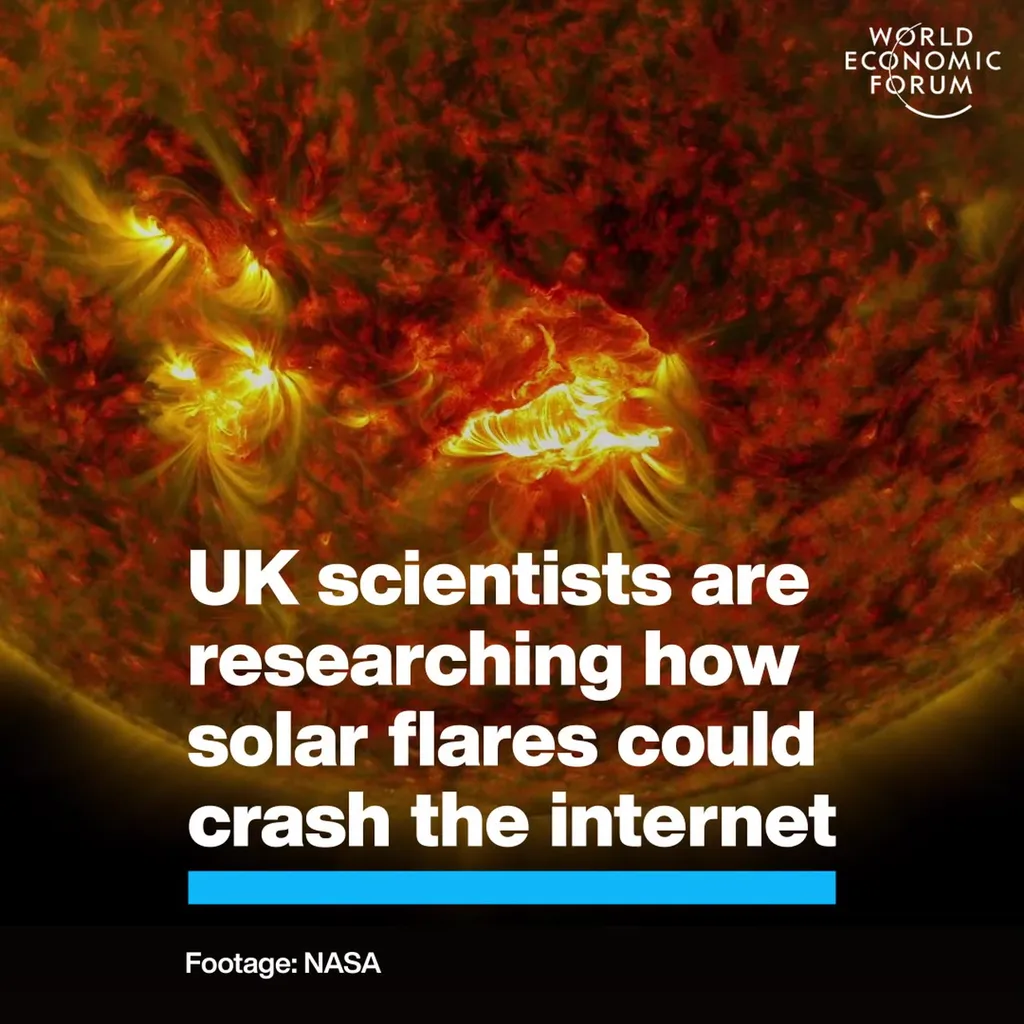
Researchers from the University of Glasgow, including Ya Wang, Sargam M. Mulay, and Lyndsay Fletcher, have published a study in the Astrophysical Journal that sheds light on an unusual solar phenomenon with potential implications for the energy sector, particularly in understanding space weather impacts on Earth’s ionosphere.
The study focuses on an extremely energetic Extreme Ultraviolet (EUV) late phase observed during a pair of C-class solar flares on June 17, 2012. Solar flares are sudden bursts of energy from the Sun’s surface, and the EUV late phase refers to a secondary increase in irradiance during these events. The researchers found that the late phase of these particular flares released 4.2 times more energy in the “warm” temperature range (2-3 million degrees Kelvin) than during the main peaks.
The source of this energetic late phase was a non-eruptive sigmoid, a S-shaped structure in the solar corona, situated in a complex magnetic field configuration. This sigmoid was rapidly energized by the C-class flares, with plasma temperatures exceeding 10 million degrees Kelvin before cooling to produce the EUV late-phase emission. The researchers used high-temperature passbands and differential emission measure analysis to observe this process.
Magnetic extrapolations suggested that the sigmoid formed due to magnetic reconnection between previously existing J-shaped loops. The sigmoid underwent fast and slow cooling stages, both dominated by conductive cooling. However, the estimated total cooling time was shorter than the observed value, leading the researchers to propose that continuous magnetic reconnection heated the non-eruptive sigmoid, resulting in the extremely energetic EUV late phase.
For the energy sector, understanding these solar phenomena is crucial as they can significantly impact the Earth’s ionosphere, affecting radio communications and satellite operations. The study provides insights into the mechanisms driving these energetic events, which can help improve space weather forecasting and mitigate potential impacts on energy infrastructure.
The research was published in the Astrophysical Journal, a peer-reviewed scientific journal covering astronomical and astrophysical topics.
This article is based on research available at arXiv.