
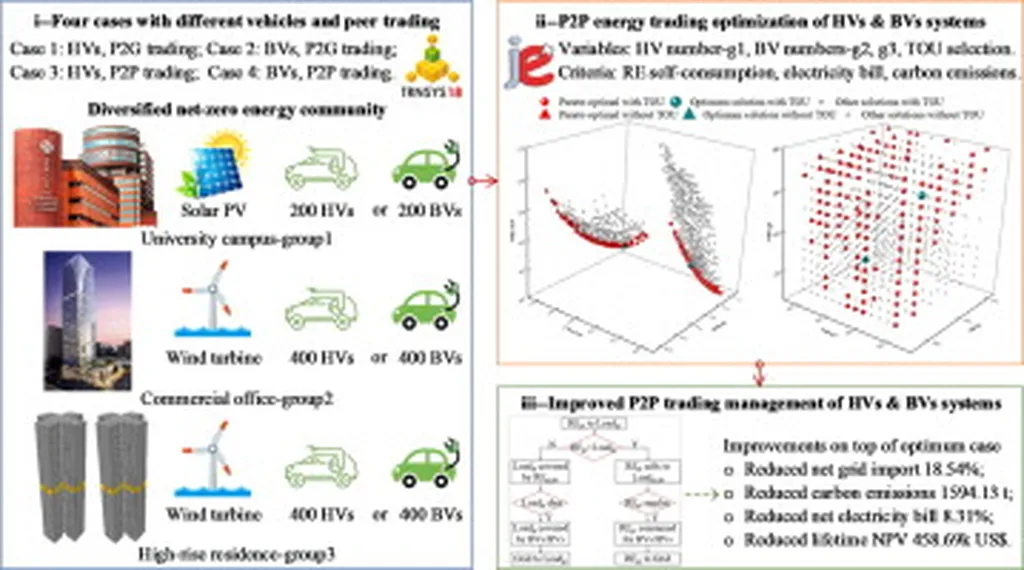
In the pursuit of net-zero carbon emissions, innovative energy trading mechanisms are gaining traction in both global and local markets. Researchers Elisheva S Shamash and Zhong Fan from the University of Technology Sydney have developed a novel approach to energy trading that leverages Vehicle-to-Everything (V2X) technology to regulate energy markets, reduce costs, and lower carbon emissions.
The researchers propose contracts based on the Vickrey-Clarke-Groves (VCG) mechanism, which facilitates efficient energy trading using electric vehicles (EVs) equipped with bidirectional batteries. These batteries can store energy during off-peak hours and export it back to the grid during peak demand periods. Each EV in the fleet has its own energy consumption and exporting schedules, as well as associated costs, which are factored into the trading mechanism.
The proposed V2X tariffs for non-domestic customers aim to optimize energy trading by considering the unique characteristics of each EV and its usage patterns. By doing so, the system can reduce overall energy costs and minimize carbon emissions. The researchers suggest that this approach can be applied to various energy markets, from local to global, to support the transition towards net-zero carbon objectives.
The research was published in the journal Applied Energy, a reputable source for energy-related studies. The findings contribute to the growing body of knowledge on innovative energy trading mechanisms and their potential to transform the energy sector. As the world moves towards a more sustainable future, such advancements in energy trading will play a crucial role in achieving net-zero carbon emissions and ensuring a reliable, cost-effective energy supply.
Practical applications for the energy sector include the integration of EV fleets into grid management strategies, enabling better demand response and peak load management. This can lead to reduced strain on the grid, lower energy costs for consumers, and a more resilient energy infrastructure. Additionally, the proposed mechanism can incentivize the adoption of EVs by demonstrating their potential to contribute to a more sustainable and efficient energy system.
This article is based on research available at arXiv.