
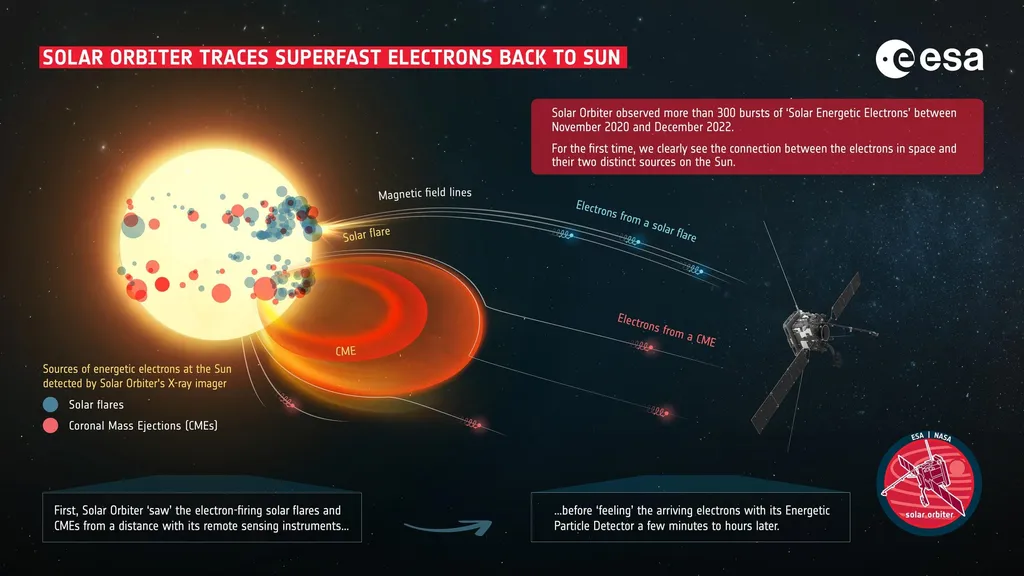
In the realm of solar research, understanding the sun’s atmosphere is crucial for predicting space weather and improving solar energy technologies. Researchers like Susanna Parenti from the European Space Astronomy Centre (ESAC) in Spain are at the forefront of this exploration. Parenti and her team have been analyzing data from the Solar Orbiter mission, which has provided unprecedented insights into the sun’s behavior.
The Solar Orbiter mission has revealed that the sun’s atmosphere is teeming with highly impulsive bursts, even in its “quiet” regions. These bursts, known as small EUV (Extreme Ultraviolet) brightenings, occur at scales as small as 200 km, the limit of the EUV instruments’ spatial resolution. While small-scale events were known before, their observation was sporadic and with lower resolution. The Solar Orbiter’s data shows that these events are ubiquitous and highly dynamic, suggesting they play a significant role in energy transfer and dissipation in the solar atmosphere.
The similarity of these small-scale events to larger, well-known solar features indicates that the underlying physical processes are scale-independent. This universality could help scientists better understand the mechanisms that heat the solar corona, a region of the sun’s atmosphere that is much hotter than its surface. By studying these small EUV brightenings, researchers aim to elucidate the dominant physical processes acting on the solar atmosphere and their potential role in the origin of the hot solar corona.
For the energy industry, this research could have practical applications. Understanding the sun’s dynamic behavior can improve predictions of space weather, which can impact satellite communications, power grids, and other energy infrastructure. Moreover, insights into the sun’s energy transfer mechanisms could inform the development of solar energy technologies, such as fusion energy, which aims to replicate the processes that power the sun.
The findings from the Solar Orbiter mission, particularly those related to small EUV brightenings, were published in a review article led by Susanna Parenti. This review summarizes observational and simulation results, covering both statistical properties and analyses of individual events. As research continues, the data from the Solar Orbiter mission is expected to provide even more insights into the sun’s behavior and its implications for the energy industry.
This article is based on research available at arXiv.