
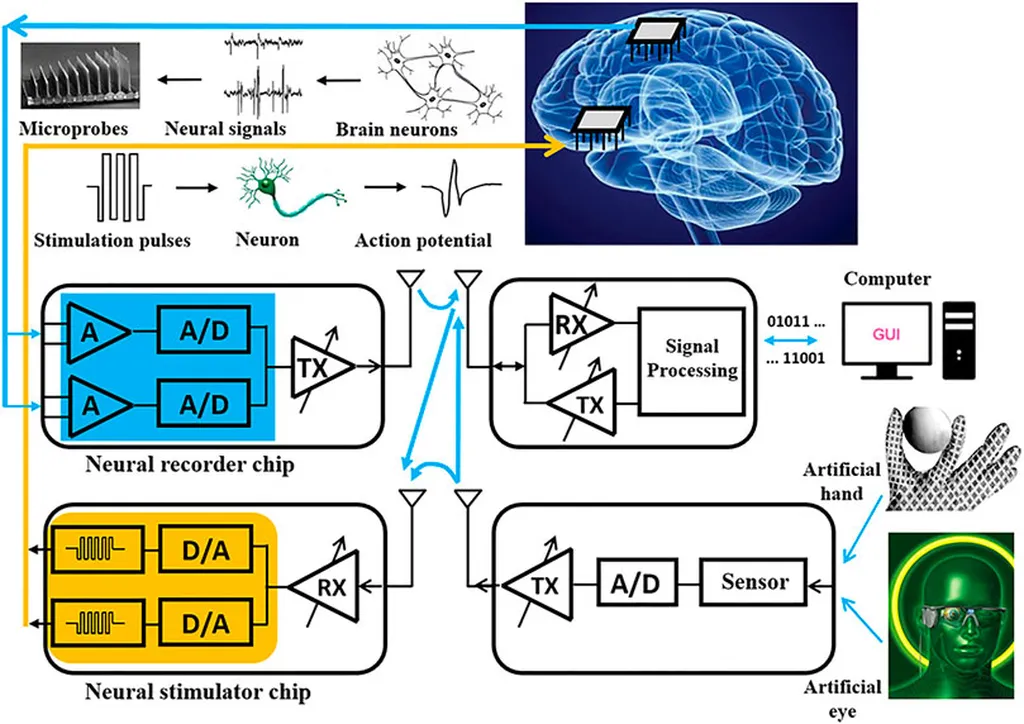
Researchers Yuzhen Qin, Zonglin Liu, and Marcel van Gerven from Radboud University in the Netherlands have published a study that delves into the mechanisms of charge-balanced electrical brain stimulation, a technique used to modulate neural activity. Their work, titled “Control of Discrete-Time Linear Systems with Charge-Balanced Inputs,” was published in the journal IEEE Transactions on Neural Systems and Rehabilitation Engineering.
Electrical brain stimulation is a promising approach for treating neurological disorders, but it must adhere to strict safety constraints. One such constraint is charge-balance, which ensures that the net charge injected into the brain is zero during each stimulation cycle. Despite its widespread use, the precise mechanisms by which charge-balanced stimulation influences neural activity remain poorly understood.
The researchers set out to investigate how charge-balanced inputs can control state trajectories in discrete-time linear systems, a mathematical framework often used to model dynamic systems. They focused on two types of charge-balanced inputs: periodic (repetitive) and non-repetitive. For each type, they derived new conditions for reachability and controllability, which are fundamental concepts in control theory that describe the ability to drive a system from one state to another.
The study’s findings are significant for the energy industry, particularly in the context of medical devices that use electrical stimulation for therapeutic purposes. Understanding how charge-balanced inputs work can lead to more efficient and safer designs for these devices. For instance, the researchers demonstrated how to design minimum-energy control inputs, which could translate to longer battery life for implantable devices.
Moreover, the theoretical results were validated through numerical simulations, providing a robust foundation for future research and practical applications. The study’s insights could also be relevant for other industries that use control systems with similar constraints, such as robotics and process control.
In summary, this research sheds light on the underlying mechanisms of charge-balanced electrical brain stimulation, offering valuable insights for the development of more efficient and safer medical devices. The study’s findings could have broader implications for industries that rely on control systems with similar constraints.
This article is based on research available at arXiv.