
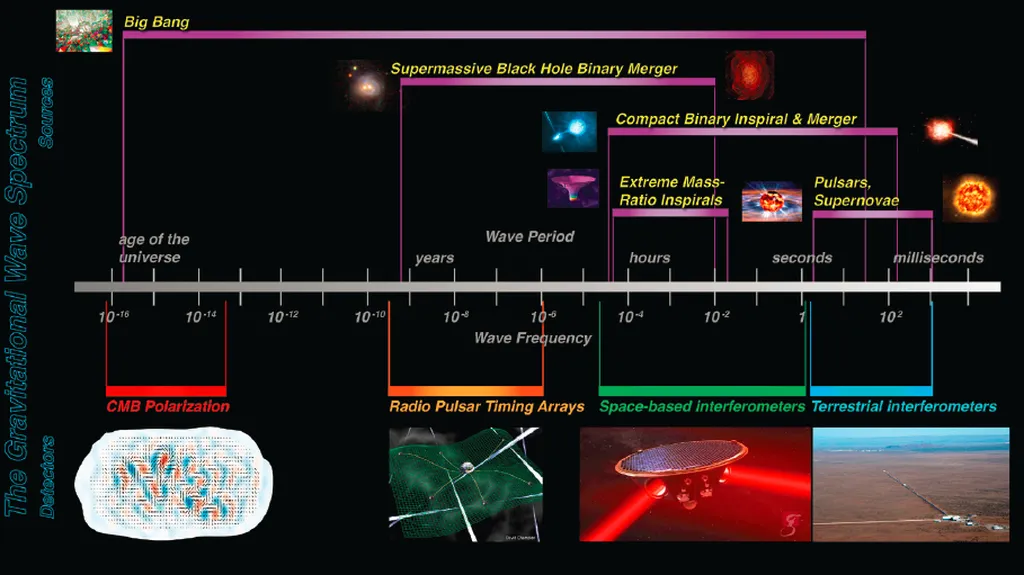
Researchers Eunjung Lee, Hee-Suk Cho, and Chang-Hwan Lee from the Korea Astronomy and Space Science Institute have delved into the complexities of gravitational wave parameter estimation, extending their previous work to include the spin parameter in binary neutron star (BNS) systems. Their findings, published in Physical Review D, shed light on the systematic biases that can arise when using non-eccentric waveforms in parameter estimation, a critical consideration for the energy sector as it increasingly turns to advanced technologies for energy generation and monitoring.
In their study, the researchers employed the analytic Fisher-Cutler-Vallisneri method to calculate the systematic biases produced by ignoring eccentricity in gravitational wave signals. They generated 10,000 BNS sources randomly distributed across a parameter space that included neutron star mass, effective spin, and eccentricity. The neutron star mass was constrained between 1 and 2 solar masses, the effective spin ranged from -0.2 to 0.2, and the eccentricity was set between 0 and 0.024 at a reference frequency of 10 Hz. The true value of the tidal deformability of neutron stars was assumed to follow the equation of state model APR4.
The researchers found that the distribution of biases in the chirp mass, symmetric mass ratio, and effective spin showed narrow bands that increased or decreased quadratically with increasing eccentricity. This indicates a weak dependence of biases on these three parameters. However, the biases in the effective tidal deformability were widely distributed depending on the values of the mass and spin parameters at a given eccentricity. This variability in the effective tidal deformability could have significant implications for the inference of neutron star properties.
For the energy sector, understanding these biases is crucial as gravitational wave detectors become more sensitive and are increasingly used for monitoring and energy generation. Accurate parameter estimation is essential for interpreting the data from these detectors and making informed decisions about energy production and distribution. The researchers’ findings highlight the importance of considering eccentricity in gravitational wave parameter estimation and provide a foundation for further research in this area.
This article is based on research available at arXiv.