
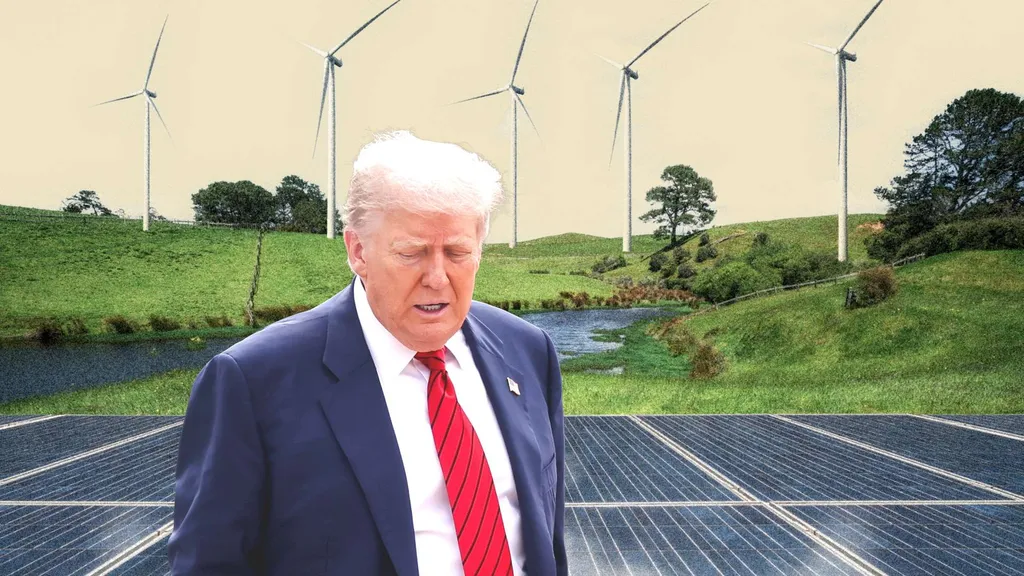
A federal judge struck down a controversial executive order issued by the Trump administration that sought to halt the permitting and development of new wind energy projects across the United States. The ruling, delivered on December 9, 2025, marks a pivotal moment for the renewable energy sector, reaffirming the legal and regulatory framework governing wind power expansion and setting the stage for accelerated deployment of clean energy infrastructure.
The executive order, signed earlier this year, had directed federal agencies to pause the review and approval of all new wind energy projects, citing “alleged legal deficiencies” in the permitting process under the previous administration. The order drew immediate backlash from a coalition of 19 states and the District of Columbia, which argued that the move overstepped presidential authority and threatened to derail billions of dollars in private investment, undermine state climate goals, and disrupt the transition to a low-carbon economy.
At the heart of the legal challenge was the assertion that the order violated the Administrative Procedure Act (APA), which mandates a transparent and evidence-based process for regulatory changes. Judge William Young of the U.S. District Court for the District of Massachusetts ruled that the order failed to provide a reasoned explanation for its sweeping action and did not follow the APA’s requirements for public notice and comment. The decision allows states to proceed with their claims that the order was arbitrary and capricious, and that it unlawfully interfered with their sovereign interests in energy planning and environmental protection.
The ruling is expected to have far-reaching implications for the wind industry, which has faced regulatory uncertainty and project delays since the order was issued. According to industry analysts, the pause in permitting had already caused several major offshore and onshore wind projects to be put on hold, with developers citing concerns over financing and supply chain disruptions. The American Clean Power Association estimates that the order, if upheld, could have jeopardized up to 25 GW of wind capacity planned for development by 2030—a figure representing nearly a third of the Biden administration’s original offshore wind target.
“This decision is a victory for clean energy, for the rule of law, and for the thousands of workers and businesses that depend on a stable regulatory environment,” said Heather Zichal, CEO of the American Clean Power Association. “The judge’s ruling sends a clear message: energy policy must be grounded in science, transparency, and collaboration, not political whim.”
The legal battle underscores the broader tension between federal and state authority in shaping the nation’s energy future. While the Trump administration has sought to prioritize fossil fuel development and roll back what it describes as “overreaching” environmental regulations, many states have moved aggressively to decarbonize their economies and expand renewable energy capacity. The ruling is likely to embolden state-led initiatives and could prompt a new wave of litigation as the administration continues to push for deregulation in the energy sector.
For engineers and policymakers, the decision highlights the critical importance of regulatory certainty in driving investment and innovation. With the legal cloud lifted, developers can now resume planning and construction, but the episode serves as a stark reminder of the vulnerabilities inherent in a politicized energy policy landscape. As the industry regroups, all eyes will be on the next steps from the Department of the Interior and the Federal Energy Regulatory Commission, whose actions will determine whether the momentum for wind energy can be fully restored.