
In the realm of energy journalism, it’s crucial to stay abreast of scientific research that could potentially impact the energy sector. A recent study, titled “Absorption in the 21 cm Hydrogen Line at z>10 as a Sensitive Tool for the Construction of a Cosmological Model on Small Scales,” delves into the intricacies of the early universe and its implications for cosmological models. The researchers involved in this study are Yu. N. Eroshenko, V. N. Lukash, E. V. Mikheeva, S. V. Pilipenko, and M. V. Tkachev, all affiliated with the Lebedev Physical Institute in Moscow, Russia.
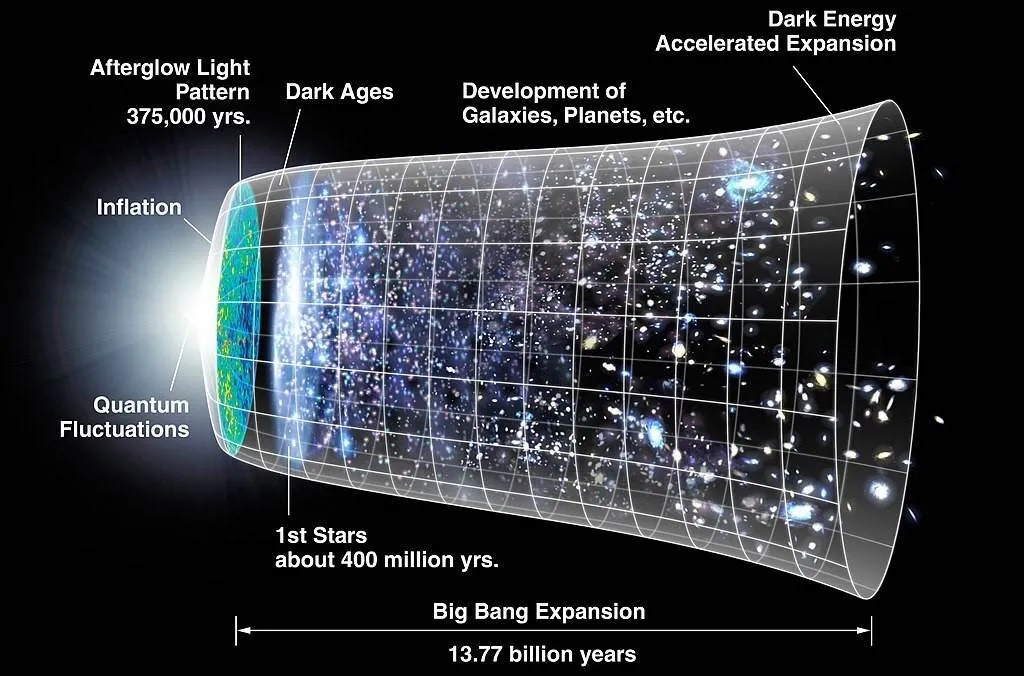
The study focuses on the absorption of the cosmic microwave background (CMB) radiation by neutral hydrogen in the early universe, specifically through the 21 cm hydrogen line. The researchers calculated the intensity of this absorption in the presence of additional power in the form of a “bump” in the spectrum of cosmological density perturbations. This bump, they found, can significantly influence the birth of the first stars, which in turn affects the absorption of CMB radiation.
The key finding of this research is that the earlier formation of the first stars, due to the presence of the bump in the density perturbation spectrum, leads to an increased ultraviolet radiation background. This radiation cools the spin temperature of neutral hydrogen, thereby amplifying the absorption in the 21 cm line. By comparing different cosmological models, the researchers demonstrated that it is possible to determine the probable position of the bump in the perturbation spectrum. This, in turn, allows for the reconstruction of the spectrum of cosmological perturbations on scales larger than 1 Mpc^-1 from the position of the absorption frequency profile.
The practical applications of this research for the energy sector are not immediately apparent, as the study is primarily focused on cosmological models and the early universe. However, understanding the fundamental physics of the universe can often lead to unexpected technological advancements. For instance, insights into the behavior of matter and energy in the early universe could potentially inform the development of new energy technologies or improve our understanding of existing ones. The research was published in the Monthly Notices of the Royal Astronomical Society, a peer-reviewed scientific journal.
This article is based on research available at arXiv.