
In the realm of astrophysics and energy research, understanding the environments surrounding cosmic events like gamma-ray bursts (GRBs) can offer insights that might one day influence energy technologies on Earth. Dr. Xiao-Hong Zhao, a researcher at the University of Science and Technology of China, has been exploring how these powerful cosmic phenomena can be used to probe the dense environments in which they occur.
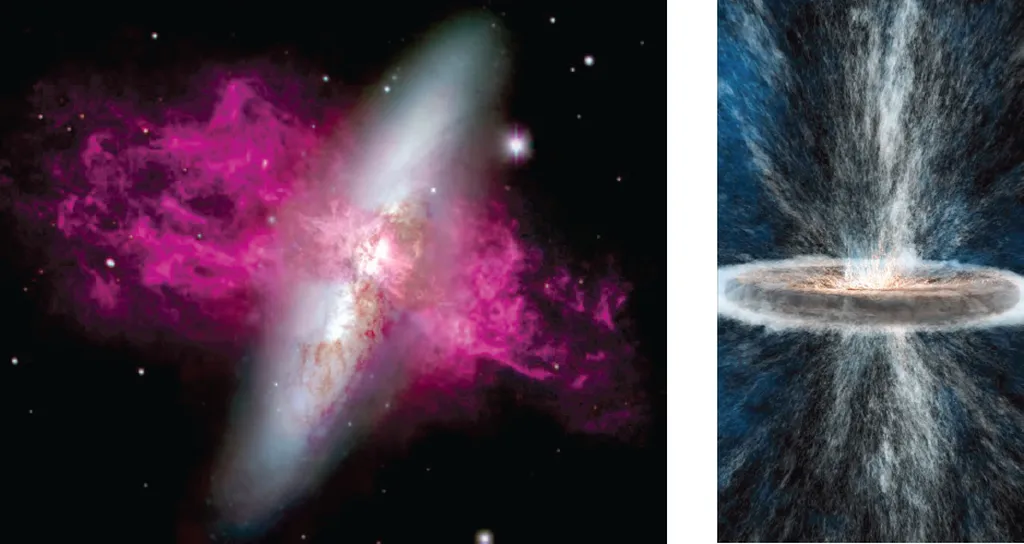
Gamma-ray bursts are among the most energetic events in the universe, releasing vast amounts of energy in the form of gamma rays. Traditionally, these bursts are thought to occur in environments with either a uniform interstellar medium or a dense stellar wind from a massive progenitor star. However, recent observations of GRB 191019A have suggested that some GRBs might originate within the accretion disks of active galactic nuclei (AGNs), which are extremely dense and gas-rich environments. This possibility has sparked interest because AGN disks could potentially host the progenitors of both long and short GRBs, and the dense environment could significantly affect the propagation of jets and the emission of afterglows.
In a study published in the Astrophysical Journal, Dr. Zhao investigates how multi-wavelength afterglow light curves can serve as diagnostic tools to understand the nature of the circumburst environment. The research reveals that in dense environments, GRB afterglows exhibit distinct frequency-dependent behaviors. For jets with large opening angles, the X-ray light curve shows a shallow decay or bump due to a transition from synchrotron to synchrotron self-Compton (SSC) dominance, while the optical and high-energy (GeV) light curves follow typical power-law decays. Conversely, for small opening angles, the light curves exhibit wavelength-dependent jet breaks: the GeV and optical bands break simultaneously, while the X-ray break is delayed as the SSC component gradually compensates for the fading synchrotron component.
These findings provide potential diagnostic signatures of GRBs occurring in dense media such as AGN disks. Understanding these signatures could help astrophysicists better interpret the environments of GRBs and potentially uncover new insights into the physics of these extreme events. While the direct application to the energy sector may not be immediate, the study of such high-energy phenomena can inspire advancements in plasma physics, particle acceleration, and other areas relevant to energy research. The research was published in the Astrophysical Journal, a leading journal in the field of astrophysics.
This article is based on research available at arXiv.