
In the realm of energy and environmental science, understanding Earth’s past can often illuminate our present and future. Researchers like Andrew P. Ingersoll, a professor of planetary science at the California Institute of Technology, delve into these historical processes to uncover mechanisms that might have shaped our planet’s atmosphere and biosphere.
Ingersoll’s recent research focuses on the Great Oxidation Event (GOE), a period approximately 2.4 billion years ago when atmospheric oxygen levels suddenly increased by more than ten times over a span of 20 to 50 million years. This abrupt change, following a long period of relative stability, is not attributed to external forces but rather to intrinsic geobiological processes. Specifically, Ingersoll proposes a positive feedback loop between atmospheric oxygen and photosynthetic bacteria. More oxygen leads to increased photosynthesis, which in turn produces more oxygen, creating a self-reinforcing cycle.
The research highlights several key feedback mechanisms that could have contributed to the GOE. One is the buildup of an ozone shield, which protects photosynthetic organisms from harmful ultraviolet radiation, allowing them to thrive and produce more oxygen. Another is the production of nutrients through oxidative weathering, which further supports photosynthetic activity. Additionally, Ingersoll proposes that the 15-fold greater efficiency of aerobic respiration compared to anaerobic respiration plays a crucial role. This efficiency tightens the coupling between respiration and photosynthesis within cells, amplifying the feedback loop.
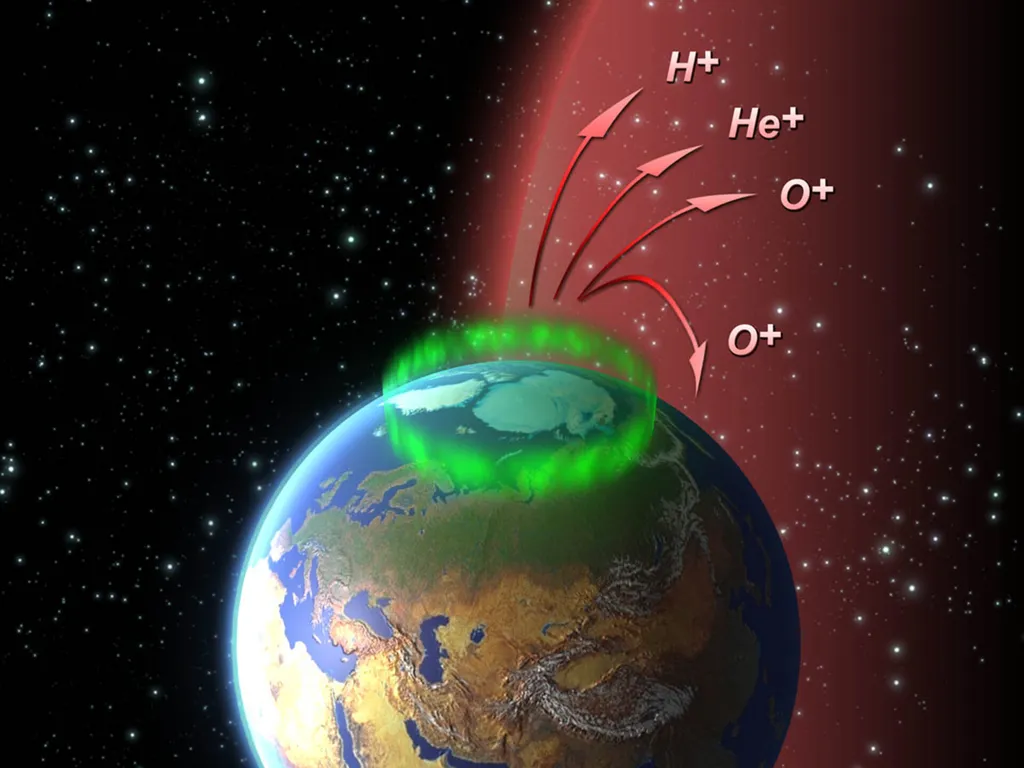
The concept of tipping points, familiar in climate science, is also applied here. Ingersoll suggests that the GOE represents a tipping point in the geobiological system, where a gradual buildup of oxygen—through processes like the burial of organic matter, oxidation of volcanic gases, or escape of hydrogen to space—reached a critical threshold. This threshold triggered a rapid and large-amplitude change in the system’s state, leading to the sudden increase in atmospheric oxygen.
For the energy sector, understanding these feedback mechanisms and tipping points can provide valuable insights. For instance, the study of past atmospheric changes can inform strategies for managing and mitigating modern-day environmental impacts, such as carbon sequestration and the development of sustainable energy technologies. By learning from Earth’s history, we can better navigate the complexities of our current energy and environmental challenges.
This research was published in the Proceedings of the National Academy of Sciences (PNAS), a prestigious journal that showcases significant advances in scientific understanding.
This article is based on research available at arXiv.