
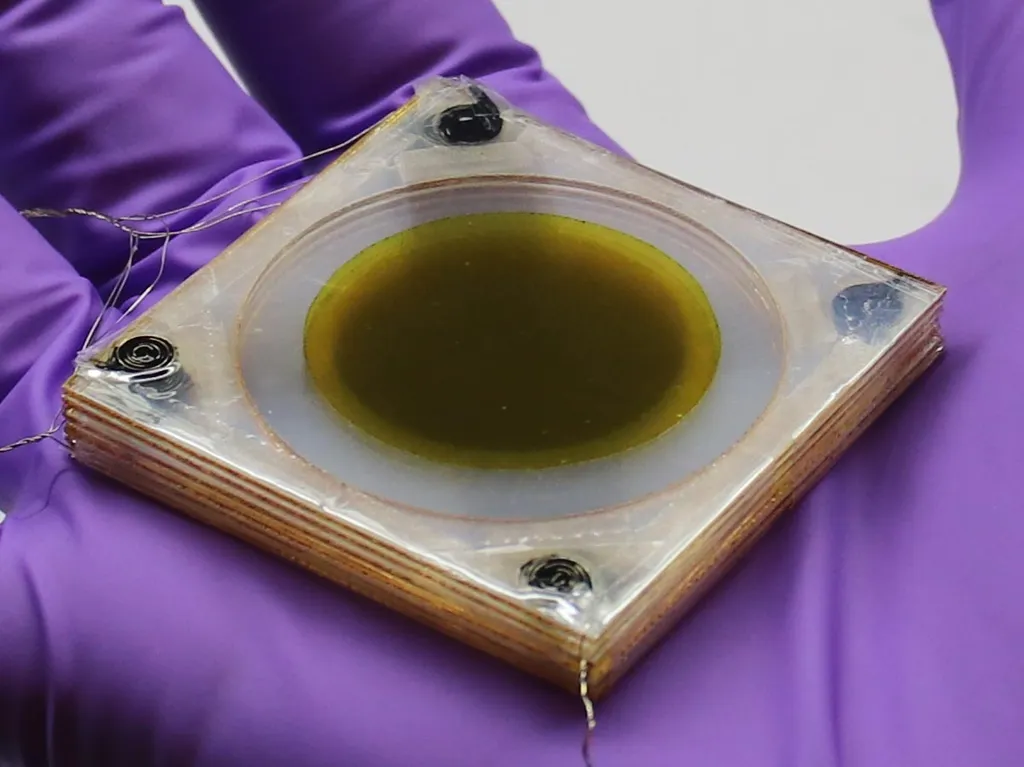
Researchers from the University of California, Los Angeles (UCLA) and other institutions have developed a novel approach to energy-efficient thermoregulation that could significantly impact the energy industry. The team, led by Qizhang Li and Gangbin Yan, presents a strategy that transforms broadband metal-insulator transition (MIT) materials into spectrally selective dynamic emitters, enabling precise control over thermal emission.
The researchers introduce a design that uses a dielectric cap to create a highly tunable Fabry-Perot cavity. This cavity allows for the engineering of the reflected-wave phase profile, resulting in a tailored thermal emission spectrum. The team’s analysis, based on Fresnel formalism and phasor diagrams, identifies two key routes for achieving high spectral selectivity: a high-index dielectric cap and a low-loss metallic MIT state. These findings were further validated through Bayesian optimization.
The practical application of this research is a wide-angle spectrally-selective thermoregulator operating in the atmospheric transparency window (8-13 um). This device can electrically tune its thermal emittance from about 0.2 to 0.9 through reversible copper electrodeposition on a germanium cavity. This technology can be used for energy-efficient buildings, wearable thermal comfort, spacecraft thermoregulation, and multispectral camouflage. Additionally, the strategy can be extended to multispectral electrochromic windows, enabling switching between solar heating and spectrally-selective radiative cooling.
The research, titled “Spectrally-selective dynamic radiative thermoregulation via phase engineering,” was published in the journal Nature Communications. This work establishes a versatile and generalizable paradigm for spectral engineering of dynamic thermal emitters, offering promising solutions for reducing energy consumption in various sectors.
In the energy industry, this technology could lead to more efficient heating and cooling systems for buildings, reducing overall energy demand. For wearable technology, it could enable advanced thermal management systems for personal comfort. In space applications, it could improve the thermal regulation of spacecraft, enhancing their performance and longevity. Overall, this research presents a significant step forward in the development of energy-efficient thermoregulation technologies.
This article is based on research available at arXiv.