
In the realm of high-performance computing, a team of researchers from Argonne National Laboratory has been making waves with their work on the Aurora supercomputer. This group, led by Huda Ibeid and including Anthony-Trung Nguyen, Aditya Nishtala, Premanand Sakarda, Larry Kaplan, Nilakantan Mahadevan, Michael Woodacre, Victor Anisimov, Kalyan Kumaran, JaeHyuk Kwack, Vitali Morozov, Servesh Muralidharan, and Scott Parker, has been pushing the boundaries of what’s possible in computational power and efficiency.
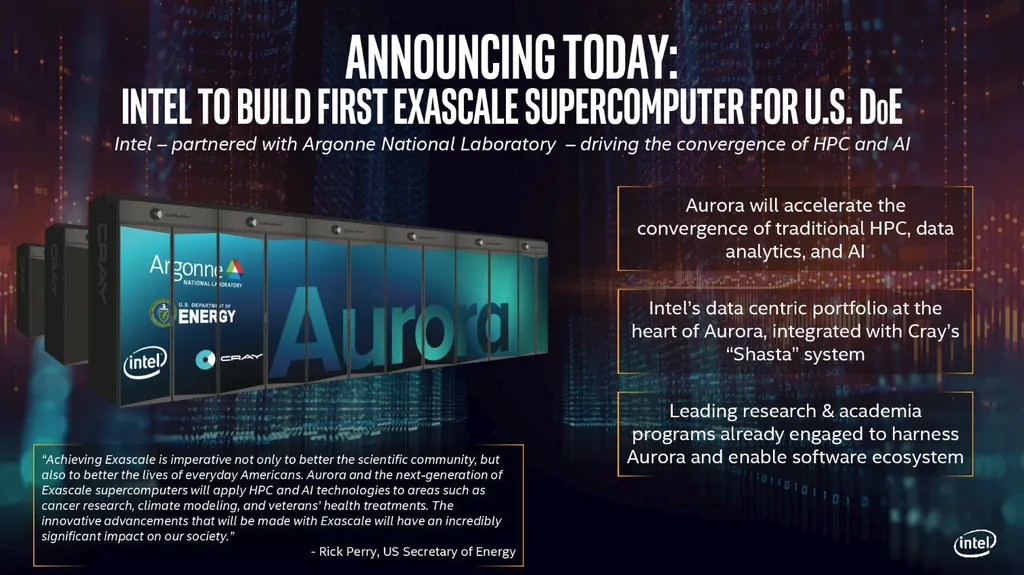
The Aurora supercomputer, deployed at Argonne National Laboratory in 2024, is one of the world’s most powerful systems dedicated to AI and high-performance computing (HPC) simulations for open science. It’s currently the second fastest system on the Top500 list and the fastest on the HPL-MxP benchmark. The system’s design is a marvel of modern engineering, featuring over ten thousand nodes, each equipped with six Intel Data Center Max Series GPUs, two Intel Xeon Max Series CPUs, and connected by the HPE Slingshot high-performance fabric interconnect. This combination of hardware enables Aurora to achieve exascale performance, making it a powerhouse for complex scientific simulations and AI applications.
The researchers’ paper, published in the journal “Supercomputing Frontiers and Innovations,” delves into the details of Aurora’s system design, with a particular focus on the network fabric and the approach taken to validate it. They present the results of MPI benchmarks, as well as performance benchmarks including HPL, HPL-MxP, Graph500, and HPCG, run on a large fraction of the system. These benchmarks demonstrate Aurora’s impressive throughput, latency, and bandwidth, which are crucial for applications to perform and scale to large node counts.
The paper also showcases the performance of Aurora on a diverse set of applications, including HACC, AMR-Wind, LAMMPS, and FMM. These applications span various scientific domains, from cosmological simulations to wind energy research, highlighting Aurora’s versatility and capability to enable breakthrough science. For the energy sector, this means advanced modeling and simulation capabilities that can accelerate research and development in areas like renewable energy, energy storage, and grid optimization.
In essence, the researchers’ work on the Aurora supercomputer represents a significant leap forward in computational power and efficiency. It opens up new possibilities for scientific discovery and innovation, with practical applications that can drive progress in the energy sector and beyond. As we continue to grapple with complex global challenges, the power of supercomputers like Aurora will be invaluable in helping us find solutions.
This article is based on research available at arXiv.