
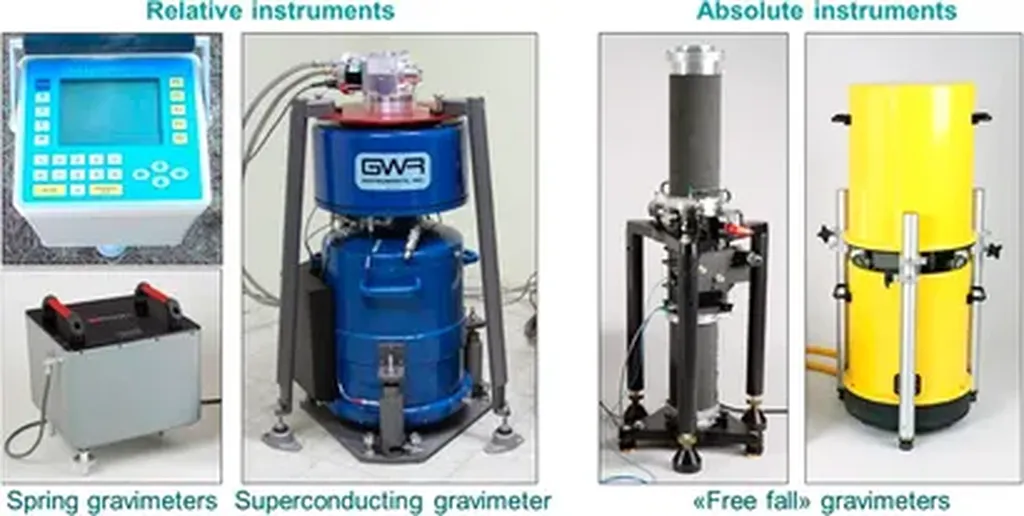
Researchers from the Kastler Brossel Laboratory at Sorbonne University in Paris, including Joachim Guyomard, Serge Reynaud, and Pierre Cladé, have made strides in advancing the understanding of quantum gravimeters. These devices, which measure gravitational acceleration with high precision, have potential applications in energy exploration and infrastructure monitoring.
The team has developed an image theory for a specific type of quantum gravimeter known as the single-bounce quantum gravimeter. This theory provides a clearer interpretation of the quantum interferences that occur within the device. By describing the free fall and quantum bounce of a matter wave-packet through decompositions over a basis of continuous energies, the researchers have enhanced the understanding of these complex phenomena.
The new theoretical framework offers tools to explore the parameter space of the gravimeter more effectively. This means that researchers can better understand how different factors, such as the properties of the matter wave-packet and the conditions of the experiment, affect the device’s performance. This improved understanding can lead to more accurate measurements of free-fall acceleration, which is crucial for the practical applications of quantum gravimeters.
One of the key benefits of this research is the potential for more precise gravitational measurements. In the energy industry, accurate gravimetric data can be used for oil and gas exploration, mineral prospecting, and monitoring of underground energy storage facilities. Additionally, these measurements can aid in the assessment of infrastructure stability and the detection of subsurface voids or anomalies.
The research was published in the journal Physical Review A, a peer-reviewed publication that focuses on atomic, molecular, and optical physics. The findings represent a significant step forward in the development of quantum gravimeters and their potential applications in the energy sector. As the technology continues to advance, it is expected to play an increasingly important role in various industrial and scientific endeavors.
In summary, the work of Guyomard, Reynaud, and Cladé provides a deeper understanding of quantum gravimeters and enhances their potential for practical applications. By improving the accuracy of gravitational measurements, this research contributes to the ongoing efforts to harness quantum technology for the benefit of the energy industry and beyond.
This article is based on research available at arXiv.